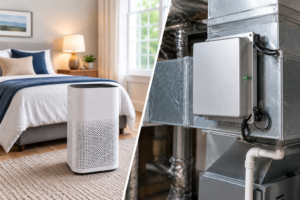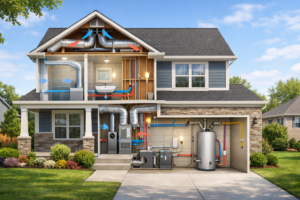

How Air Purifiers Work
Air purifiers are often recommended as a way to improve indoor air quality, but many homeowners aren’t exactly sure what they do or how they actually work.
Impact-Site-Verification: 73d45810-f029-4e12-9428-0cf75e42a3f6
At a basic level, an air purifier is designed to pull air from a room, remove certain particles, and circulate cleaner air back into the space. But the effectiveness of that process depends on how the system is built and how it’s used.
Understanding how air purifiers work helps you set realistic expectations. They don’t replace good airflow or solve every air quality issue, but they can be a useful part of a broader approach.
This guide explains how air purifiers work, what they can and can’t do, and how they fit into improving air quality at home.
Home, Done Right – Perspective
Air purifiers don’t create clean air on their own—they help manage what’s already there.
Air is constantly moving through your home, carrying dust, allergens, and particles with it. A purifier works within that system, pulling in air, filtering it, and returning it to the room.
That means effectiveness depends on placement, airflow, and consistency. Used correctly, a purifier can reduce buildup over time. Used incorrectly, it may have little noticeable impact.
The goal isn’t to rely on one device. It’s to understand how it fits into the bigger picture of how your home handles air.
How This System Works
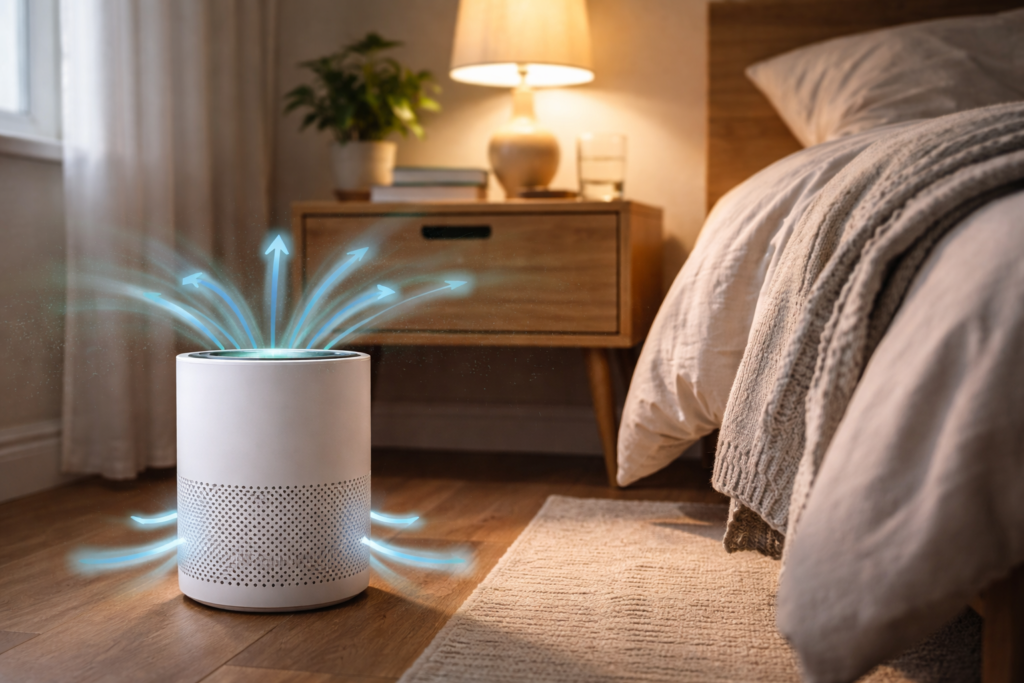
Air purifiers work by moving air through a controlled filtration process.
They don’t clean the entire room all at once. Instead, they continuously pull in air, remove certain particles, and circulate it back out. Over time, this repeated cycle reduces the amount of dust, allergens, and other particles in the air.
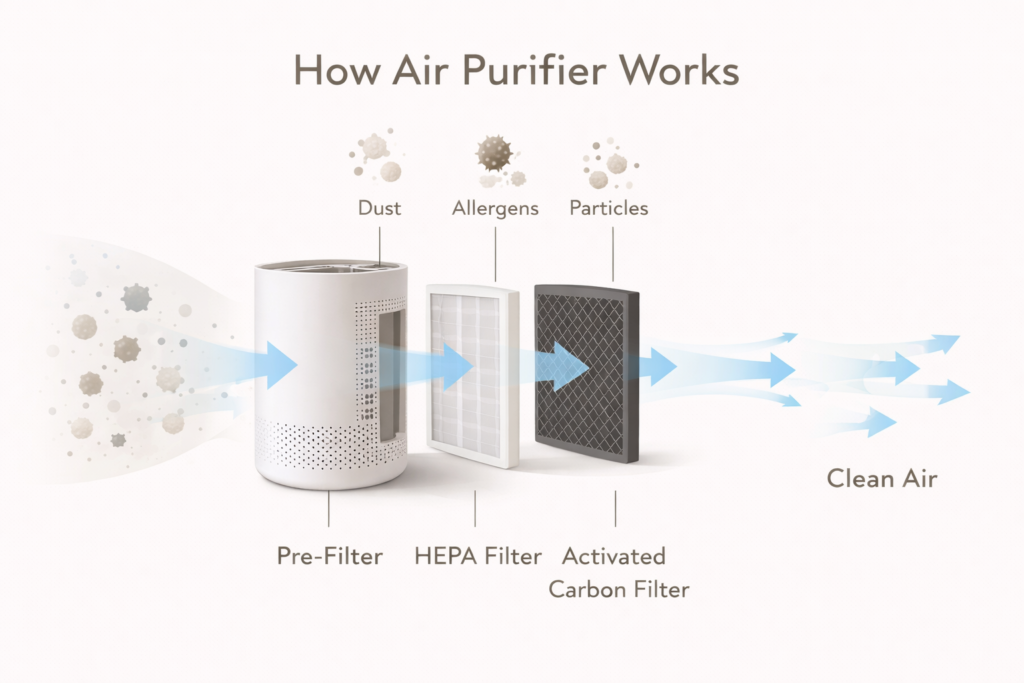
The Basic Process
An air purifier works in a simple loop:
- Air is pulled into the unit
- It passes through one or more filters
- Particles are captured inside the filter layers
- Cleaned air is pushed back into the room
This cycle repeats continuously while the unit is running.
What Happens Inside the Filters
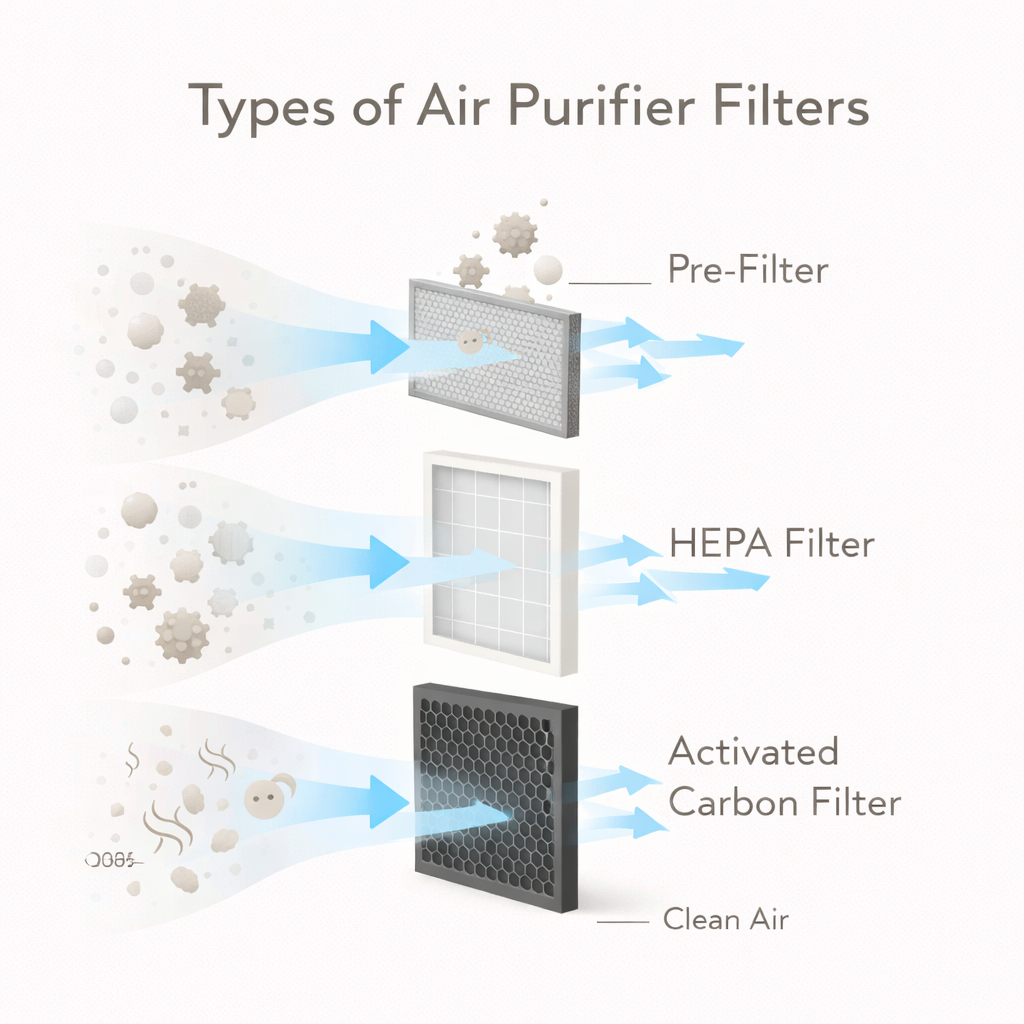
Most air purifiers use multiple layers of filtration, each designed to capture different types of particles.
- Pre-filter: captures larger particles like dust and hair
- HEPA filter: traps smaller particles like allergens and fine dust
- Carbon filter: helps reduce odors and some gases
Each layer builds on the previous one, improving overall effectiveness.
Why Air Movement Matters
Air purifiers depend on airflow to work effectively.
They only clean the air that passes through them. If air in the room isn’t circulating well, some areas may not be filtered as often.
That’s why placement matters. A purifier works best when air can move freely around it.
How the Cycle Improves Air Over Time
Air purifiers don’t create instant results.
Instead, they gradually reduce the concentration of particles by repeatedly filtering the same air. With consistent use, this leads to noticeable improvements in how the air feels.
Understanding this cycle helps explain what air purifiers can realistically do and what they can’t.
What’s Normal (And What Isn’t)
Air purifiers often work quietly in the background, which can make it hard to tell whether they’re actually doing anything. Understanding what’s normal helps you set expectations and recognize when something might be off.
What’s Normal
- The unit runs continuously with a low, steady sound
- Air movement is subtle rather than strong
- Dust still appears over time, just more slowly
- Changes in air quality happen gradually, not instantly
Most air purifiers are designed to improve air quality over time, not eliminate every particle immediately.
What Isn’t Normal
- Little to no airflow coming from the unit
- Noticeable dust buildup despite consistent use
- Persistent odors that don’t improve at all
- The unit becoming unusually loud or inconsistent
These signs can point to issues like clogged filters, poor placement, or limitations in how the purifier is being used.
Once you understand what’s expected, it becomes easier to recognize where confusion often comes from.
What Homeowners Often Misunderstand
Air purifiers are often seen as a complete solution for indoor air quality but that’s not how they work. Most misunderstandings come from expecting one device to solve problems that are actually caused by multiple factors in the home.
They Don’t Clean Everything in the Air
Air purifiers are designed to remove certain types of particles, not everything.
They work well for:
- Dust
- Allergens
- Some airborne particles
They are less effective for:
- Larger debris that settles quickly
- Moisture or humidity issues
- Airflow problems in the home
For a whole-home approach to cleaner air, you may also want to learn what an air scrubber is and how it differs from a portable air purifier in our full guide Air Purifier vs Air Scrubber. You can also review our overall guide on How to Improve Indoor Air Quality at Home.
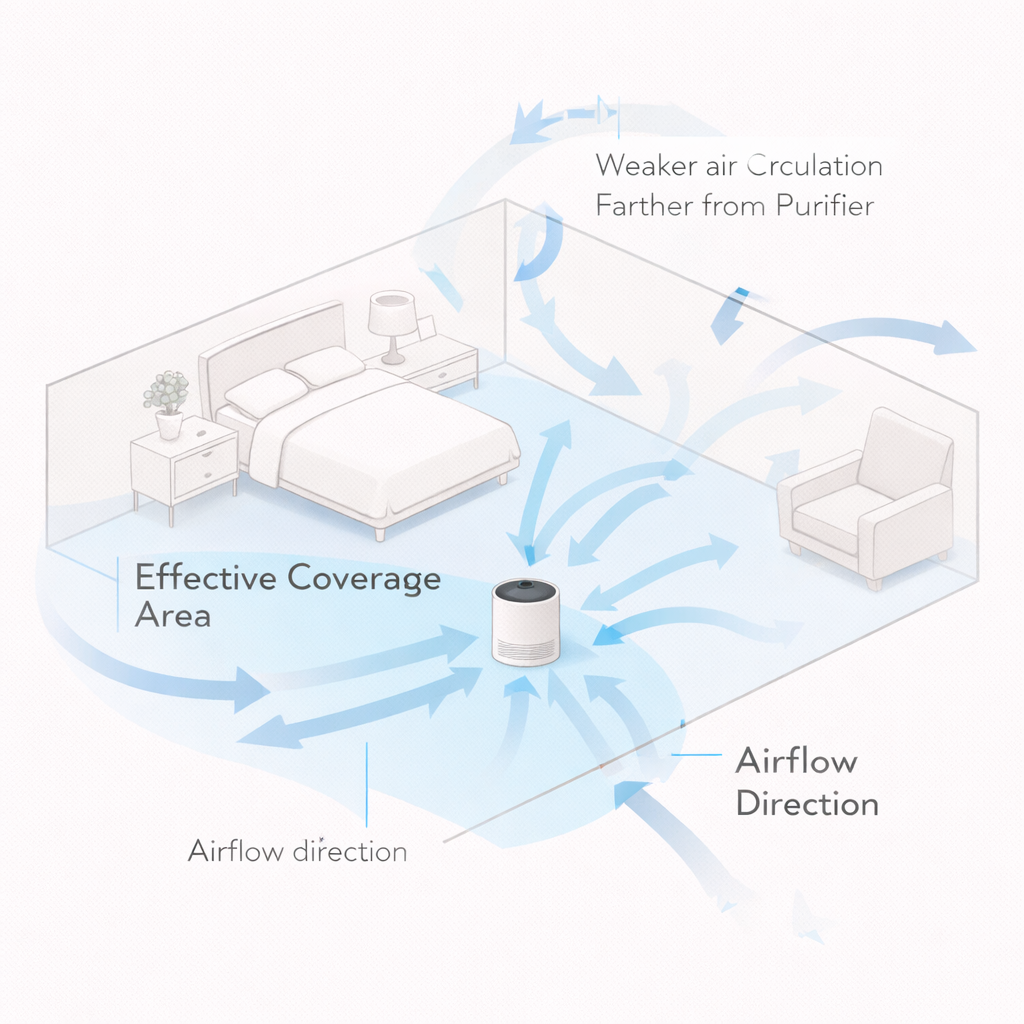
They Only Clean the Air That Reaches Them
An air purifier can only filter air that passes through the unit. If air isn’t circulating well:
- Some areas of the room may not be filtered often
- Particles can remain in certain spaces
- Effectiveness becomes uneven
This is why placement and airflow matter just as much as the device itself.
They Don’t Replace Ventilation or Humidity Control
Air purifiers are just one part of a larger system. They don’t:
- Bring in fresh air
- Remove excess moisture
- Fix ventilation issues
Learn More: How To Reduce Humidity In A House
Results Take Time
Air purifiers work gradually. They reduce particle levels over time through repeated filtration cycles. This means:
- Improvements may not be immediate
- Consistency matters more than short-term use
- Results depend on how often the unit runs
When used with the right expectations, air purifiers can be a useful part of maintaining indoor air quality. The key is knowing when they’re helping—and when something else may need attention.
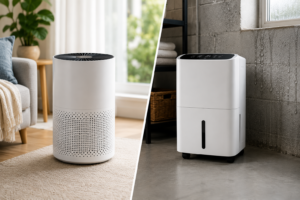
While air purifiers are excellent at removing airborne contaminants, they don’t reduce excess humidity. Learn how they compare to dehumidifiers in our guide Air Purifier vs. Dehumidifier: Which One Does Your Home Need?
When to Pay Attention
Air purifiers are meant to run quietly in the background, so it’s easy to overlook when something isn’t working as expected.
Paying attention to a few key signals can help you understand whether the purifier is doing its job—or if something else in your home needs to be addressed.
Learn More: Best Air Purifiers for Pets
Watch For
- Dust continuing to build up quickly on surfaces
- Rooms that still feel stuffy or uneven
- Persistent odors that don’t improve
- Reduced airflow coming from the unit
- Filters that become dirty very quickly
These signs don’t always mean the purifier isn’t working—but they often indicate that something else is affecting air quality.
What It Usually Means
- Fast dust buildup: particles are continuously being introduced or not fully filtered
- Stuffy rooms: limited airflow or poor ventilation
- Lingering odors: filtration limits or lack of fresh air exchange
- Weak airflow: clogged filters or improper placement
- Frequent filter changes: high particle levels in the home
These patterns help you understand whether the issue is with the purifier itself or the environment it’s working in.
When a Purifier Helps vs. When It Doesn’t
Air purifiers are most helpful when:
- There are airborne particles to reduce
- Air is circulating well through the space
- The unit is properly sized for the room
They are less helpful when:
- Moisture or humidity is the main issue
- Airflow is restricted
- The problem is coming from a specific source that isn’t addressed
Understanding these signals helps you use an air purifier more effectively and recognize when it’s only part of the solution.
Learning how air purifiers work is helpful, but many homeowners also want to know whether they’re actually worth the cost and maintenance.
Conclusion
Air purifiers are designed to reduce airborne particles by continuously filtering the air in a room.
They work best when they’re used consistently, placed correctly, and supported by good airflow throughout the home. While they can improve air quality over time, they don’t replace ventilation or solve every underlying issue.
Understanding how they work and what they’re meant to do helps you use them more effectively as part of a broader approach to managing indoor air quality.
Learn about the common indoor air quality problems homeowners often overlook and how they affect your home over time.
The Bottom Line
Air purifiers work by continuously filtering the air in a room, reducing particles over time.
They are most effective when used consistently, placed correctly, and combined with good airflow and moisture control.
While they won’t solve every air quality issue, they can play a valuable role in maintaining a cleaner, more comfortable indoor environment when used as part of a larger system.
Frequently Asked Questions
Do air purifiers actually work?
Yes. Air purifiers can reduce airborne particles like dust, allergens, and fine debris by continuously filtering the air in a room. Their effectiveness depends on placement, airflow, and consistent use.
How long does it take for an air purifier to work?
Air purifiers don’t work instantly. They improve air quality gradually by repeatedly filtering the air. Noticeable changes can take hours or days depending on the room size and conditions.
Do air purifiers remove dust completely?
No. Air purifiers reduce airborne dust but don’t eliminate it entirely. Dust is constantly introduced into a home, so purifiers help lower levels rather than remove all particles.
Can an air purifier remove odors?
Some air purifiers can reduce odors, especially those with activated carbon filters. However, they may not fully eliminate strong or persistent smells if the source remains.
Do air purifiers help with allergies?
Yes. Air purifiers can help reduce airborne allergens like pollen, dust, and pet dander, which may improve overall air quality in a room.
Where should an air purifier be placed?
Air purifiers work best in open areas where air can circulate freely. Placing them near walls or in corners can limit airflow and reduce effectiveness.
Do air purifiers replace ventilation?
No. Air purifiers do not bring in fresh air. They filter existing air, so proper ventilation is still important for overall indoor air quality.
How often should you replace air purifier filters?
Filter replacement depends on usage and air conditions, but filters should be checked regularly and replaced when they become dirty to maintain performance.