

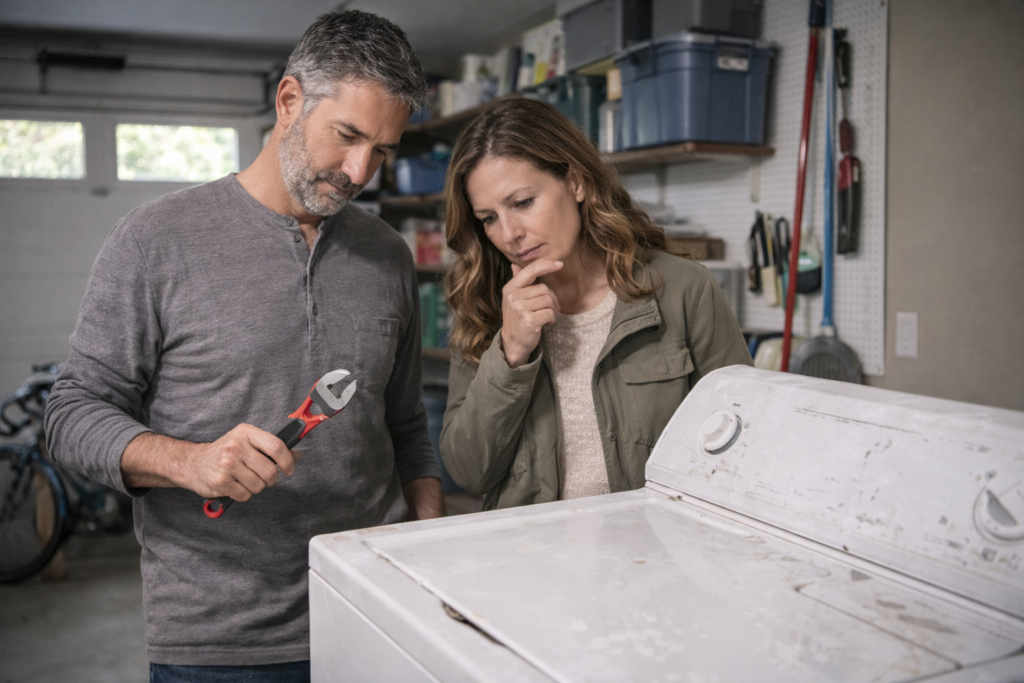
Repair or Replace? A Practical Guide for Homeowners
Repairing or replacing something in your home is rarely a simple decision. Many homeowners struggle to know whether a problem can be fixed with a small repair or whether it is a sign that something should be replaced entirely.
This guide explains how to evaluate common household issues so you can make practical decisions about repairs, replacements, and when it makes sense to call a professional.
Home, Done Right – Perspective
Most home repair decisions are not just about fixing a problem today. They are about deciding what makes sense for the long term. A quick repair might solve an issue temporarily, but sometimes it simply delays a larger replacement that will eventually be necessary.
A practical homeowner approach focuses on understanding the condition of the item, the cost of repair, and how long the solution is likely to last. Looking at these factors together makes it much easier to decide whether a repair is worthwhile or whether replacement is the better option.
How to Decide Whether to Repair or Replace
Many home maintenance decisions become easier when you look at a few practical factors instead of guessing. When something stops working properly, homeowners can usually determine the best course of action by considering the age of the item, the cost of repair, and the likelihood of future problems.
A simple evaluation of these factors can help you decide whether a repair makes sense or whether replacing the item will save time, money, and frustration in the long run.
When Repairing Makes Sense
- The item is relatively new
- The repair cost is small compared to replacement
- The problem is clearly isolated
- The item has otherwise worked reliably
- The repair extends the useful life significantly
When Replacement Is Usually Better
- The item is near the end of its expected lifespan
- The repair cost approaches the cost of replacement
- Multiple problems have appeared recently
- The item is inefficient or outdated
- Repairs are becoming frequent
Common Repair vs Replace Decisions Homeowners Face
Many repair decisions become easier when you look at real-world examples. Homeowners frequently face similar situations involving appliances, heating systems, roofing materials, and other major components of the home. Understanding how these situations are typically evaluated can make the decision process much clearer.
Appliances
Small appliance problems such as worn belts, heating elements, or control switches are often inexpensive to repair. If the appliance is relatively new and the repair cost is modest, fixing the issue can extend its life for several more years.
However, if an appliance is older and begins experiencing multiple problems, replacement may become the more practical choice, especially when newer models are significantly more energy efficient.
Heating and Cooling Systems
HVAC systems are expensive to replace, so many homeowners prefer to repair them whenever possible. Minor repairs, routine servicing, and component replacements are common during the middle years of a system’s lifespan.
When a system becomes older and major components fail, replacement often becomes more practical, particularly if the equipment is no longer efficient or reliable.

Roofing Materials
Roof repairs are often appropriate when damage is limited to a small area, such as a few missing shingles or localized wear. Addressing these issues early can prevent more significant water damage.
If the roof is nearing the end of its expected lifespan and multiple repairs are needed, a full replacement may provide better long-term protection for the home.
You can also review our Seasonal Home Maintenance Checklist to stay organized throughout the year.
A Simple Repair vs Replace Checklist
When homeowners are unsure whether to repair or replace something in their home, it helps to step back and look at the bigger picture. A few simple questions can often clarify whether a repair is worthwhile or whether replacing the item will make more sense over time.
- How old is the item compared to its typical lifespan?
- Is the repair cost small compared to the cost of replacement?
- Has the item needed multiple repairs recently?
- Would replacing the item significantly improve efficiency or reliability?
- Will the repair solve the problem for several years or only temporarily?
In many cases, the right choice becomes clearer when these factors are considered together. Small repairs often make sense for newer equipment, while older or unreliable items may be better replaced before they cause larger problems.
If you’re building a home maintenance routine, start with our Essential Home Maintenance Checklist.
The Bottom Line
Deciding whether to repair or replace something in your home rarely comes down to a single factor. Age, repair costs, reliability, and long-term efficiency all play a role in determining the most practical choice.
By stepping back and evaluating these factors together, homeowners can avoid unnecessary expenses and make decisions that protect both their homes and their budgets. In many cases, a thoughtful repair can extend the life of an item, while timely replacement can prevent ongoing problems and provide greater long-term value.
Explore more practical homeowner advice in our Home Maintenance Guides.