
Indoor Air Quality Problems Homeowners Overlook
Most homeowners think about air quality when something feels obviously wrong—like strong odors, visible mold, or constant dust. But in many homes, air quality issues don’t announce themselves that clearly. They build slowly, often going unnoticed in spaces that otherwise look clean and well-maintained.
The reality is that indoor air can quietly carry dust, moisture, allergens, and invisible pollutants from room to room. These problems don’t stay contained—they move through your home, settle into surfaces, and affect how your space feels day to day.
What makes this tricky is that many of the most common air quality issues don’t look like problems at first. A slightly foggy window, a bit of dust in sunlight, or a humid bathroom might seem normal—but over time, these small signs can point to bigger underlying issues.
This guide walks through the indoor air quality problems homeowners often overlook, how they develop, and what they mean for your home.
Home, Done Right – Perspective
Most homeowners don’t think about air quality until it becomes uncomfortable.
But air quality isn’t just about comfort—it’s about how your home functions over time. The air inside your house is constantly moving, carrying moisture, dust, and particles through every room. When something is off, it doesn’t stay isolated—it spreads.
The key is learning to recognize the early signs before they turn into bigger problems. Small changes in how your home feels—like lingering humidity, stale air, or dust buildup—are often the first indicators that something needs attention.
A well-functioning home doesn’t just look clean. It manages air, moisture, and circulation in a way that keeps problems from building in the first place.
What Affects Indoor Air Quality in a Home
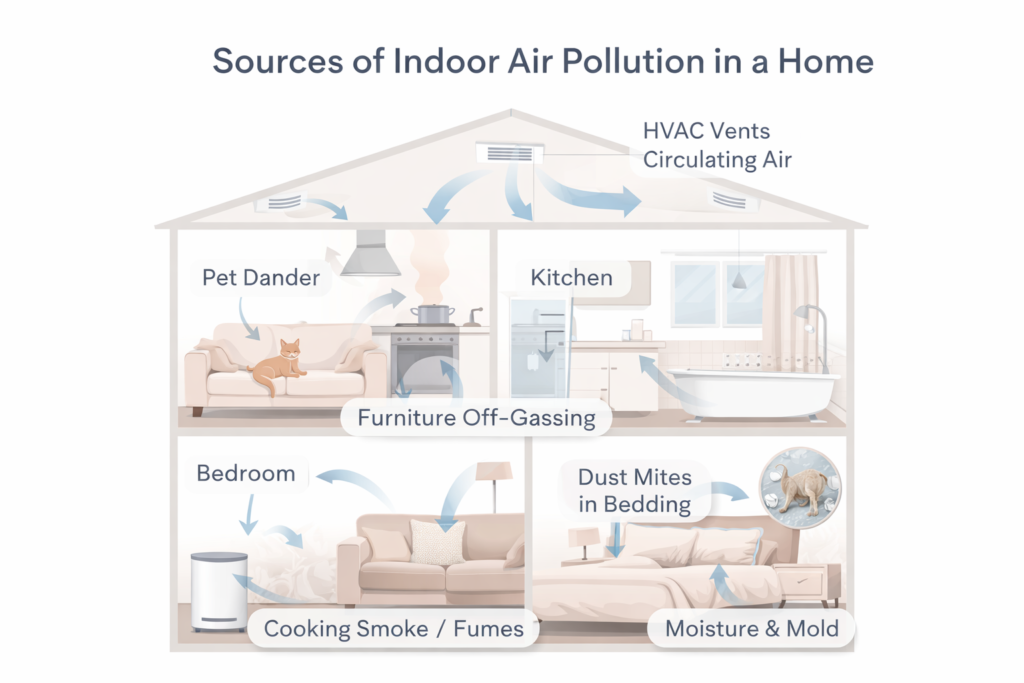
Indoor air quality is shaped by a combination of factors that are always working in the background. Unlike a single visible problem, air quality is the result of how your home handles particles, moisture, airflow, and everyday activity.
Most homes don’t have just one source of poor air quality—they have several, all contributing in small ways. Over time, those small factors combine and spread throughout the house.
In This Guide
Indoor air quality problems often develop gradually and can be easy to overlook in a home that otherwise appears clean. Small signs—like dust, stale air, or excess moisture—can point to larger underlying issues if they are not addressed.
In this guide you will learn how to:
- Identify common indoor air quality problems homeowners overlook
- Understand how air, moisture, and particles move through a home
- Recognize early warning signs of poor air quality
- Learn what’s actually in your indoor air
- Improve indoor air quality with simple, practical steps
These insights can help homeowners create a more comfortable living environment and prevent long-term air quality issues.
Everyday Sources Inside the Home
Many of the biggest air quality contributors come from normal, daily living.
Cooking releases smoke, grease particles, and gases into the air. Cleaning products can introduce chemical compounds. Furniture, flooring, and household materials slowly release emissions over time. Even activities like vacuuming or making the bed can send fine particles into the air.
These sources don’t stay in one place—they move through the home and settle into different areas.
Dust, Allergens, and Particles
Dust is one of the most common and overlooked air quality issues.
It’s made up of a mix of materials like skin cells, fabric fibers, dirt, and outdoor particles brought inside. Over time, dust builds up on surfaces and in soft materials like carpets and furniture.
When disturbed, these particles become airborne again, contributing to ongoing air quality issues even in homes that are regularly cleaned.
Moisture and Humidity
Moisture plays a major role in indoor air quality.
High humidity creates an environment where mold and mildew can develop, especially in bathrooms, basements, and poorly ventilated areas. Even without visible mold, excess moisture can make the air feel heavy and contribute to long-term problems.
Damp rooms are often overlooked until musty odors or mold begin to appear. Addressing moisture early can help prevent larger air quality issues.
Learn More: How Humidity Affects Your Home
Airflow and Ventilation
Air movement is what connects everything. Air doesn’t stay still, it travels between rooms, through hallways, and in and out of vents. As it moves, it carries dust, moisture, and airborne particles with it.
If airflow is limited or poorly balanced, pollutants can build up in certain areas instead of being removed or diluted.
Filtration and HVAC Systems
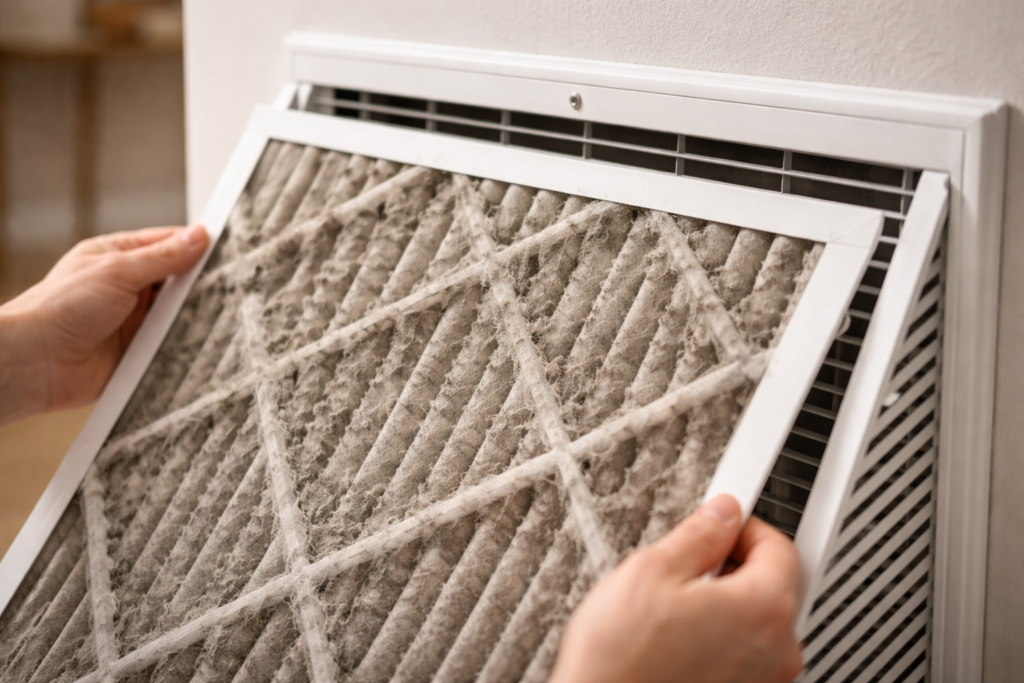
Your HVAC system plays a major role in maintaining air quality but only if it’s working properly. Air filters are designed to capture particles before air is recirculated through the home. When filters are clean and functioning, they help reduce airborne dust and debris. When they’re clogged or neglected, they can do the opposite—allowing particles to circulate more freely.
The important thing to understand is that these factors don’t operate independently. They interact constantly, airflow spreads particles, moisture creates conditions for growth, and everyday activities keep introducing new pollutants into the system.
That’s why indoor air quality problems often go unnoticed. They aren’t caused by a single issue, they’re the result of how everything in your home works together.
If you’re addressing multiple indoor air quality concerns, an air scrubber may be one option worth considering as part of your overall strategy. One of the most common questions homeowners have is whether they need a portable purifier or a whole-house air scrubber. Our Air Purifier vs. Air Scrubber guide walks through the key differences.
How Air Moves Through Your Home (and Why It Matters)
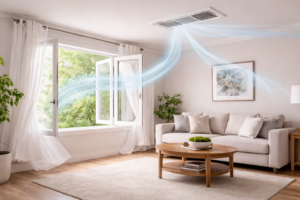
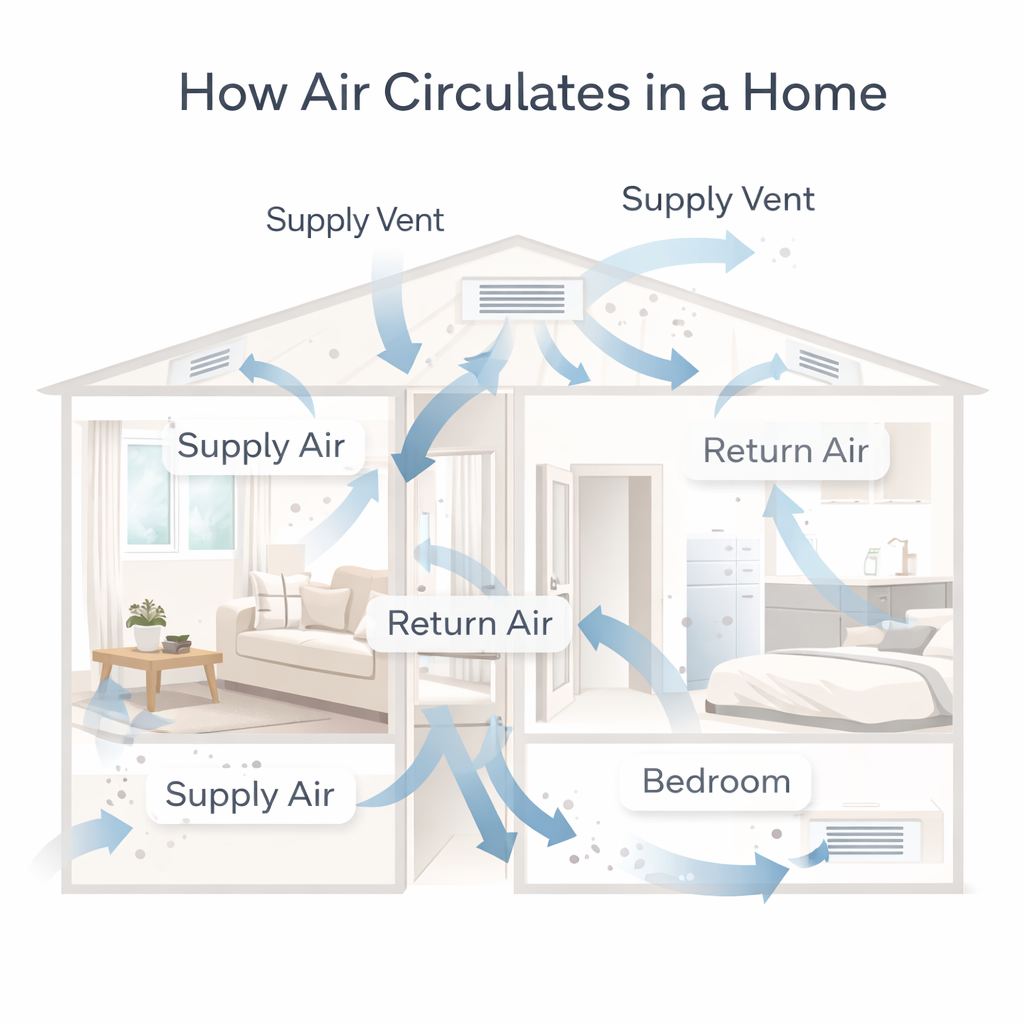
Air inside your home is constantly in motion—even when it doesn’t feel like it.
It moves through supply vents, returns through HVAC systems, flows under doors, and shifts naturally between rooms due to temperature and pressure differences. This movement is what connects every part of your home’s air quality together.
Air Doesn’t Stay in One Place
When air enters a room through a vent, it doesn’t stay there. It continues moving—into hallways, into adjacent rooms, and eventually back through return vents. As it moves, it carries everything with it:
- Dust
- Moisture
- Allergens
- Odors
- Fine particles
This is why a problem in one area of your home often shows up somewhere else.
How HVAC Systems Circulate Air
Most homes rely on a forced-air system that continuously cycles air throughout the house.
Air is:
- Pulled into return vents
- Passed through a filter
- Heated or cooled
- Pushed back out through supply vents
This cycle repeats over and over again throughout the day.
If the system is clean and balanced, it helps manage air quality. If not, it can spread particles more efficiently than it removes them.
A dirty HVAC filter is one of the most commonly overlooked causes of poor airflow and reduced indoor air quality. See our guide on How Often Should You Change Your HVAC Filter? for replacement recommendations.
Why Airflow Can Make Problems Worse
Airflow doesn’t just distribute clean air, it distributes everything in the air.
If there’s excess moisture in a bathroom, particles in a bedroom, or dust buildup in a living area, airflow can carry those issues into other parts of the home. Poor ventilation makes this worse by trapping air instead of refreshing it.
Natural Air Movement Still Happens
Even without HVAC running, air continues to move.
- Warm air rises
- Cool air sinks
- Air shifts when doors open and close
- Outdoor air enters through small leaks and openings
This constant movement means indoor air quality is always changing—even when you’re not actively doing anything.
Once you understand how air moves, it becomes easier to recognize where problems can start—and why they often show up in unexpected places. The challenge is that many of these problems don’t look obvious at first.
Indoor Air Quality Problems Homeowners Often Miss
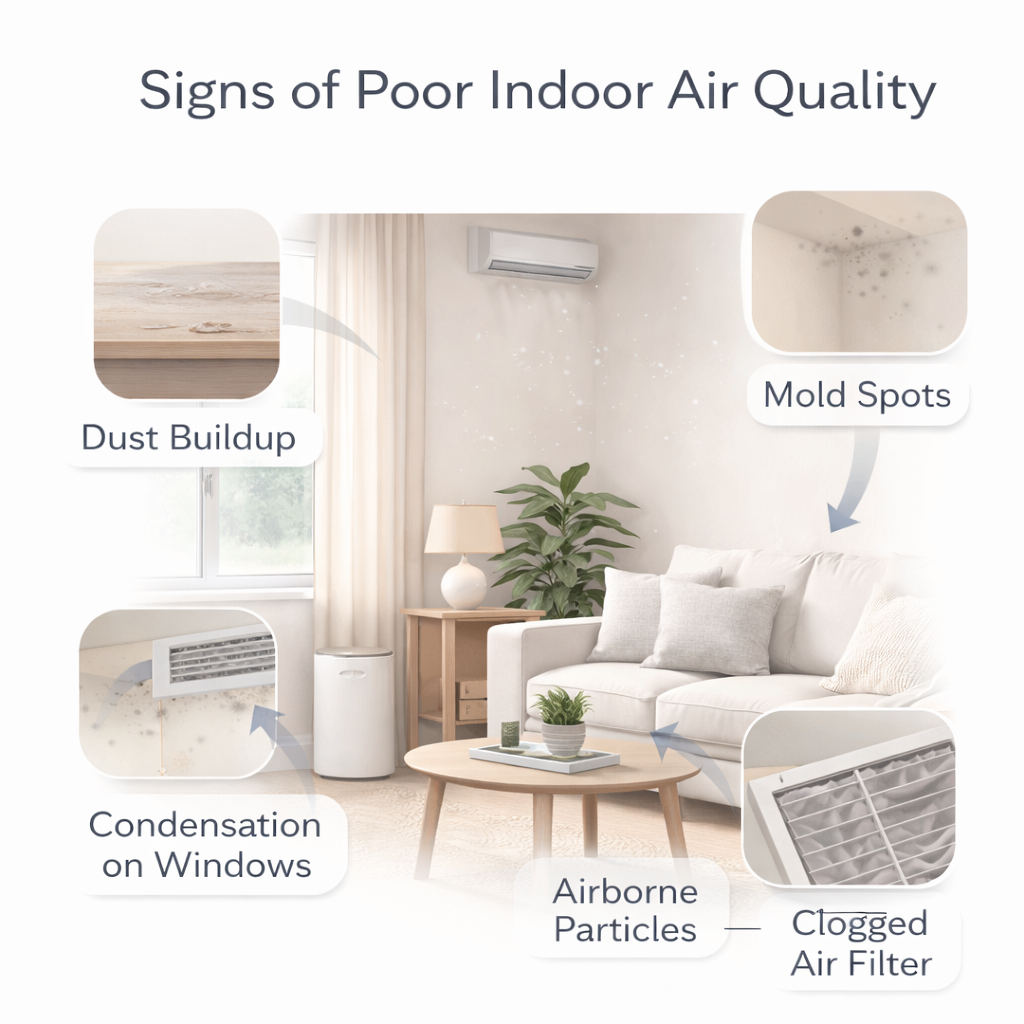
Most indoor air quality issues don’t look like problems at first. They show up as small, easy-to-ignore changes, things that feel normal or temporary. Because of that, many homeowners don’t connect these signs to air quality at all.
Dust That Keeps Coming Back
A thin layer of dust on surfaces is easy to dismiss.
But when dust builds up quickly after cleaning, it often means particles are continuously circulating through the air. This can come from poor filtration, airflow patterns, or materials inside the home. Dust isn’t just sitting on surfaces—it’s constantly moving through the air and resettling.
Stale or Heavy Air
Sometimes a home just feels “off.”
Rooms may feel stuffy, air may seem heavier than usual, or it may feel like fresh air isn’t circulating well. This is often a sign of limited ventilation or trapped air that isn’t being refreshed. These changes are subtle, but they’re often one of the first signs of an air quality imbalance.
Lingering Odors
Odors that don’t clear quickly can point to underlying air movement issues. Cooking smells, cleaning products, or musty odors that stick around longer than expected often indicate that air isn’t circulating or being filtered effectively. Instead of leaving the home, these particles remain suspended in the air.
Moisture Where You Don’t Expect It
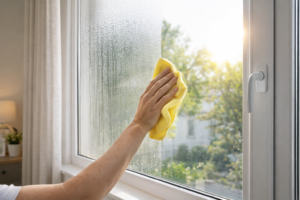
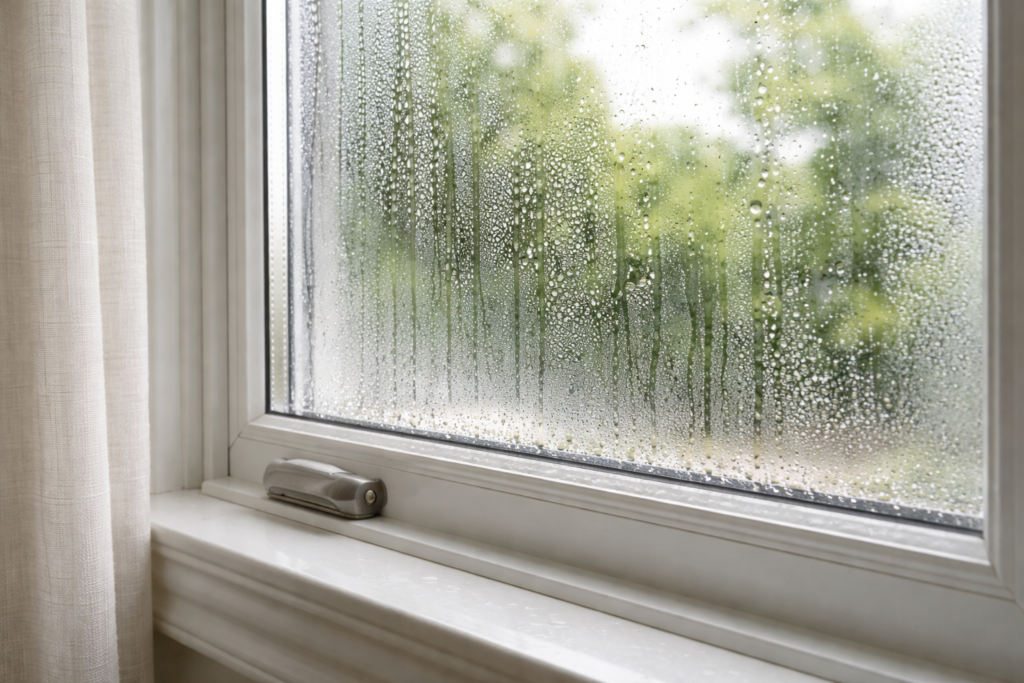
Condensation on windows, damp-feeling rooms, or slightly humid air can all signal excess moisture. Over time, this creates conditions that affect both air quality and the home itself.
Learn More: How to Prevent Mold Growth in a House
Rooms That Feel Different From Each Other
In some homes, one room may feel comfortable while another feels stuffy, humid, or dusty. These inconsistencies are often caused by airflow imbalances—where air isn’t moving evenly throughout the house. t’s a sign that air quality isn’t being managed consistently across spaces.
Subtle Build-Up Over Time
The biggest issue is that most of these problems develop slowly. Because the changes are gradual, they become part of the background of daily life. What feels “normal” may actually be the result of long-term buildup of dust, moisture, and airborne particles.
These signs are easy to overlook because they don’t feel urgent but they often point to how air is behaving throughout your home. Understanding what’s actually in that air helps explain why these problems happen in the first place.
What’s Actually in Your Indoor Air
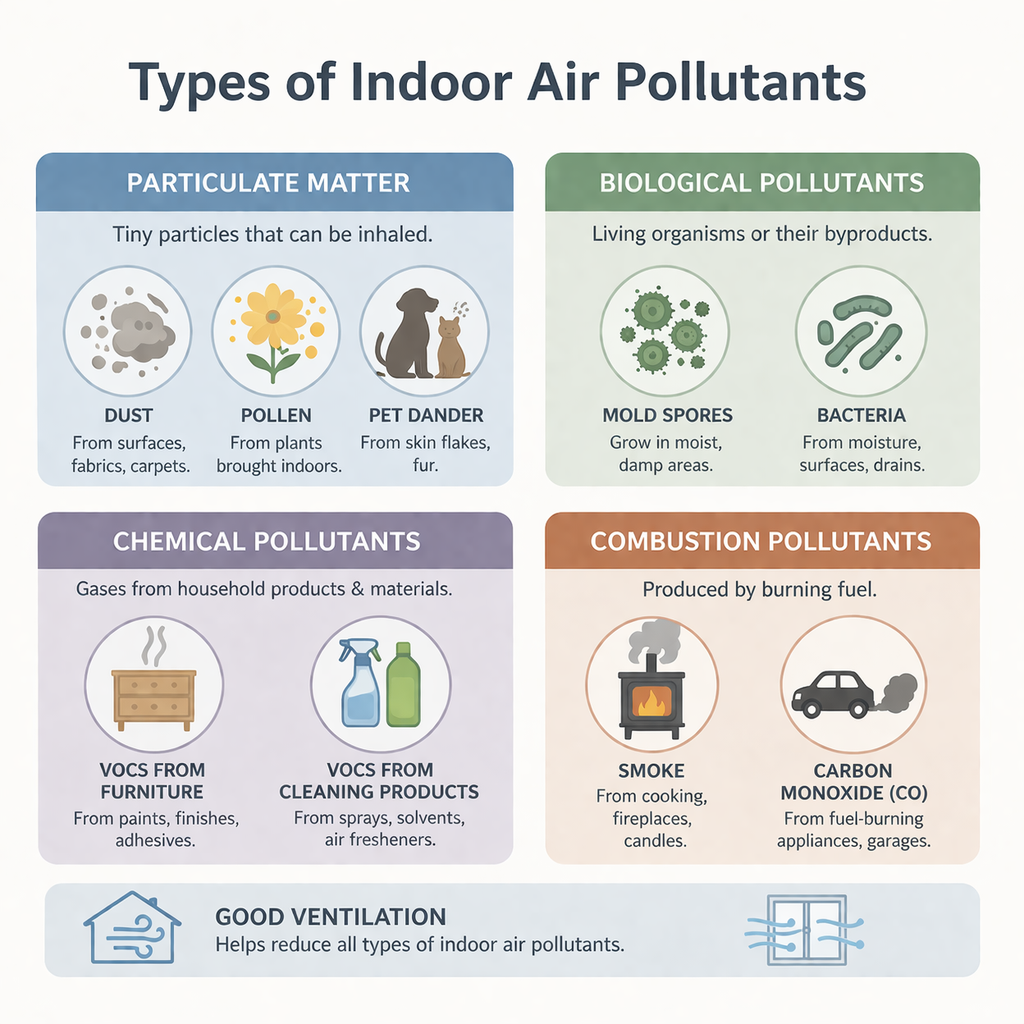
Indoor air isn’t just empty space—it’s a mix of particles, moisture, and invisible gases moving through your home at all times.
Some of these are harmless in small amounts. Others can build up depending on how your home is used, ventilated, and maintained.
Particles You Can’t Always See
A large portion of indoor air pollution comes from tiny particles suspended in the air.
These include:
- Dust
- Pollen
- Pet dander
- Fabric fibers
Even when they aren’t visible, these particles are constantly circulating and settling throughout the home.
Biological Contaminants
Some air quality issues come from organic sources.
This includes:
- Mold spores
- Bacteria
- Microscopic allergens
These tend to thrive in areas with excess moisture or poor airflow.
Chemical Emissions (VOCs)
Many everyday materials release low levels of chemicals into the air over time.
These are often referred to as volatile organic compounds (VOCs), and they can come from:
- Furniture and flooring
- Paint and finishes
- Cleaning products
- Household items
These emissions are usually subtle and go unnoticed, but they contribute to overall air quality.
Combustion Byproducts
If your home uses gas appliances, fireplaces, or attached garages, combustion-related particles may also be present. These can include:
- Smoke particles
- Carbon-based gases
- Other byproducts from burning fuel
Proper ventilation plays an important role in keeping these from building up indoors.
Moisture in the Air
Water vapor is a normal part of indoor air—but when levels are too high, it changes how the air behaves.
Excess humidity:
- Makes air feel heavier
- Encourages mold growth
- Affects surfaces and materials
What’s important isn’t just what’s in the air—but how it affects your home over time. Air quality issues don’t stay invisible forever. They tend to show up in subtle, physical ways throughout your space.
How Indoor Air Quality Affects Your Home
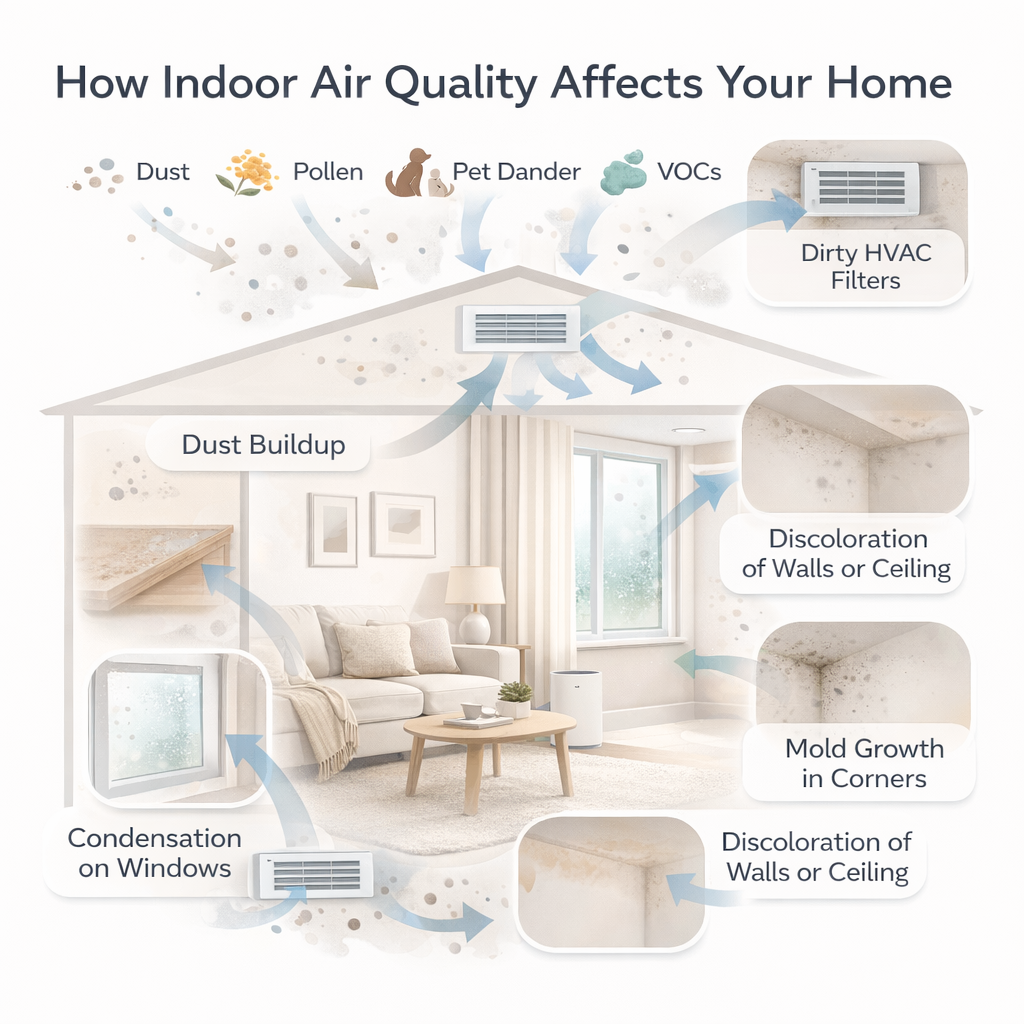
Indoor air quality doesn’t just affect how your home feels—it affects how it performs over time. When air carries excess dust, moisture, or pollutants, those elements don’t stay in the air. They settle, build up, and interact with surfaces, materials, and systems throughout the house.
Dust Build-Up on Surfaces
When airborne particles circulate through your home, they eventually settle.
This leads to:
- Faster dust accumulation on furniture
- Build-up in corners and along baseboards
- More frequent cleaning without long-term improvement
If dust keeps returning quickly, it’s often a sign that particles are continuously moving through the air rather than being removed.
Moisture and Condensation Issues
Air with excess humidity affects more than just comfort.
Over time, it can lead to:
- Condensation on windows
- Damp-feeling rooms
- Increased risk of mold or mildew
These are early indicators that moisture is not being properly managed.
Strain on HVAC Systems
Poor air quality can also impact how your systems function.
Dust and airborne particles:
- Clog filters more quickly
- Reduce airflow efficiency
- Increase system workload
Over time, this can affect performance and maintenance needs.
Learn More: How Air Purifiers Work
Uneven Conditions Throughout the Home
When air quality isn’t balanced, different areas of the home can feel different.
You might notice:
- Some rooms feel stuffy
- Others feel more humid
- Certain areas collect more dust
These inconsistencies often point to airflow and air distribution issues.
Long-Term Wear on Materials
Air quality can quietly affect the condition of materials inside your home.
Over time, you may see:
- Dust settling into fabrics and carpets
- Moisture affecting wood or paint
- Subtle discoloration or buildup in certain areas
These changes happen gradually, which is why they’re often overlooked.
The good news is that improving indoor air quality doesn’t require major changes all at once. In most cases, it comes down to a few practical adjustments that help your home manage air more effectively.
Simple Ways to Improve Indoor Air Quality
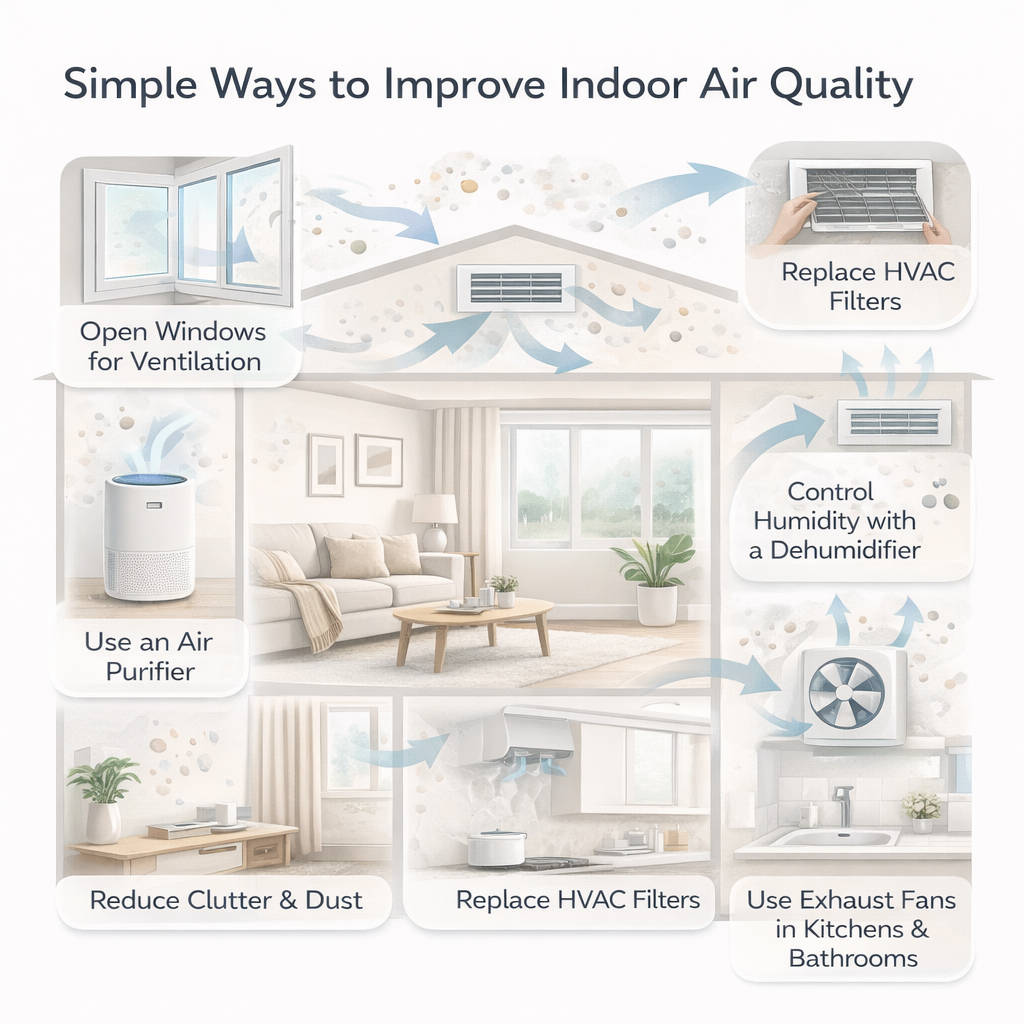
Improving indoor air quality doesn’t require complicated systems or constant attention. In most homes, it comes down to a few consistent habits that help reduce buildup, improve airflow, and keep air moving the way it should.
Improve Ventilation
Fresh air helps dilute indoor pollutants.
Simple ways to improve ventilation include:
- Opening windows when weather allows
- Using exhaust fans in kitchens and bathrooms
- Letting air move between rooms instead of keeping spaces closed off
Even small improvements in airflow can make a noticeable difference over time.
Replace Air Filters Regularly
Air filters are one of the simplest ways to improve indoor air quality.
When replaced regularly, they:
- Capture dust and airborne particles
- Help maintain airflow
- Reduce the amount of debris circulating through your home
Manage Humidity Levels
Keeping humidity in a balanced range helps prevent multiple issues at once.
This includes:
- Reducing excess moisture in bathrooms and basements
- Using dehumidifiers where needed
- Preventing condensation from building up
High humidity is one of the most commonly overlooked indoor air quality issues. In below-grade spaces, a basement dehumidifier can help control moisture and improve comfort.
Reduce Dust and Particle Sources
While you can’t eliminate dust completely, you can reduce how much builds up and recirculates.
This includes:
- Regular cleaning of surfaces and floors
- Minimizing clutter that collects dust
- Maintaining fabrics, carpets, and upholstery
The goal isn’t perfection, it’s reducing how much material is constantly re-entering the air.
Be Aware of Airflow Between Rooms
Air quality improves when air can move freely.
Simple adjustments include:
- Keeping vents unblocked
- Allowing space under doors for airflow
- Avoiding closed-off areas where air becomes stagnant
These small changes help prevent pockets of poor air quality from forming.
The key is consistency. Small adjustments, applied over time, make a bigger difference than one-time fixes. Understanding how your home handles air is what allows you to improve it without overcomplicating things.
Many homeowners aren’t sure whether poor air quality is caused by airborne contaminants or excess humidity. Our Air Purifier vs. Dehumidifier guide explains the difference.
Conclusion
Indoor air quality is easy to overlook because most of the problems aren’t obvious.
They show up gradually—through dust, moisture, airflow issues, and subtle changes in how your home feels. Because these signs are familiar, they’re often ignored or treated as normal.
But when you step back and look at how air moves through your home, it becomes clear that these small issues are connected.
Improving air quality isn’t about chasing perfection. It’s about understanding how your home works and making small adjustments that prevent problems from building over time.
The Bottom Line
Indoor air quality affects every part of your home, even when you can’t see it.
The earlier you recognize how air, moisture, and particles interact, the easier it is to keep your home comfortable, consistent, and working the way it should.
Frequently Asked Questions
What causes poor indoor air quality in a home?
Poor indoor air quality is usually caused by a mix of dust, moisture, limited ventilation, household chemicals, and particles that build up over time. In many homes, it is not one major issue but several small ones working together.
What are signs of poor indoor air quality?
Common signs include dust that returns quickly, stale or stuffy rooms, lingering odors, condensation on windows, excess humidity, and rooms that feel noticeably different from one another.
Can a clean house still have poor indoor air quality?
Yes. A home can look clean and still have air quality issues. Dust, airborne particles, humidity, and invisible pollutants can still circulate through the house even when surfaces appear tidy.
Does humidity affect indoor air quality?
Yes. High humidity can make air feel heavy, increase condensation, and create conditions that support mold and mildew growth. Low airflow combined with excess moisture often makes air quality problems worse.
How does air move indoor pollutants around a house?
Air moves through vents, returns, hallways, door openings, and natural pressure changes. As it moves, it can carry dust, moisture, allergens, and odors from one room to another.
What is the easiest way to improve indoor air quality?
The simplest starting points are improving ventilation, replacing HVAC filters regularly, managing humidity, and reducing dust buildup. Small, consistent improvements usually have more impact than one-time fixes.
Do air filters help with indoor air quality?
Yes. Clean air filters help capture airborne particles before air is recirculated through your home. When filters are clogged or neglected, they become less effective and can contribute to ongoing dust and airflow problems.
Why do some rooms feel stuffier than others?
That usually points to uneven airflow, poor ventilation, or differences in moisture and particle buildup. If one room feels more humid, dusty, or stagnant than another, air may not be circulating evenly through the home.