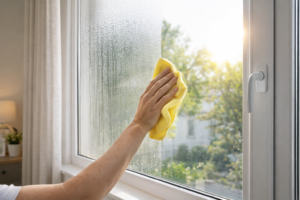


Signs of High Humidity in a House
High humidity in a house is not always immediately obvious, but it often shows through subtle signs that can affect comfort and indoor air quality. When moisture levels are too high, it can lead to condensation, musty odors, and long-term damage if not addressed.
In many homes, humidity builds up gradually due to everyday activities, limited airflow, or moisture entering from outside. Without proper ventilation or moisture control, these conditions can persist and worsen over time.
Recognizing the signs of high humidity early can help homeowners take action before it leads to larger problems like mold growth or structural damage.
Home, Done Right – Perspective
High humidity is often easy to overlook because it develops gradually. In many cases, homeowners notice the effects, like condensation or musty air, before realizing that moisture levels are too high. Identifying these signs early makes it easier to control humidity and prevent larger problems.
Common Signs of High Humidity in a House
High humidity often reveals itself through visible changes in the home and noticeable differences in how the air feels. These signs can appear gradually, making them easy to overlook at first.
In This Guide
Recognizing the signs of high humidity is the first step in preventing moisture problems in a home. In many cases, small indicators—like condensation or musty odors—can signal larger issues if they are not addressed.
In this guide you will learn how to:
- Identify common signs of high humidity
- Understand what causes moisture buildup in a home
- Reduce humidity through ventilation and moisture control
- Prevent mold and long-term moisture damage
- Maintain balanced indoor humidity levels
These steps can help homeowners improve comfort and protect their homes from moisture-related problems.
Condensation on Windows
Water droplets forming on windows are one of the most common signs of excess humidity. This happens when warm, moist air comes into contact with cooler glass surfaces.
Learn more: How to Fix Condensation on Windows
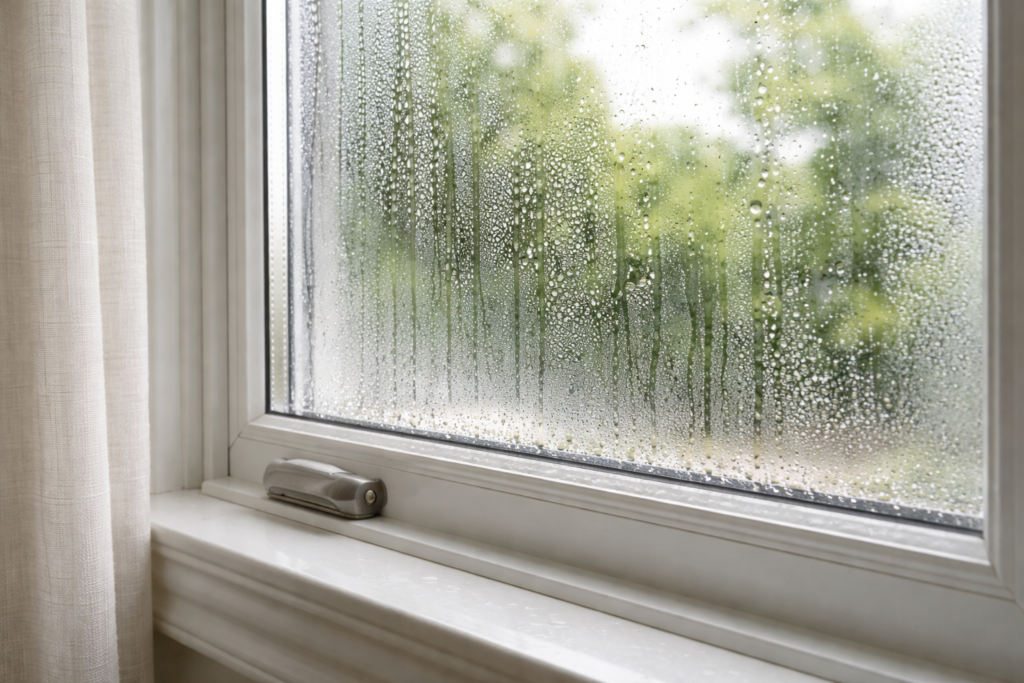
Musty Odors
A damp or musty smell often indicates that moisture is present in the air or being absorbed by materials in the home.

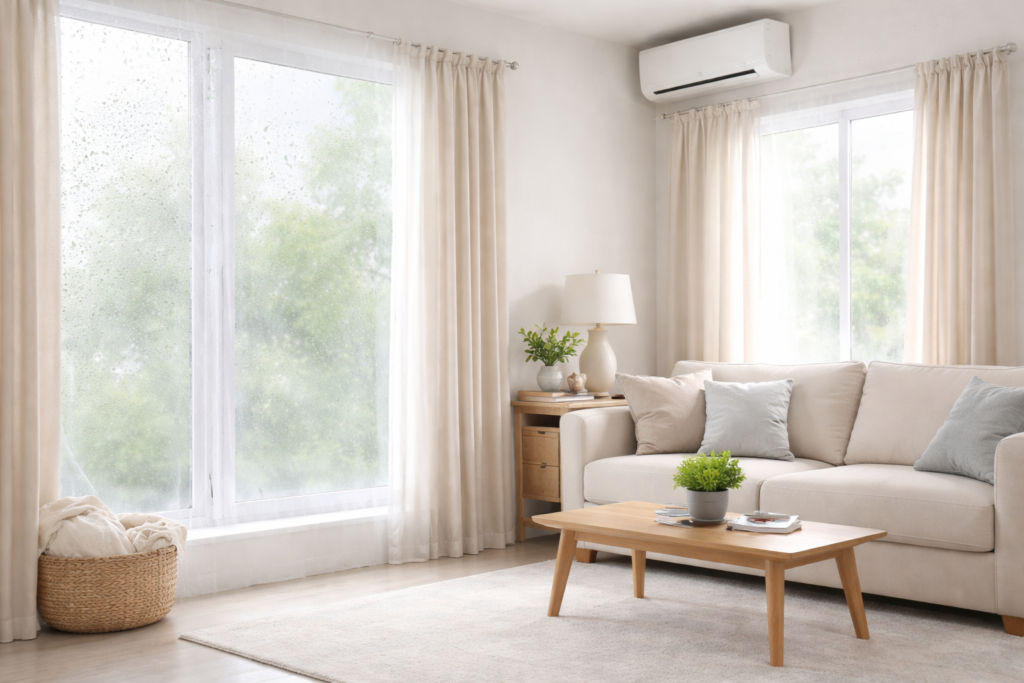
Damp or Sticky Air
Air that feels heavy, sticky, or uncomfortable is often a sign that humidity levels are too high, even if the temperature is cool.
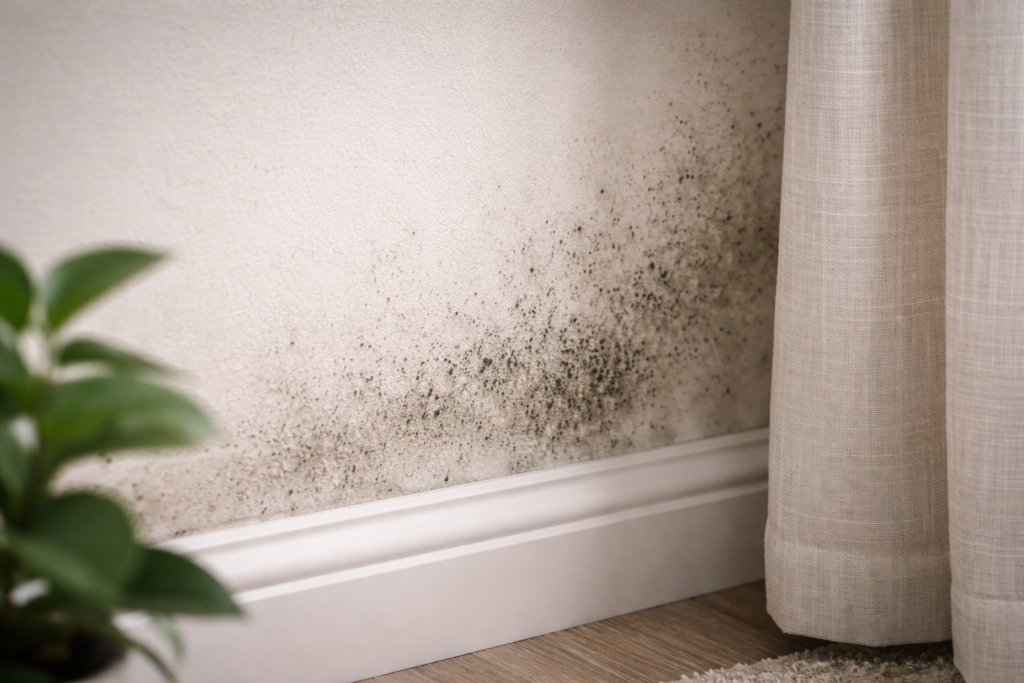
Mold or Mildew Growth
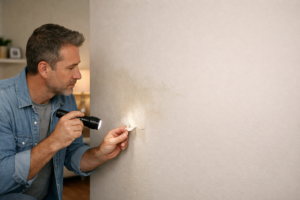
Small spots of mold or mildew can begin to form when humidity remains elevated over time.
Learn more: How to Prevent Mold Growth in a House
What Causes High Humidity in a House
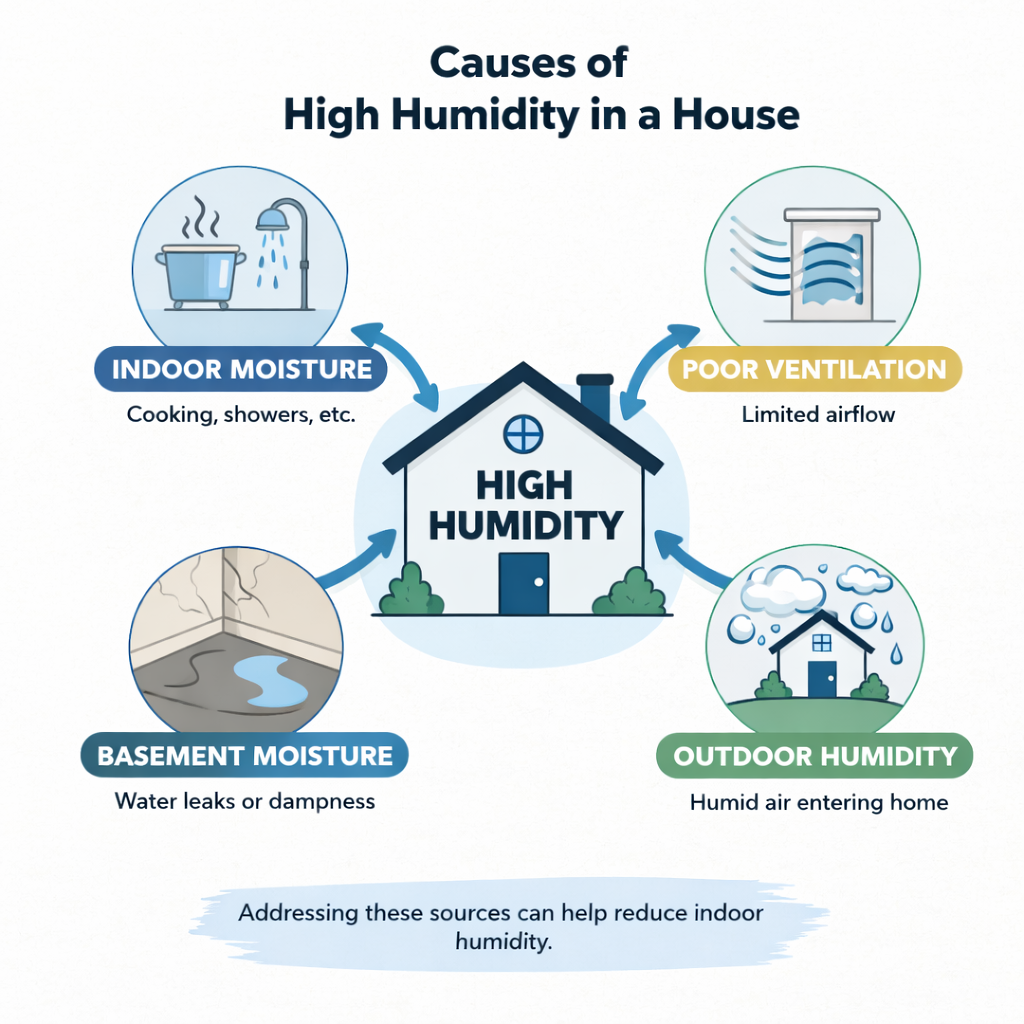
High humidity in a house is usually the result of moisture entering the home or being generated inside without proper removal. In many cases, multiple factors contribute to rising humidity levels.
Indoor Moisture Sources
Everyday activities such as cooking, showering, and laundry release moisture into the air. Without proper ventilation, this moisture can build up over time.
Poor Ventilation
When airflow is limited, humid air becomes trapped inside the home. This prevents moisture from escaping and allows humidity levels to rise.
Basement and Lower-Level Moisture
Moisture often accumulates in lower areas of a home, such as basements. This can increase overall humidity throughout the house.
Learn more: How to Reduce Humidity in a Basement
Outdoor Humidity Entering the Home
Humid outdoor air can enter through leaks, open windows, or poor sealing, adding to indoor moisture levels.
How to Reduce High Humidity in a House
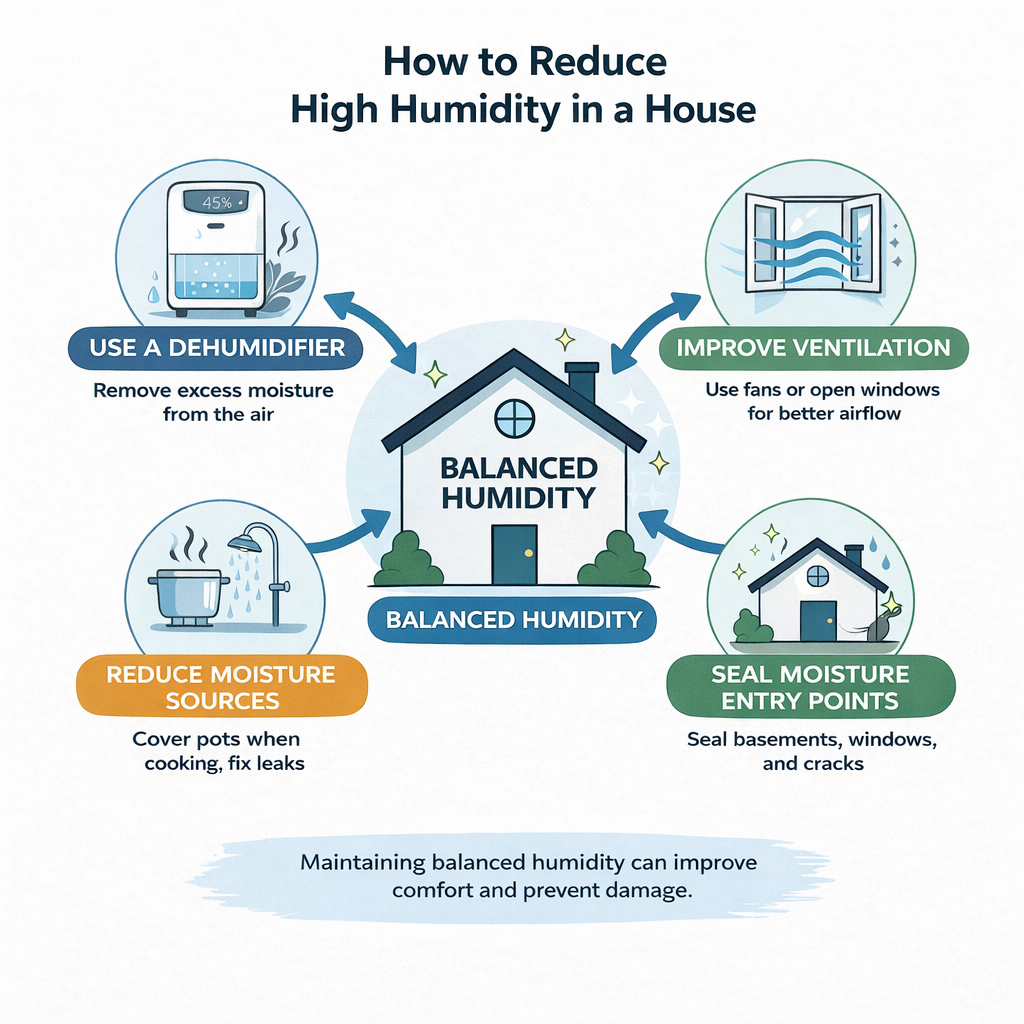
Reducing humidity involves controlling moisture sources and improving airflow so that excess moisture does not build up inside the home. In most cases, combining a few key strategies can significantly lower humidity levels.
Use a Dehumidifier
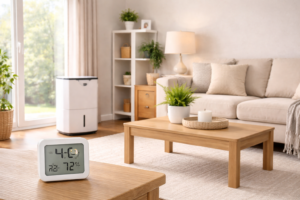
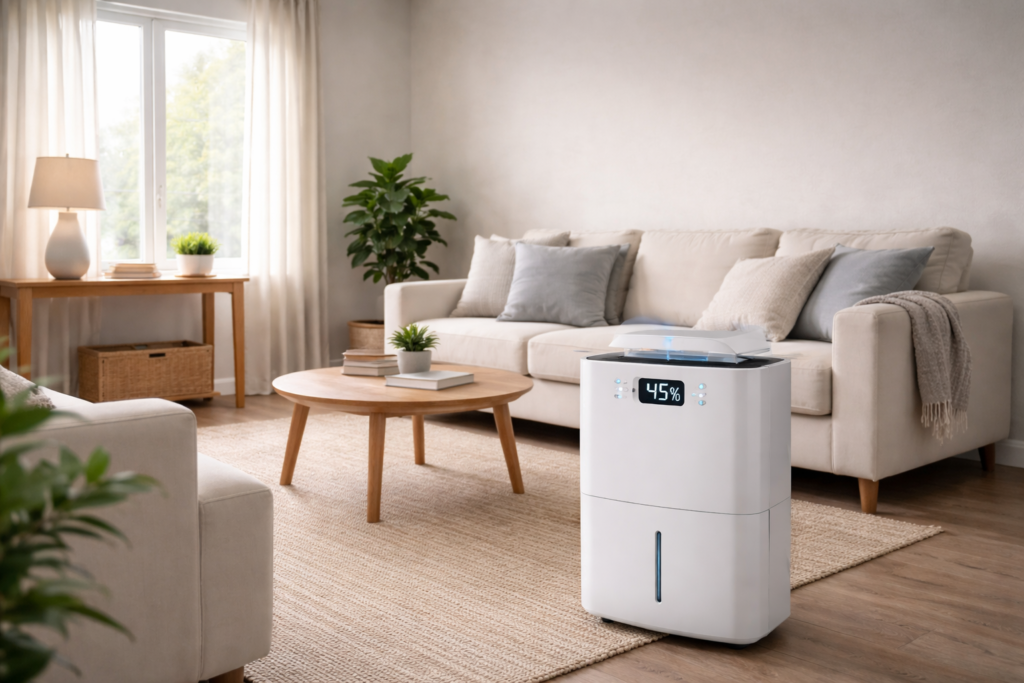
A dehumidifier removes excess moisture from the air and helps maintain balanced humidity levels throughout the home.
For some carefully selected options, please review our guide to the Best Dehumidifiers for Basements.
Improve Ventilation
Increasing airflow allows humid air to escape and fresh air to circulate. This helps prevent moisture from becoming trapped inside the home.
Learn more: How to Improve Ventilation in a House
Reduce Moisture Sources
Managing moisture from daily activities can help lower overall humidity levels. Using exhaust fans and limiting excess moisture helps maintain balance.
Learn more: How to Dry Out a Damp Room
Address Moisture Entry Points
Sealing leaks, improving drainage, and controlling outdoor moisture can help prevent humidity from entering the home.
Conclusion
High humidity in a house can affect comfort, air quality, and the overall condition of the home. While it may not always be immediately noticeable, the signs—such as condensation, musty odors, and damp air—can indicate that moisture levels are too high.
High humidity is often part of a larger issue. Learning how to prevent moisture problems in a house can help address the root cause.
By recognizing these signs early and taking steps to reduce humidity, homeowners can prevent larger problems like mold growth and moisture damage.
The Bottom Line
High humidity is often caused by a combination of moisture sources and limited airflow. Identifying the signs and addressing the underlying causes helps maintain a healthier and more comfortable indoor environment.
Frequently Asked Questions
What are the signs of high humidity in a house?
Common signs include condensation on windows, musty odors, damp or sticky air, and mold or mildew growth.
What humidity level is too high in a house?
Indoor humidity levels above 50–60% are generally considered too high and can lead to moisture problems over time.
Can high humidity cause mold?
Yes. High humidity creates the conditions mold needs to grow, especially when moisture remains on surfaces.
Why does my house feel humid even with AC?
This can happen if the AC system is not removing enough moisture, airflow is limited, or indoor humidity sources are too high.
Learn more: Why Is My House So Humid Even With AC
How do I lower humidity in my house quickly?
Using a dehumidifier, improving ventilation, and reducing moisture sources can help lower humidity levels quickly.
Is high humidity bad for a house?
Yes. Over time, high humidity can lead to mold growth, material damage, and reduced indoor air quality.