
Why Is My House So Humid Even With AC?
It can be frustrating when your home still feels humid even while the air conditioning is running. Many homeowners expect AC to remove moisture along with cooling, but that is not always the case.
In some situations, an air conditioner may lower the temperature without effectively reducing humidity. This can leave the air feeling heavy, uncomfortable, and damp, even when the thermostat is set correctly.
Understanding why your house feels humid with AC is the first step to solving the problem. In most cases, it comes down to airflow, system performance, or excess moisture that is not being properly removed.
Home, Done Right – Perspective
When a house feels humid even with air conditioning, the issue is usually not the temperature—it’s how moisture is being managed. In many cases, improving airflow, reducing indoor moisture sources, or making small adjustments to how the system runs can have a bigger impact than lowering the thermostat.
Why Your House Feels Humid Even With AC
Air conditioning systems are designed to cool indoor air, and they can remove some moisture as part of that process. However, they are not always effective at controlling humidity on their own.
When an AC system runs, it cools air as it passes over the evaporator coil. As the air cools, some moisture is removed. But in certain conditions, this process may not remove enough humidity to keep the home comfortable.
In This Guide
Understanding why your house feels humid even with AC starts with recognizing how cooling and moisture control work together. In many homes, the issue is not the temperature, but how humidity is being managed.
In this guide you will learn how to:
- Understand why AC may not fully remove humidity
- Identify common causes of humidity in a cooled home
- Improve airflow and system performance
- Reduce indoor moisture sources
- Use additional tools to balance humidity levels
These steps can help homeowners create a more comfortable indoor environment and reduce excess moisture.
When Cooling Doesn’t Equal Dehumidifying
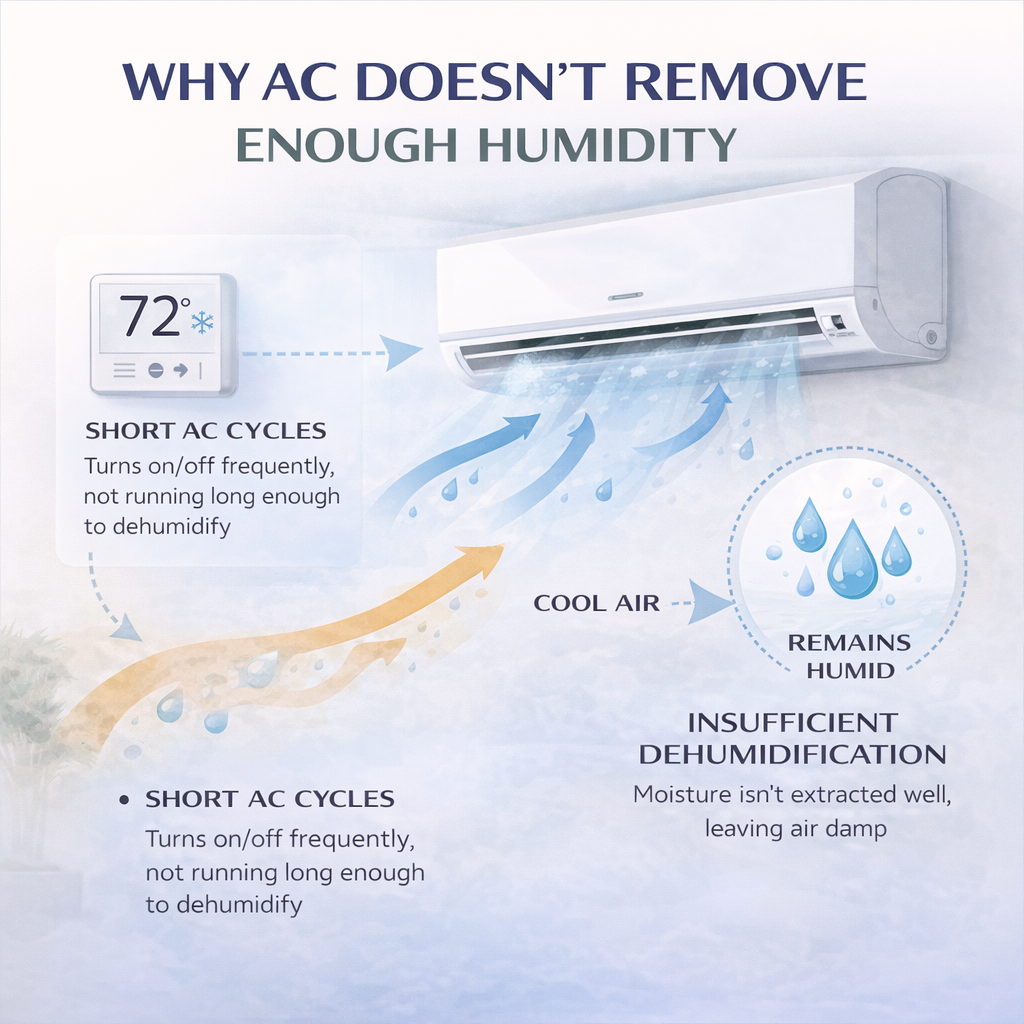
In some homes, the air temperature drops quickly, but moisture remains in the air. This can happen when the AC system does not run long enough or when humidity levels are especially high.
Common Causes of Humidity With AC
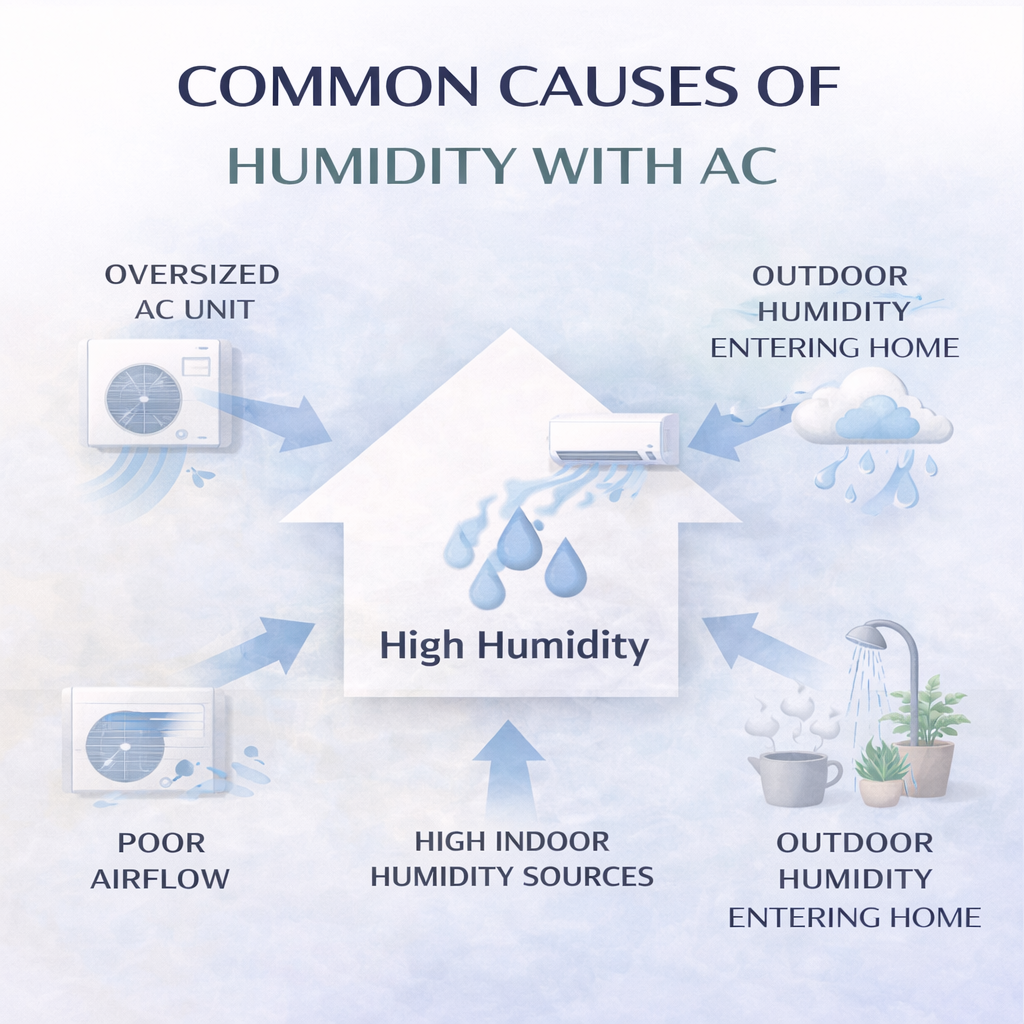
Several factors can cause a home to feel humid even when the air conditioning is running. In many cases, it is a combination of system performance, airflow, and moisture sources.
Oversized AC Unit
If an air conditioner is too large for the space, it may cool the air quickly and shut off before removing enough moisture. This short cycling prevents proper dehumidification.
Poor Airflow
Restricted airflow can prevent the system from circulating air effectively. When air does not move properly through the home, humidity can remain trapped in certain areas.
Learn more: How to Improve Ventilation in a House
High Indoor Humidity
Moisture from everyday activities such as cooking, showers, and laundry can raise indoor humidity levels. If this moisture is not removed, the AC system may struggle to keep up.
Learn more: How to Reduce Humidity in a House
Outdoor Humidity Entering the Home
Humid outdoor air can enter through leaks, openings, or frequent door and window use. This adds moisture faster than the AC system can remove it.
Learn More: Signs of High Humidity in a House
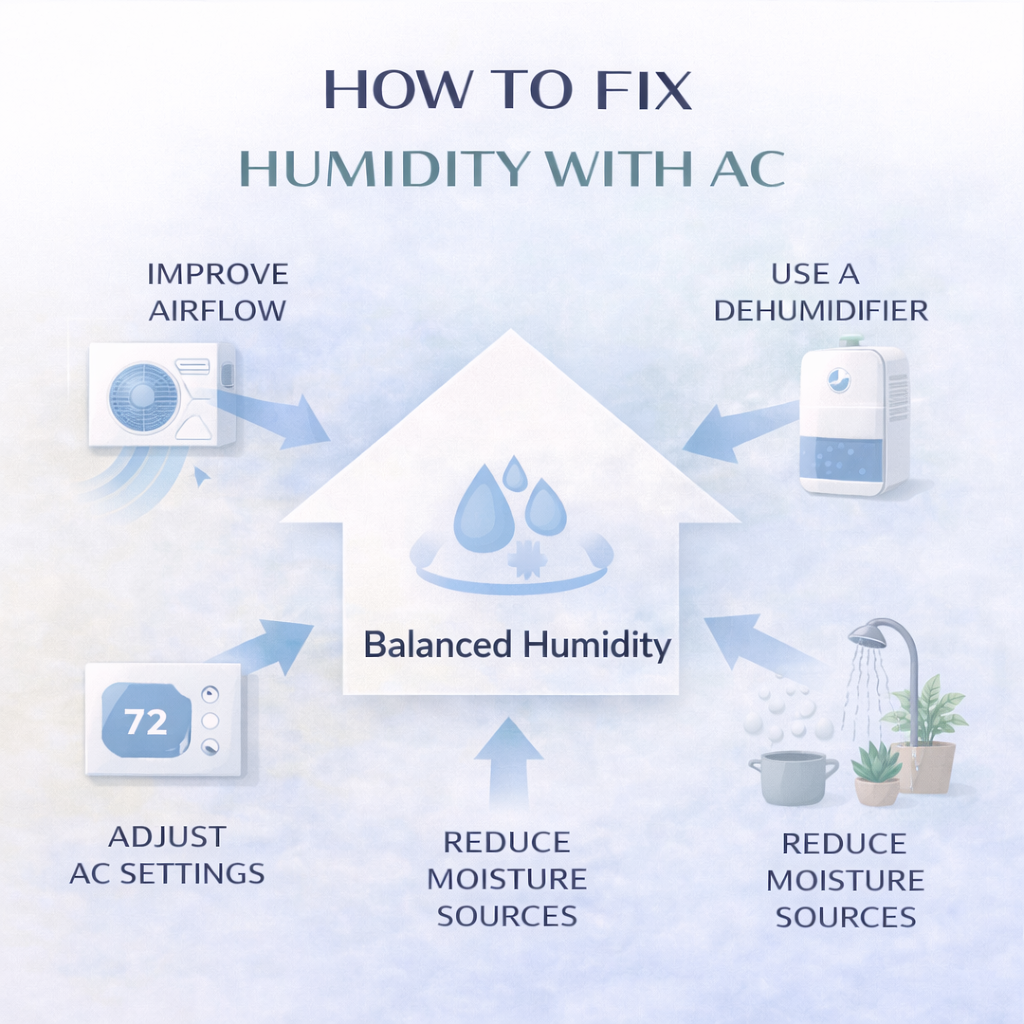
How to Fix Humidity Even With AC
Fixing humidity issues while using air conditioning involves improving how moisture is removed from the air and ensuring the system is working effectively. In many cases, small adjustments can make a noticeable difference.
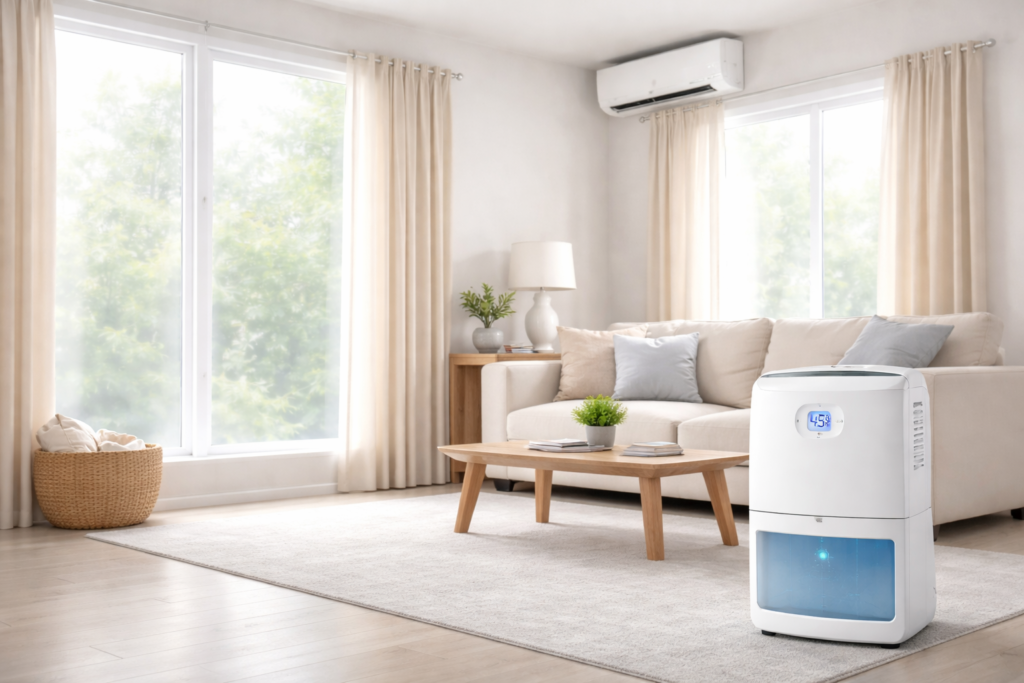
Use a Dehumidifier
A dehumidifier can remove moisture that your AC system does not fully eliminate. This is often one of the most effective ways to balance indoor humidity.
If your air conditioner struggles with damp spaces, consider reading our guide on the Best Dehumidifiers for Basements
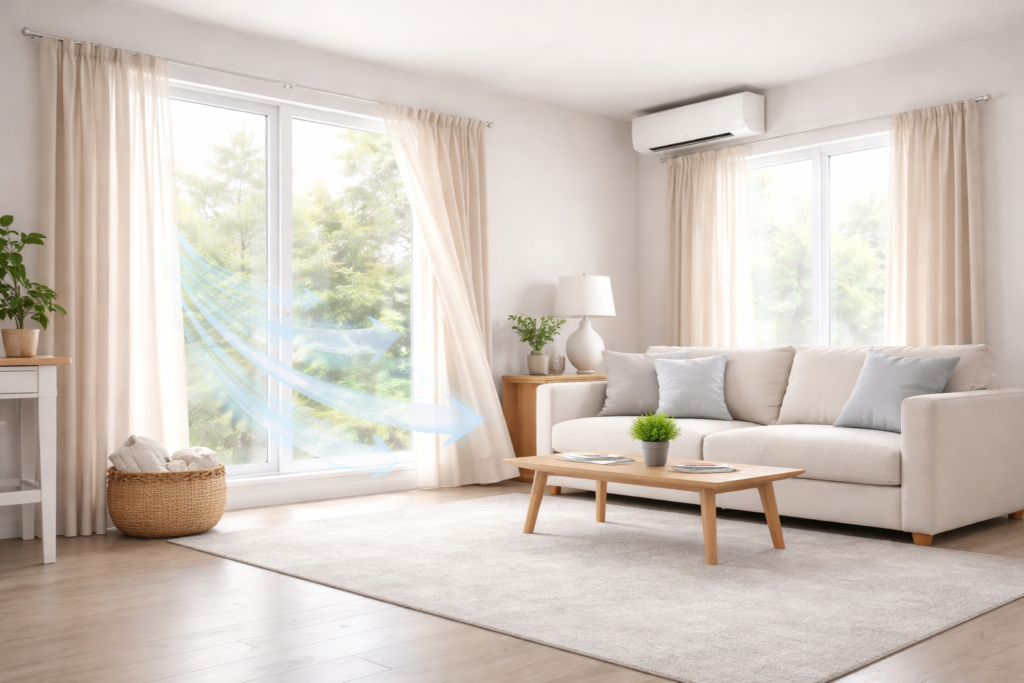
Improve Airflow
Better airflow helps the AC system move air evenly throughout the home. This reduces pockets of humid air and improves overall comfort.
Adjust AC Settings
Running the fan longer or adjusting system settings can help improve moisture removal. Allowing the system to run for longer cycles can increase dehumidification.
Reduce Indoor Moisture Sources
Limiting moisture from daily activities can help reduce the load on your AC system. Using exhaust fans and managing humidity sources can make a big difference.
In some homes, moisture buildup starts in lower areas. Learn how to reduce humidity in a basement to control humidity at the source.
Signs Your AC Is Not Controlling Humidity Properly
In some homes, it can be difficult to tell whether humidity is the issue or just general discomfort. However, there are several clear signs that your AC system may not be removing enough moisture.
Air Feels Sticky or Heavy
Even when the temperature is cool, humid air can feel heavy and uncomfortable. This is often one of the most noticeable signs of excess moisture.
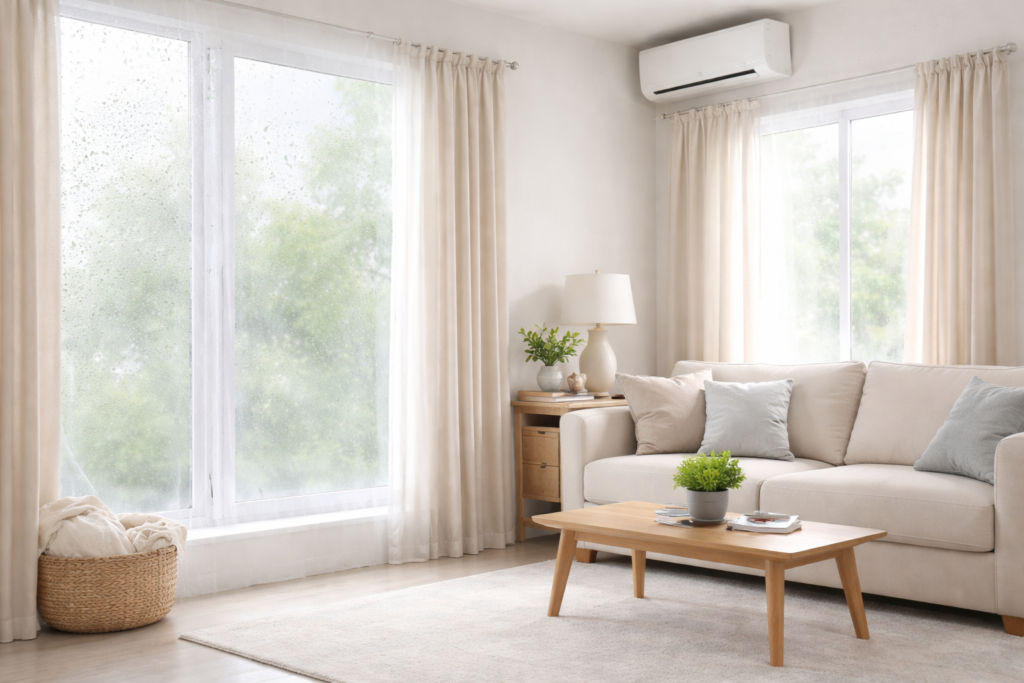
Condensation on Windows or Surfaces
Moisture forming on windows, walls, or other surfaces can indicate that humidity levels are too high.
Learn more: How to Fix Condensation on Windows
Musty Odors
A damp or musty smell can develop when humidity remains high. This can be a sign that moisture is lingering in the air or being absorbed by materials.
Mold or Damp Areas
Persistent humidity can lead to mold growth or damp spots in certain areas of the home.
Learn more: How to Prevent Mold Growth in a House
Conclusion
When a house feels humid even with air conditioning, the issue is usually related to how moisture is being managed rather than how the system is cooling. While AC can remove some humidity, it may not be enough on its own under certain conditions.
Humidity issues are often part of a larger system. Learning how to prevent moisture problems in a house can help address the root cause.
By improving airflow, reducing moisture sources, and using additional tools like dehumidifiers, most homes can achieve a more balanced and comfortable indoor environment.
The Bottom Line
Air conditioning alone does not always control humidity. Addressing airflow, system performance, and moisture sources together is the most effective way to reduce indoor humidity and improve comfort.
Frequently Asked Questions
Why is my house humid even when the AC is on?
Your house can feel humid even with AC running if the system is not removing enough moisture. This can happen due to short cycling, poor airflow, high indoor humidity, or outdoor moisture entering the home.
Does air conditioning remove humidity?
Yes, air conditioning removes some humidity as it cools the air. However, it may not remove enough moisture in very humid conditions or if the system is not running efficiently.
Will a dehumidifier help if my AC isn’t enough?
Yes. A dehumidifier can remove excess moisture that your AC system may miss, helping balance indoor humidity levels and improve comfort.
Can an oversized AC unit cause humidity problems?
Yes. An oversized AC unit can cool the air too quickly and shut off before removing enough moisture, leading to higher indoor humidity.
How do I know if humidity is too high in my house?
Signs include sticky or heavy air, condensation on windows, musty odors, and damp areas. These are all indicators that moisture levels may be too high.
Should I run the AC fan continuously to reduce humidity?
Running the fan continuously can help with airflow, but it may not significantly reduce humidity on its own. In some cases, it can even redistribute moisture if not paired with proper dehumidification.