
How to Prevent Mold Growth in a House
Mold problems in homes rarely start as visible mold. In most cases, mold begins with moisture — humidity, small leaks, condensation, or damp materials that stay wet long enough for mold to develop.
Many homeowners focus on removing mold after it appears, but prevention is usually much easier than cleanup. Many of the same steps used for preventing water damage in your home also help stop mold from developing. When moisture is controlled and airflow is improved, the conditions mold needs to grow are much less likely to exist.
Certain areas of a house are naturally more vulnerable to mold. Bathrooms, basements, kitchens, laundry rooms, and areas around windows or plumbing fixtures often experience higher humidity or hidden moisture.
The good news is that preventing mold growth in a house usually comes down to a few simple habits: managing humidity, fixing leaks quickly, improving ventilation, and keeping an eye on areas where moisture tends to collect. Taking steps to prevent moisture problems in a house can significantly reduce the risk of mold.
Home, Done Right – Perspective
Mold prevention is rarely about a single product or quick fix. In most homes, it comes down to controlling moisture, improving airflow, and catching small problems before they have time to turn into larger issues.
Why Mold Grows in a House
Mold grows when the right environmental conditions exist for long enough. In most homes, the key factor is moisture. When surfaces stay damp or humidity remains high, mold spores that are naturally present in the air can begin to grow on common building materials.
Homes contain many materials that mold can feed on. Drywall, wood, dust, insulation, and even some fabrics provide organic material that mold uses as a food source. When these materials become damp and stay that way, mold can begin developing surprisingly quickly.
Many mold problems begin in places where moisture is not immediately obvious. Slow plumbing leaks, condensation on cold surfaces, or poor ventilation in bathrooms and kitchens can allow moisture to build up over time without being noticed.
Once mold starts growing, it tends to spread until the moisture problem is addressed. That is why prevention focuses on removing the conditions mold needs rather than simply cleaning visible mold.
What Mold Needs to Grow
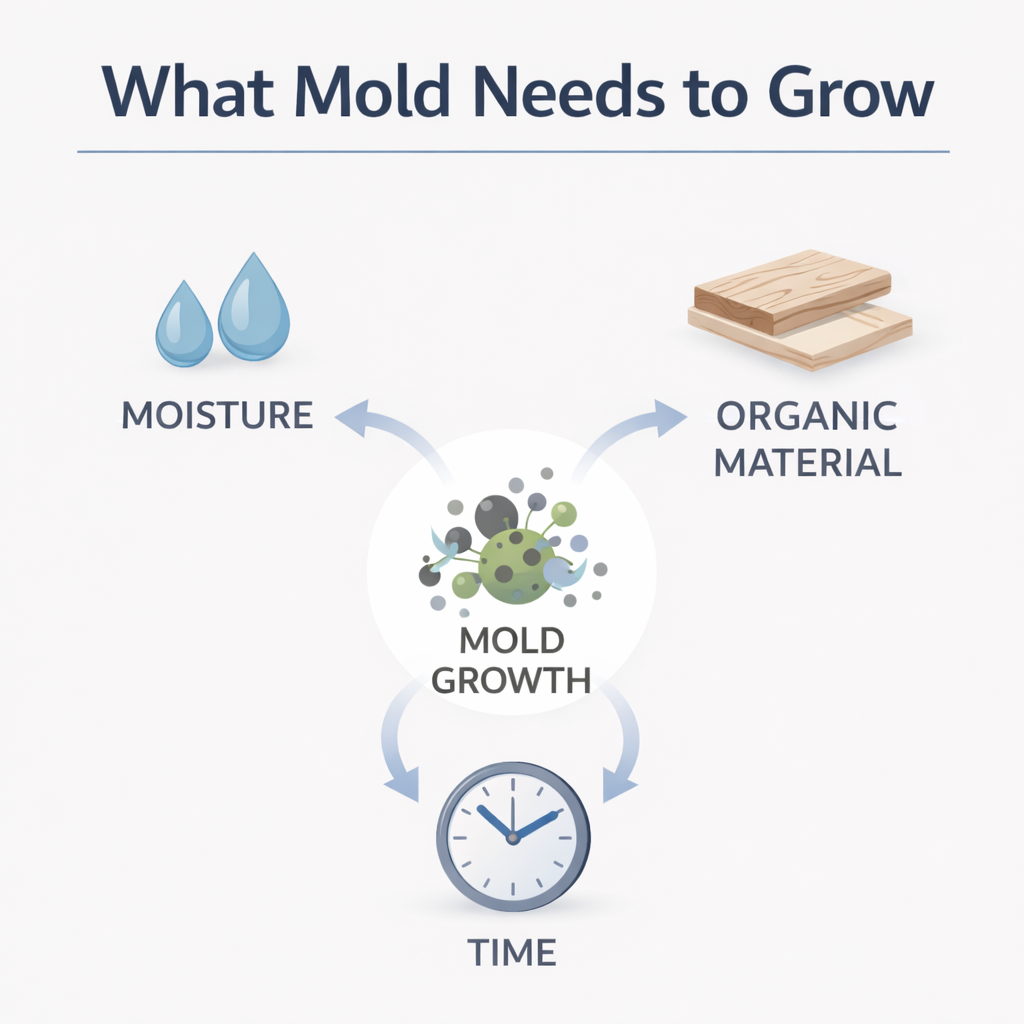
Mold growth typically requires three basic conditions:
- Moisture from humidity, leaks, condensation, or water damage
- Organic material such as drywall, wood, dust, or fabrics
- Time for mold spores to settle and begin growing
When these three conditions exist together, mold can begin forming within a short period of time.
In This Guide
Preventing mold growth in a house comes down to controlling moisture and addressing problem areas before they have time to develop into larger issues.
In this guide you will learn how to:
- Keep indoor humidity within a healthy range
- Identify and fix small water leaks before they cause damage
- Improve ventilation in bathrooms, kitchens, and laundry areas
- Prevent condensation on windows, pipes, and walls
- Keep basements and lower levels dry
- Dry wet materials quickly after spills or leaks
- Monitor common trouble spots where mold often begins
Understanding these key areas can help homeowners reduce moisture problems and lower the chances of mold developing inside the home.
Control Indoor Humidity
Indoor humidity plays a major role in whether mold develops inside a house. When humidity levels stay too high, moisture can collect on surfaces, soak into materials, and create the damp conditions mold needs to grow.
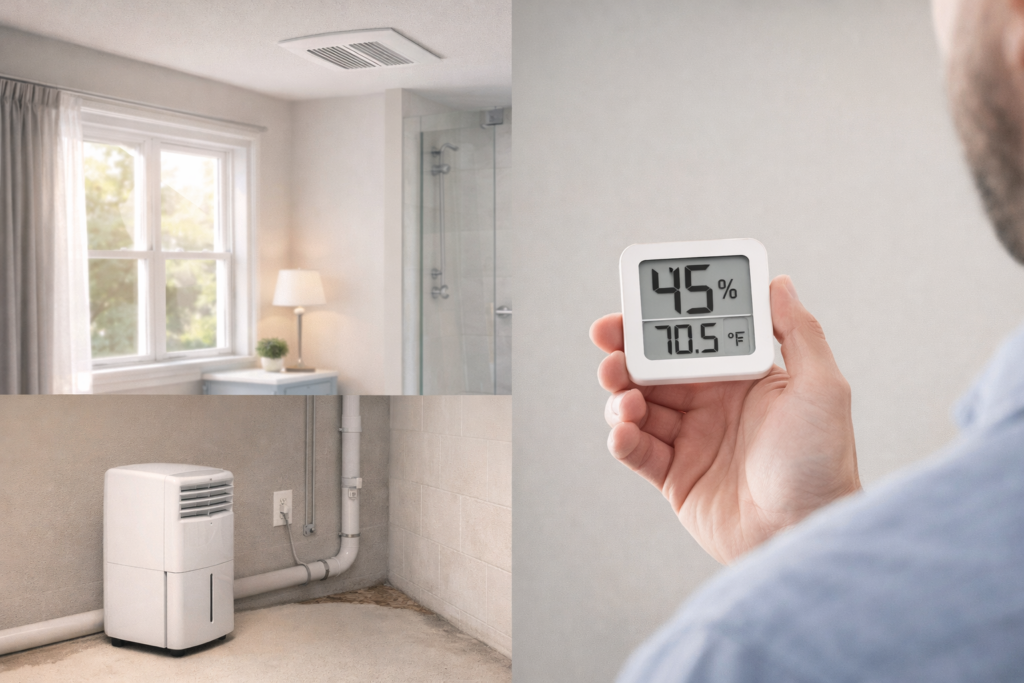
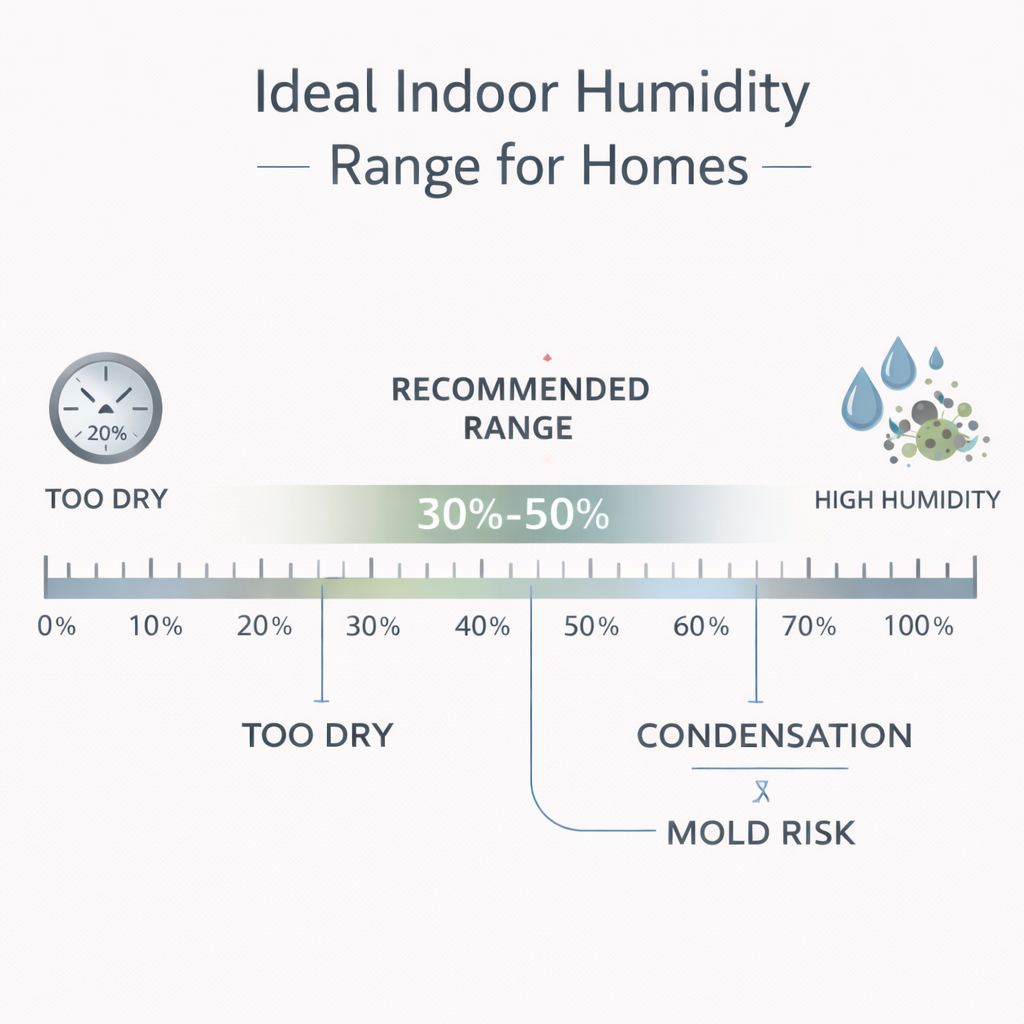
Most homes are healthiest when indoor humidity stays between 30% and 50%. When humidity regularly rises above this range, the risk of condensation, damp materials, and mold growth increases.
What Humidity Level Helps Prevent Mold
Keeping humidity in the recommended range helps reduce the amount of moisture that can settle on walls, ceilings, windows, and other surfaces. Many homeowners use a simple digital hygrometer to monitor humidity levels inside the home.
Humidity levels can vary by season and location within the house. Basements, bathrooms, and laundry areas often experience higher humidity than other living spaces.
Why High Humidity Creates Mold Risk
When warm air holds large amounts of moisture, that moisture can condense when it contacts cooler surfaces. Windows, exterior walls, and pipes are common places where condensation forms.
Over time, repeated condensation can dampen drywall, wood trim, and window frames. If the moisture remains long enough, mold spores can begin growing on these surfaces.
When a Dehumidifier Helps Most
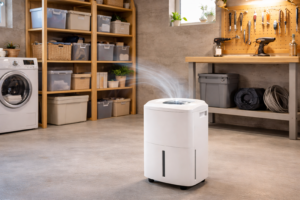
In homes where humidity frequently rises above the recommended range, a dehumidifier can help remove excess moisture from the air. This is especially useful in basements, lower levels, and other spaces that tend to stay damp.
Running a dehumidifier during humid seasons can significantly reduce the conditions that allow mold to develop.
Preventing mold often requires controlling humidity, but some homeowners also benefit from using an air purifier. Learn when to use each in our Air Purifier vs. Dehumidifier guide.
Fix Water Leaks Quickly
Water leaks are one of the most common causes of mold growth inside homes. Even small leaks can allow moisture to build up in hidden areas where materials stay damp long enough for mold to develop.
Leaks are especially problematic because they often occur inside walls, under sinks, or around plumbing fixtures where they may go unnoticed for long periods of time. Catching and repairing these problems early is one of the most effective ways to prevent mold.
Addressing leaks quickly is one of the most effective ways to prevent mold. Many of the same steps used for preventing water damage in your home also help eliminate the moisture conditions that allow mold to grow.
Plumbing Leaks
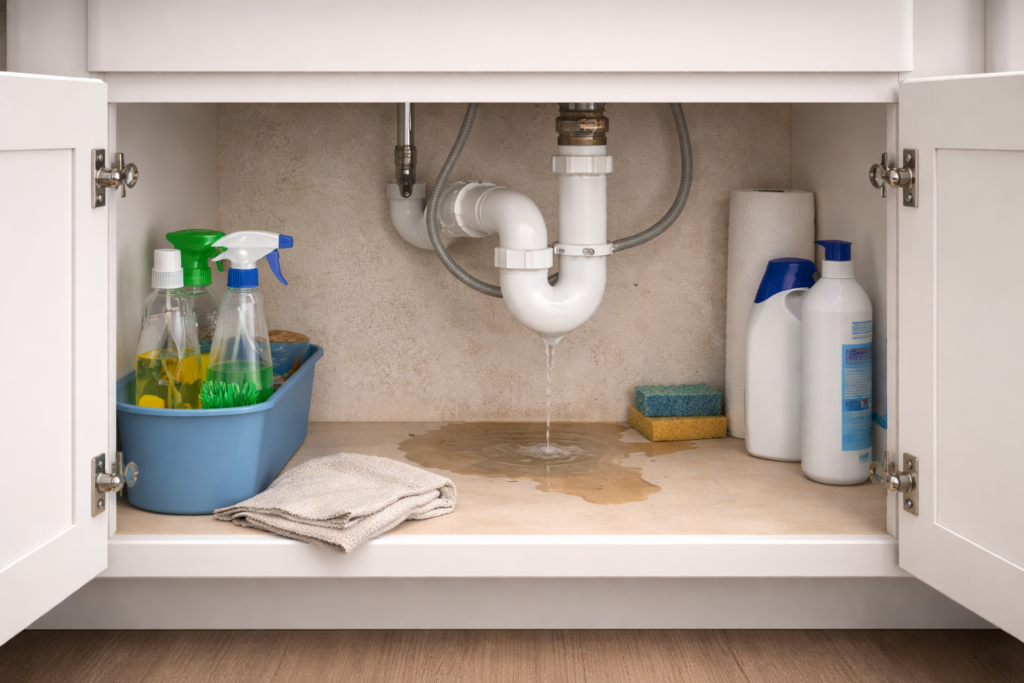
Plumbing leaks frequently occur under sinks, behind toilets, around water supply lines, or near appliances like dishwashers and washing machines. Slow drips or loose connections can allow water to collect inside cabinets or wall cavities.
Checking these areas occasionally for moisture, stains, or musty odors can help homeowners catch small plumbing leaks before they lead to larger problems.
Roof Leaks
Roof leaks can allow water to enter the attic or run down inside walls. Over time, this moisture can soak insulation, wood framing, or drywall.
Signs of a roof leak may include ceiling stains, damp attic insulation, or discoloration near roof penetrations and vents.
Window and Siding Leaks
Water can also enter a home through poorly sealed windows, damaged siding, or deteriorating exterior caulking. When rainwater gets behind exterior materials, it can dampen framing and drywall inside the wall.
Regular exterior inspections and maintaining seals around windows and doors can help prevent these types of leaks.
Why Small Leaks Become Bigger Problems
Many mold issues begin with leaks that seem minor at first. A small drip or slow seep can keep materials damp for weeks or months without being noticed.
Fixing leaks quickly and drying wet materials as soon as possible helps prevent the conditions that allow mold to grow.
Improve Ventilation in High-Moisture Areas
Certain rooms in a house naturally produce more moisture than others. Bathrooms, kitchens, and laundry rooms release water vapor into the air through activities like showering, cooking, and washing clothes.
Without proper ventilation, this moisture can build up and increase indoor humidity. Over time, trapped moisture can lead to condensation on surfaces and create conditions where mold can begin to grow.
Bathrooms
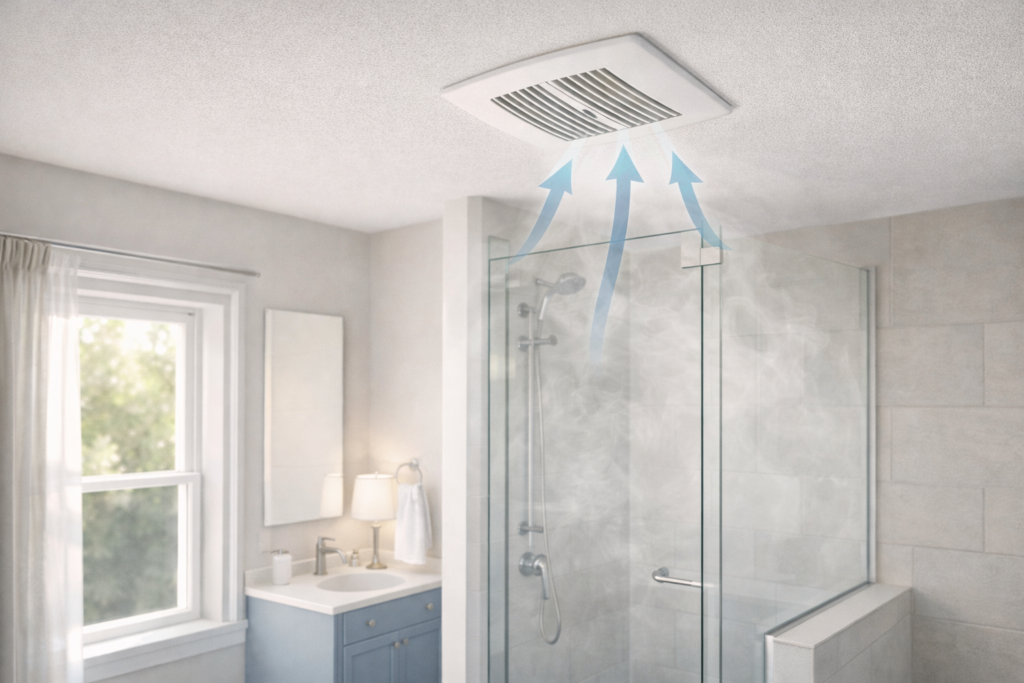
Bathrooms are one of the most common places for mold to develop because showers and baths release large amounts of steam into the air. If that moisture is not removed, it can collect on walls, ceilings, and around fixtures.
Using an exhaust fan during and after showers helps remove humid air from the room. Running the fan for several minutes after bathing allows excess moisture to leave the space before it settles on surfaces.
Kitchens
Cooking, boiling water, and using dishwashers can add moisture to indoor air. Kitchen exhaust fans or range hoods help remove steam and humidity before it spreads through the home.
When possible, vented range hoods that exhaust air outside are more effective than recirculating models.
Laundry Rooms
Washing machines and clothes dryers can also release moisture into the air. Properly vented dryers and adequate room ventilation help prevent humidity from building up in these spaces.
Basements and Crawl Spaces
Lower levels of homes often have limited airflow and naturally higher humidity. Improving ventilation and controlling moisture in these areas can reduce the risk of mold forming on walls, floors, or stored items.
Prevent Condensation on Surfaces
Condensation forms when warm, humid air comes into contact with cooler surfaces. When this happens inside a home, moisture can collect on windows, pipes, walls, and other materials. If these surfaces stay damp repeatedly, they can create conditions where mold begins to grow.
Managing indoor humidity and improving airflow can significantly reduce condensation problems throughout the house.
Windows
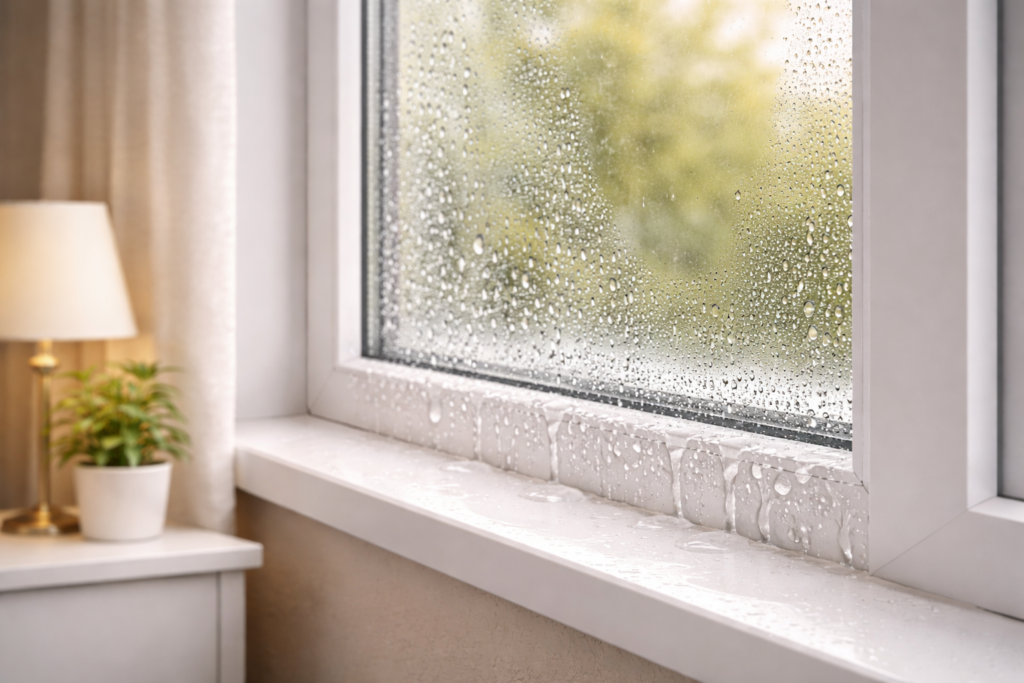
Windows are one of the most common places where condensation appears, especially during colder months. Warm indoor air contains moisture, and when it contacts the cooler glass surface, water droplets can form.
Over time, repeated condensation can dampen window frames, trim, and nearby drywall.
Cold Water Pipes
Cold water pipes can also develop condensation when humid air contacts the cooler pipe surface. This often occurs in basements, utility rooms, or under sinks where humidity levels may be higher.
Insulating exposed pipes can help reduce the amount of condensation that forms.
Exterior Walls
Exterior walls may become cooler than interior air, particularly in poorly insulated homes. When humid indoor air reaches these surfaces, condensation can occur inside wall cavities or on interior surfaces.
Maintaining proper humidity levels helps reduce the likelihood of moisture forming on these cooler areas.
HVAC Ducts
Air conditioning ducts can also create condensation when warm air contacts the cooler metal surface of the ductwork. This is most common in humid climates or areas with limited insulation around ducts.
Proper duct insulation and humidity control can help prevent moisture buildup in these systems.
Keep Basements and Lower Levels Dry
Basements and lower levels of homes are often more vulnerable to moisture problems than other areas. Because they are partially or fully below ground, they can be affected by groundwater, humidity, and limited airflow.
If moisture is not controlled in these spaces, materials such as drywall, wood framing, and stored items can remain damp long enough for mold to begin growing.
Why Basements Are High-Risk
Basements tend to stay cooler than the rest of the home. When warm, humid air enters the space and contacts cooler surfaces, condensation can occur. In addition, groundwater pressure around the foundation can allow moisture to seep through small cracks or porous concrete.
These conditions make basements one of the most common places where mold problems develop.
Drainage and Grading Basics
Good exterior drainage plays an important role in keeping basements dry. The ground around the home should slope away from the foundation so rainwater flows away instead of collecting near the walls.
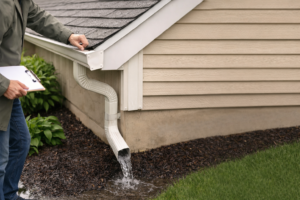
Keeping gutters and downspouts clear and directing downspout discharge away from the house can also help prevent water from entering the basement.
Sump Pumps, Vapor Issues, and Dehumidification
In some homes, sump pumps help remove water that collects around the foundation. Vapor barriers and proper sealing can also reduce moisture entering from the surrounding soil.
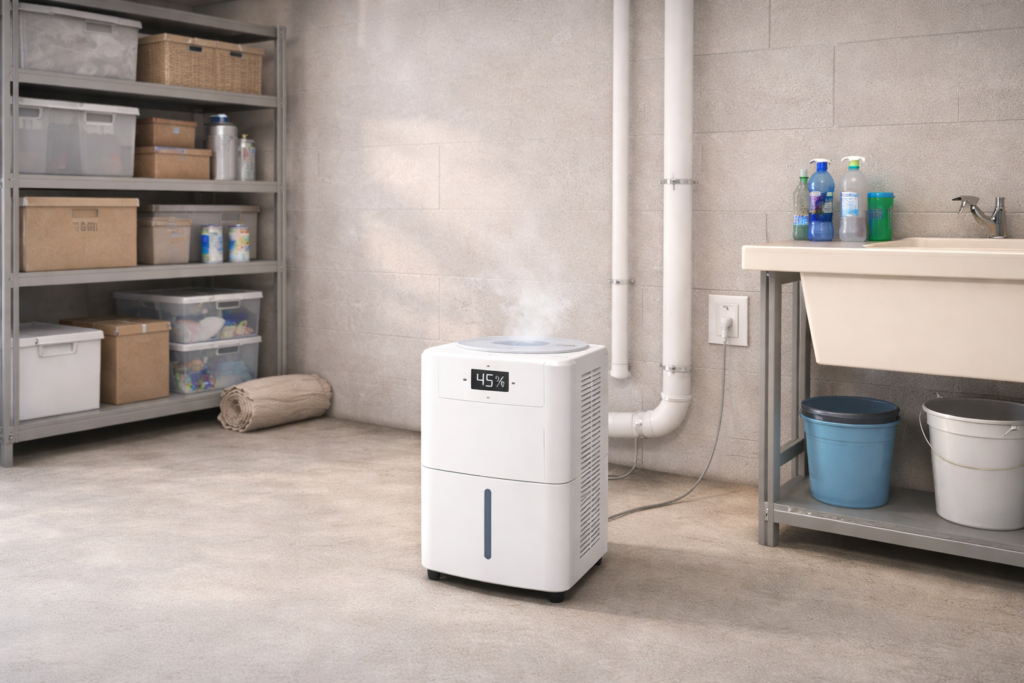
Even with good drainage, basements may still have higher humidity levels than the rest of the home. Running a dehumidifier in the basement can help keep moisture under control.
Dry Wet Materials as Fast as Possible
When materials inside a home become wet, the speed at which they dry plays a major role in whether mold develops. Mold spores are always present in the air, and when moisture remains on surfaces for an extended period of time, those spores can begin growing.
Drying wet materials quickly reduces the chance that mold will take hold. The faster moisture is removed, the less opportunity mold has to develop.
Carpets
Carpets can absorb large amounts of water during spills, leaks, or flooding. If they remain damp for too long, moisture can reach the padding underneath and create an environment where mold grows easily.
Using fans, dehumidifiers, and good airflow can help carpets dry more quickly. In cases where carpets remain saturated for long periods, replacement may sometimes be necessary.
Drywall
Drywall is particularly vulnerable to moisture because it contains paper backing and other organic materials that mold can feed on. When drywall becomes wet, it should be dried as quickly as possible.
If drywall stays saturated for too long, mold can develop inside the material or behind the wall.
Wood and Trim
Wood framing, baseboards, and trim can also absorb moisture. Although wood can sometimes dry without damage, repeated exposure to moisture can lead to staining, warping, and mold growth.
Improving airflow and reducing humidity helps wood materials dry more efficiently.
When Materials May Need Replacement
In some cases, materials that have remained wet for extended periods cannot be fully dried or cleaned. When mold has penetrated deeply into porous materials, replacement may be the safest option to fully resolve the issue.
Watch the Most Common Mold Trouble Spots
Even when humidity and ventilation are well managed, certain areas of a home are more likely to develop hidden moisture problems. Regularly checking these locations can help homeowners catch small issues before mold begins to grow.
Many mold problems develop in places that are rarely inspected, so occasional checks in these areas can make a big difference.
Under Sinks
Kitchen and bathroom sink cabinets often contain plumbing connections that can slowly leak over time. Even small drips can allow moisture to collect inside the cabinet and create a damp environment.
Looking for water stains, damp cabinet floors, or musty odors can help identify early signs of a problem.
Around Tubs and Showers
Bathrooms frequently experience high humidity and direct water exposure. Cracked caulking, loose tiles, or worn grout can allow moisture to seep behind walls or under flooring.
Checking seals around tubs and showers and maintaining caulking can help prevent water from reaching hidden areas.
Around Windows
Windows are common locations for condensation, especially during colder months. Repeated moisture around window frames can dampen surrounding materials and eventually allow mold to form.
Keeping humidity under control and wiping away condensation when it appears can reduce this risk.
Behind Appliances
Appliances such as refrigerators, dishwashers, and washing machines can occasionally develop leaks or condensation issues. Because these areas are often hidden from view, moisture can go unnoticed.
Moving appliances occasionally to check for dampness or water stains can help prevent long-term moisture problems.
In Attics Near Roof Penetrations
Roof vents, chimneys, and other roof penetrations can sometimes allow small amounts of water into the attic. Damp insulation or staining on wood framing may indicate a slow roof leak.
Periodic attic inspections can help identify these issues early before mold develops.
Habits That Help Prevent Mold Long-Term
Preventing mold in a house is often less about major repairs and more about consistent home maintenance habits. Small routine checks and simple daily practices can greatly reduce the chances of moisture problems developing.
Over time, these habits help homeowners notice early warning signs and address small issues before they become larger mold problems.
Regular Inspections
Walking through the home occasionally to look for signs of moisture can help catch issues early. Checking under sinks, around plumbing fixtures, near windows, and in basements or utility rooms can reveal small leaks or condensation problems.
Early detection often makes repairs simpler and prevents moisture from lingering long enough for mold to develop.
Seasonal Moisture Checks
Different seasons can introduce different moisture risks. Humid summer weather can increase indoor humidity, while cold winter temperatures can lead to condensation on windows and exterior walls.
Adjusting ventilation, using dehumidifiers when needed, and monitoring humidity levels during seasonal changes can help keep moisture under control.
Using Exhaust Fans Properly
Exhaust fans in bathrooms and kitchens are most effective when they run long enough to remove excess moisture. Turning on fans during showers or cooking and leaving them on for several minutes afterward helps humid air leave the home.
Consistent use of exhaust fans reduces the buildup of humidity in rooms where moisture is regularly produced.
Avoiding Indoor Moisture Buildup
Some everyday activities can add extra moisture to indoor air. Drying clothes indoors, running hot showers without ventilation, or allowing standing water to remain on surfaces can all increase humidity levels.
Being mindful of these sources of moisture and improving airflow throughout the home helps prevent conditions that allow mold to grow.
Many homeowners find it helpful to follow a seasonal home maintenance checklist to keep track of moisture risks and routine inspections throughout the year.
Signs Your Prevention Plan Isn’t Working
Even with good prevention habits, moisture problems can sometimes develop inside a home. Recognizing the early warning signs allows homeowners to address issues before mold spreads or causes larger damage.
In many cases, mold appears after moisture problems have been present for some time. Learning to recognize the signs of hidden water damage in homes can help homeowners identify these issues before mold spreads.
Many mold problems start with subtle clues that moisture is building up somewhere in the house.
Musty Odors
A persistent musty smell is often one of the first indicators that mold may be present. This odor typically develops when moisture has been trapped in materials for an extended period of time.
If a musty smell appears in a specific area of the home, it may be worth checking nearby surfaces, cabinets, or hidden spaces for moisture or mold growth.
Condensation
Frequent condensation on windows, pipes, or other cool surfaces may indicate that indoor humidity levels are too high. When condensation appears regularly, it can dampen nearby materials and increase the risk of mold development.
Monitoring humidity levels and improving ventilation can help reduce repeated condensation.
Staining or Discoloration
Dark spots, water stains, or unusual discoloration on ceilings, walls, or around fixtures may indicate moisture problems. These stains sometimes appear before mold becomes clearly visible.
Investigating the source of the moisture quickly can help prevent further damage.
Peeling Paint or Warped Materials
Excess moisture can cause paint to peel, drywall to bubble, or wood trim to warp. These changes in building materials often occur when moisture has been present for a long time.
When these signs appear, it is important to identify and correct the moisture source before mold begins to develop.
Conclusion
Preventing mold growth in a house starts with understanding how moisture behaves inside a home. Mold typically develops when humidity stays too high, water leaks go unnoticed, or materials remain damp for long periods of time.
By controlling humidity, fixing leaks quickly, improving ventilation, and keeping an eye on moisture-prone areas, homeowners can greatly reduce the conditions that allow mold to grow.
Simple maintenance habits and regular inspections often make the biggest difference. Catching small moisture problems early helps prevent them from turning into larger mold issues that are more difficult and expensive to address.
Regular inspections and routine upkeep are one of the best ways to prevent moisture problems. Following an essential home maintenance checklist can help homeowners catch leaks, humidity issues, and ventilation problems before mold begins to develop.
The Bottom Line
Preventing mold growth in a house comes down to managing moisture. When humidity is controlled, ventilation is improved, and leaks are repaired quickly, the environment mold needs to grow becomes much less likely to exist.
With consistent moisture control and routine home maintenance, most mold problems can be prevented before they start.
Frequently Asked Questions
What causes mold to grow in a house?
Mold grows when moisture, organic material, and time come together. In homes, this usually happens because of high humidity, leaks, condensation, or damp materials that stay wet long enough for mold to develop.
What humidity level helps prevent mold growth?
In most homes, keeping indoor humidity between 30% and 50% helps reduce the risk of mold growth. Higher humidity levels can increase condensation and create damp conditions that allow mold to grow.
Where does mold usually grow in a house?
Mold commonly grows in bathrooms, basements, kitchens, laundry rooms, around windows, under sinks, behind appliances, and in attics where moisture tends to collect.
Can a small leak cause mold?
Yes. Even a small leak can keep building materials damp for weeks or months, which can create the conditions mold needs to grow. Fixing leaks quickly is one of the best ways to prevent mold problems.
How can I prevent mold in a basement?
To help prevent mold in a basement, keep humidity under control with a dehumidifier, improve drainage around the foundation, maintain gutters and downspouts, and address any signs of seepage or condensation quickly.
Does condensation on windows mean there is a mold risk?
It can. Repeated condensation on windows may indicate indoor humidity is too high. Over time, that moisture can dampen surrounding materials and increase the risk of mold growth if it is not addressed.