
Signs of Hidden Water Damage in Homes
Water damage does not always appear immediately after a leak or moisture problem begins. In many homes, water can slowly accumulate behind walls, under flooring, or inside ceilings long before visible damage becomes obvious. Because moisture can travel through building materials, the first signs of a problem may appear far from the original source.
Hidden water damage often develops gradually as small plumbing leaks, roof issues, drainage problems, or humidity-related moisture go unnoticed over time. While these issues may begin as minor concerns, they can eventually weaken building materials, damage finishes, and create conditions that allow mold or mildew to grow.
For homeowners, recognizing the early warning signs of hidden water damage is one of the most effective ways to prevent larger repairs. Subtle clues such as stains, musty odors, peeling paint, or warped materials can often indicate that moisture is present where it should not be.
In this guide, we’ll explore the most common signs of hidden water damage, where these problems often occur in a home, and how homeowners can investigate potential moisture issues before they become more serious. Understanding how to prevent moisture problems in a house can help catch these issues earlier.
Home, Done Right – Perspective
Hidden water damage is often difficult to detect because moisture can travel through walls, ceilings, and flooring before becoming visible. By the time clear damage appears, the original source of the problem may have been present for quite some time.
Many moisture issues begin with small leaks, drainage problems, or excess humidity that gradually affect surrounding materials. Because these problems often develop slowly, homeowners may only notice subtle changes such as discoloration, damp smells, or slight warping of surfaces.
Understanding these early warning signs can help homeowners identify potential problems sooner and take action before moisture causes more extensive damage inside the home.
How Hidden Water Damage Develops
Hidden water damage often begins when moisture enters areas of the home that are not regularly visible or inspected. Because many plumbing lines, structural cavities, and insulation layers are located behind walls, beneath floors, or above ceilings, water can remain undetected for long periods of time.
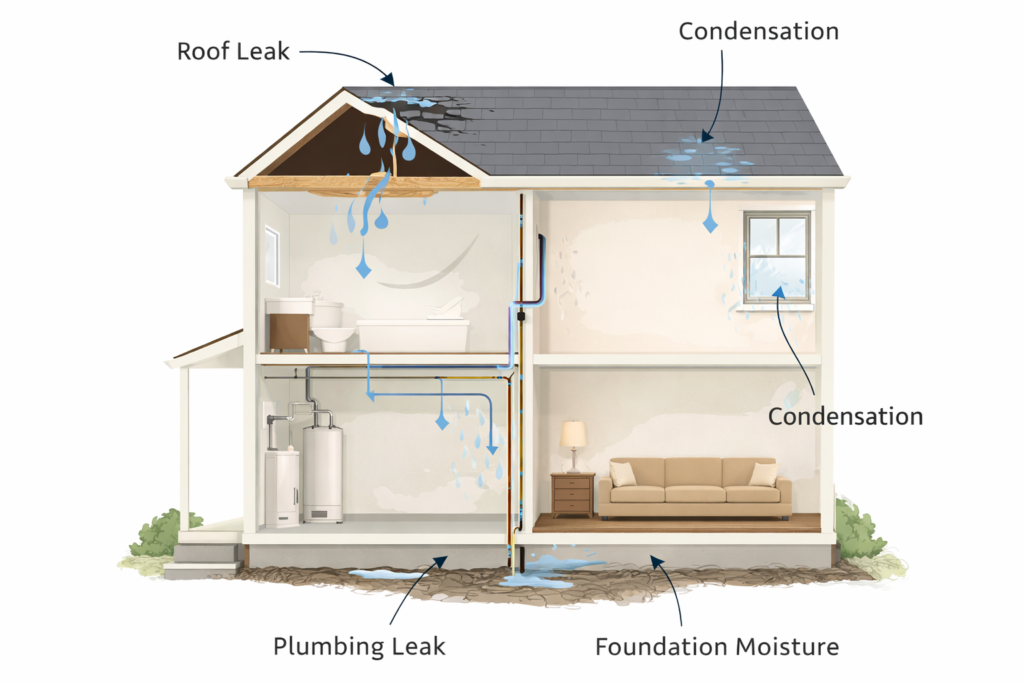
Small leaks from plumbing connections, roof penetrations, or appliance supply lines are common starting points. In other cases, moisture may enter the home from outside through foundation cracks, drainage problems, or poorly sealed exterior materials. Over time, this moisture can spread through porous materials such as drywall, wood framing, and insulation.
As these materials absorb water, they may slowly weaken or begin to change appearance. Paint may discolor, flooring may warp, and musty odors may develop as moisture lingers in enclosed spaces.
Because water often travels before becoming visible, the location where damage appears may not always be where the problem originated. Understanding how hidden water damage develops helps homeowners know where to look when investigating possible moisture problems.
Understanding how moisture enters a home can also help homeowners reduce the risk of future problems. Our guide on How to Prevent Water Damage in Your Home explains several ways to protect key areas of the home from water intrusion.
In This Guide
Hidden water damage often develops slowly and may remain unnoticed until visible damage begins to appear. This guide explains the most common warning signs that may indicate moisture problems inside a home, even when the source of the leak is not immediately obvious.
You’ll learn how to recognize subtle clues that water may be present behind walls, beneath flooring, or in ceilings, including:
- water stains or discoloration on walls and ceilings
- musty odors or persistent damp smells
- peeling paint or bubbling finishes
- warped flooring or soft drywall
- unexpected mold or mildew growth
- unexplained increases in water bills
The guide also explores the areas of the home where hidden water damage most commonly develops and how homeowners can safely investigate potential moisture issues before they become more serious.
Common Signs of Hidden Water Damage
Hidden water damage rarely appears all at once. In many homes, the first signs are subtle and may develop gradually as moisture continues to affect building materials over time. Because water can travel through walls, ceilings, and floors, these warning signs may appear in areas that are not directly connected to the original source of the leak.
Homeowners who understand what to look for are often able to identify potential moisture problems earlier. Small changes in appearance, unusual odors, or unexpected changes in materials can sometimes indicate that water is present behind surfaces where it cannot be easily seen.
The following signs are among the most common indicators that hidden water damage may be developing somewhere in the home.
Water Stains or Discoloration
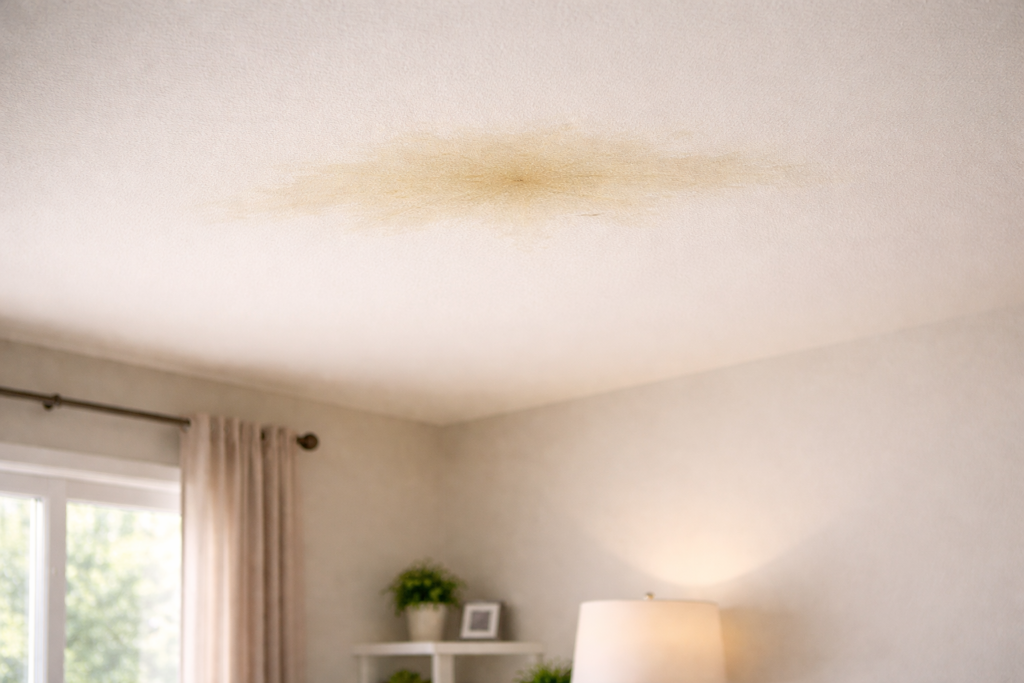
One of the most recognizable signs of hidden water damage is discoloration on ceilings or walls. Water stains often appear as yellow, brown, or darker patches that gradually spread over time as moisture moves through drywall or ceiling materials.
These stains may develop below roof leaks, plumbing lines, or bathroom fixtures located on upper floors. Even if the area appears dry, a stain can indicate that moisture has entered the material at some point and may still be present behind the surface.
When water stains appear suddenly or continue to expand, it is often a sign that the underlying source of moisture has not yet been resolved.
Musty Odors or Damp Smells
A persistent musty odor inside a home is often one of the earliest indicators that hidden moisture may be present. These smells typically develop when damp materials such as drywall, wood, insulation, or carpeting remain wet for extended periods of time.
Musty odors are commonly associated with mold or mildew growth, which can occur when moisture becomes trapped in areas with limited airflow. Basements, crawl spaces, bathrooms, and areas behind walls are common places where these conditions may develop.
Even when visible mold is not present, a damp or earthy smell may indicate that moisture has accumulated somewhere nearby. Because odors can travel through air vents, wall cavities, or floor openings, the smell may not always originate from the exact location where it is detected.
When musty odors appear without an obvious source, it may be helpful to inspect nearby plumbing fixtures, walls, ceilings, or basement areas for additional signs of moisture.
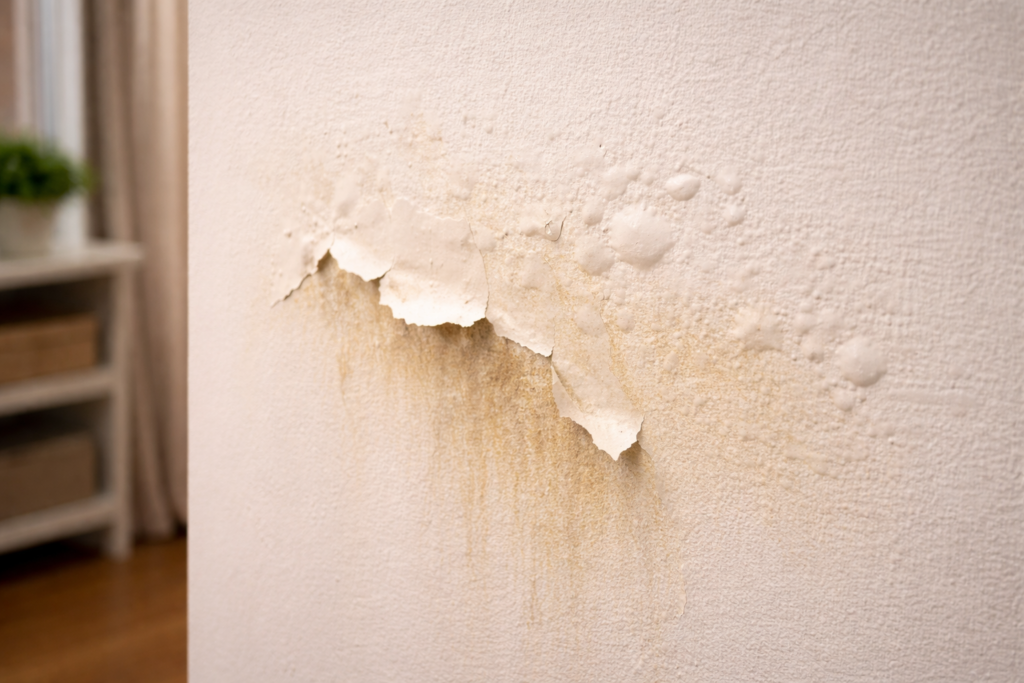
Peeling Paint or Bubbling Surfaces
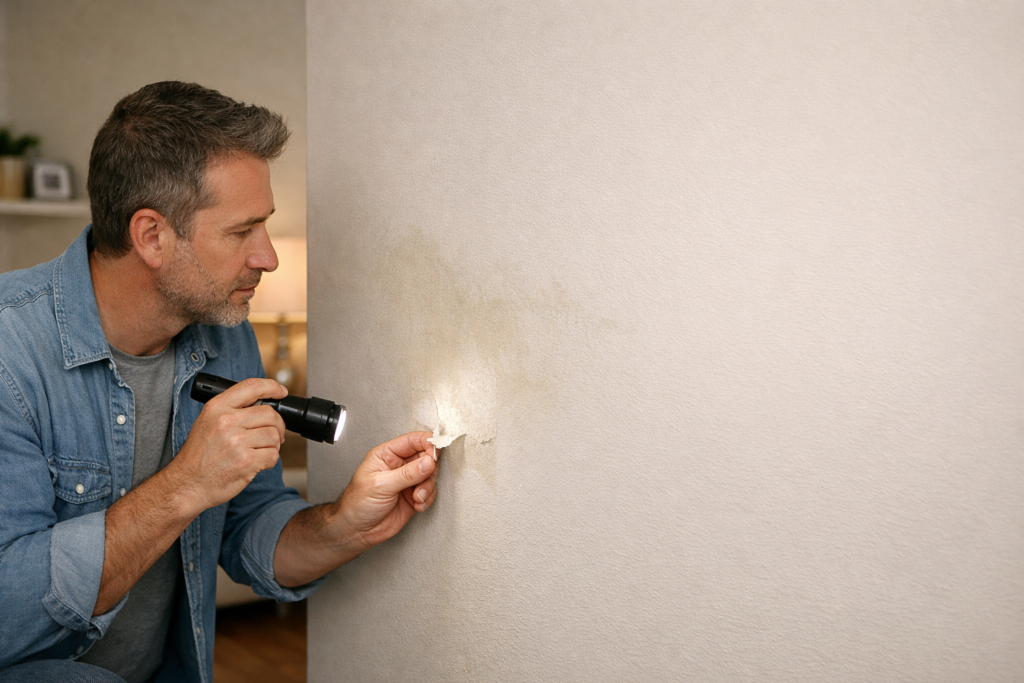
Paint and other surface finishes can react quickly when moisture begins to affect the materials beneath them. When water seeps into drywall, plaster, or wood surfaces, it can cause paint to lose adhesion and separate from the wall.
This often appears as bubbling, blistering, or peeling paint. In some cases, the surface may feel slightly soft or uneven where moisture has affected the underlying material.
These changes are commonly seen near bathrooms, kitchens, plumbing fixtures, or areas below roof leaks. Even small amounts of moisture trapped behind a surface can gradually cause paint or wallpaper to deteriorate.
If peeling or bubbling finishes appear in areas that are not normally exposed to water, it may indicate that hidden moisture is present behind the wall or ceiling.
Warped Flooring or Soft Materials
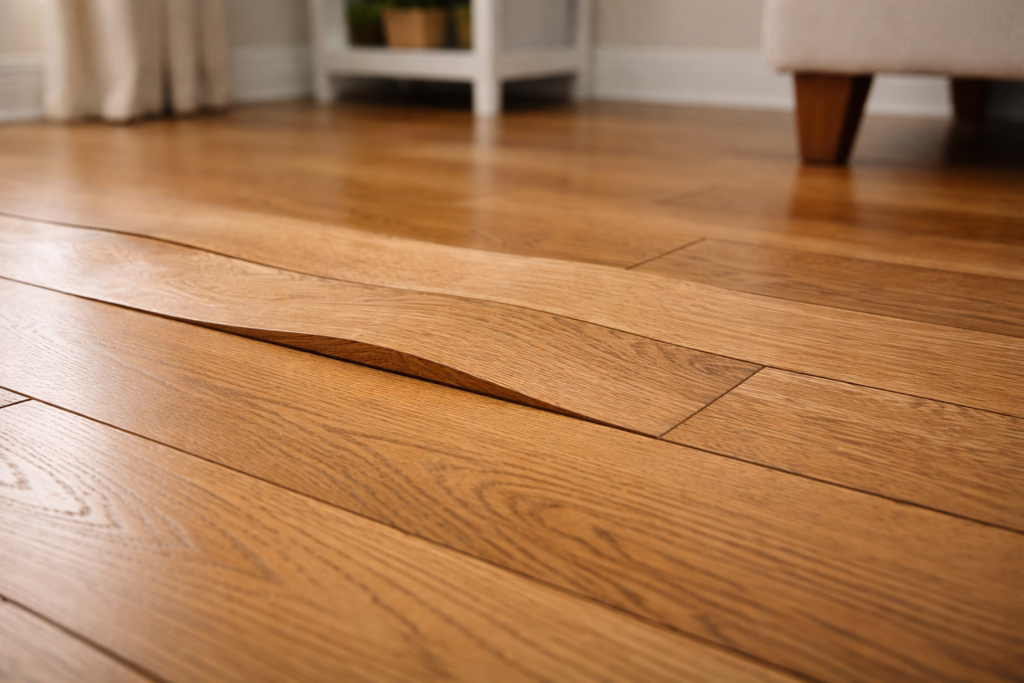
Moisture can gradually affect flooring materials and other structural components when water remains present for extended periods of time. Many building materials—such as wood, laminate, and certain types of subflooring—can absorb moisture and begin to change shape as they expand or weaken.
Warped or uneven flooring is a common sign that water may be present beneath the surface. Homeowners may notice boards that begin to cup or lift, sections of flooring that feel soft underfoot, or areas where flooring materials no longer sit evenly.
In some cases, drywall or baseboards may also feel soft or slightly swollen if moisture has accumulated behind the wall. These changes may occur slowly, especially when water is leaking in small amounts over time.
When flooring or wall materials begin to warp, soften, or change shape without an obvious cause, it may indicate that hidden moisture is affecting the materials below the surface.
Unexpected Mold or Mildew Growth
Mold and mildew often develop when moisture remains trapped in an area for an extended period of time. Because mold thrives in damp environments, its presence can sometimes indicate that hidden water damage exists behind walls, beneath flooring, or inside ceilings.
In some cases, homeowners may notice small dark spots forming on walls, ceilings, window frames, or around baseboards. These spots may appear green, black, or gray depending on the surface and environmental conditions.
Controlling moisture is also one of the best ways to prevent mold growth in a house, especially in areas like basements and bathrooms.
Mold growth may also occur in areas that are not frequently visible, such as behind furniture, inside closets, or near poorly ventilated spaces. Even when only a small amount of mold is visible, it can signal that moisture is present somewhere nearby.
When mold or mildew appears unexpectedly in areas that are not typically exposed to water, it is often a good idea to investigate surrounding surfaces and nearby plumbing fixtures to determine whether hidden moisture may be present.
Unexpected Increases in Water Bills
An unexplained increase in a home’s water bill can sometimes indicate that water is escaping somewhere within the plumbing system. While seasonal changes in water use are normal, a noticeable spike in usage without a clear explanation may suggest that a hidden leak is present.
Small plumbing leaks can occur inside walls, beneath floors, or behind fixtures where they may remain unnoticed for long periods of time. Even a slow leak can allow a significant amount of water to escape over time, gradually affecting nearby building materials.
Homeowners who monitor their monthly water usage may be able to identify these issues earlier. If water consumption increases unexpectedly, it may be helpful to check visible plumbing fixtures, supply lines, and appliances for signs of moisture.
In some cases, turning off all water fixtures and checking the home’s water meter can help determine whether water is still flowing somewhere in the system. If the meter continues to move when no water is being used, it may indicate that a leak exists within the plumbing system.
Where Hidden Water Damage Often Occurs
Hidden water damage often develops in areas of the home where moisture can accumulate without being immediately visible. Because many plumbing lines, roofing components, and drainage systems are located inside walls or above ceilings, water may remain unnoticed until visible damage appears.
Certain parts of the home are more susceptible to hidden moisture problems because they contain plumbing fixtures, water-using appliances, or areas where condensation can occur. Understanding where these problems most commonly develop can help homeowners know where to look when investigating potential water damage.
Many of these areas benefit from regular inspections. Our guide on What Every Homeowner Should Inspect Annually highlights several parts of the home that should be checked each year.
The following areas are among the most common places where hidden water damage may occur.
Attics
Attics are one of the most common places for hidden water damage to develop because they sit directly beneath the roof. Small roof leaks, damaged flashing, or condensation from poor ventilation can allow moisture to enter attic spaces over time.
Because attics are not frequently inspected, water damage may go unnoticed until stains appear on ceilings or insulation becomes damp. Homeowners may also notice mold growth, wet insulation, or discoloration on roof decking when inspecting the attic.
Periodic attic inspections—especially after heavy storms—can help identify small roof leaks before they cause significant interior damage.
Bathrooms
Bathrooms contain several plumbing fixtures that are frequently exposed to water, making them another common location for hidden moisture problems. Leaks may develop around sinks, toilets, bathtubs, or shower plumbing connections.
Water can also escape behind walls when seals around tubs or showers deteriorate over time. Because bathroom plumbing is often concealed behind finished surfaces, small leaks may not be noticed until visible damage appears on nearby walls or ceilings.
Regularly checking areas around fixtures and maintaining seals and caulking can help prevent moisture from accumulating in bathroom walls and floors.
Kitchens
Kitchens contain several appliances and plumbing connections that can become sources of hidden water damage. Sinks, dishwashers, refrigerators with water lines, and garbage disposals all rely on water supply connections that can wear out or loosen over time.
Small leaks under sinks or behind appliances may go unnoticed, especially when cabinets or appliances hide the affected area. Moisture can gradually accumulate inside cabinets or beneath flooring materials before visible damage becomes apparent.
Regularly checking under sinks and occasionally inspecting behind appliances can help homeowners identify slow leaks before they begin to affect surrounding materials.
Basements
Basements are particularly vulnerable to hidden water damage because they sit below ground level and are surrounded by soil that can retain moisture. Drainage problems around the foundation, cracks in basement walls, or high humidity levels can allow moisture to enter these spaces gradually.
In some cases, homeowners may notice damp walls, musty odors, or condensation forming on surfaces. These signs may indicate that water is entering the basement or that humidity levels are too high.
Because basements often contain structural components and mechanical systems, identifying moisture problems early can help prevent long-term damage.
Behind Appliances
Appliances that use water can sometimes leak slowly without being immediately visible. Washing machines, dishwashers, refrigerators with water lines, and water heaters all rely on hoses and connections that may eventually wear out or loosen.
When leaks occur behind appliances, water may collect beneath flooring materials or spread into nearby walls before being noticed. Because these areas are rarely inspected, hidden moisture can sometimes remain present for long periods of time.
Occasionally checking behind or around appliances for signs of moisture can help homeowners identify small leaks before they develop into more serious water damage.
How Homeowners Can Investigate Hidden Water Damage
When signs of hidden water damage appear, homeowners can often take a few simple steps to determine whether moisture may be present and where the problem might be originating. While some situations require professional inspection, many early investigations simply involve observing key areas of the home more closely.
One of the first steps is to examine nearby plumbing fixtures, appliances, and exterior areas that could be allowing water to enter the structure. Checking under sinks, around water heaters, and near supply lines can sometimes reveal small leaks that may not have been obvious at first.
Homeowners can also pay attention to areas where water might travel from another location. For example, stains on ceilings may originate from plumbing on the floor above or from a roof issue in the attic. Similarly, damp walls in basements may be connected to drainage or foundation problems outside the home.
In some cases, monitoring the home’s water meter can help determine whether a hidden plumbing leak may be present. Turning off all water fixtures and checking whether the meter continues to move can sometimes indicate that water is escaping somewhere within the system.
When moisture problems appear persistent or the source of the issue cannot be identified, it may be helpful to consult a qualified professional who can perform a more detailed inspection.
Following a structured routine such as an Essential Home Maintenance Checklist can make it easier to monitor these areas and identify potential problems early.
Understanding Hidden Water Damage Helps Prevent Bigger Problems
Hidden water damage often begins with small leaks or moisture issues that develop slowly over time. Because these problems may remain out of sight for long periods, the first warning signs are often subtle changes in surfaces, odors, or building materials.
By learning to recognize these early indicators, homeowners can often investigate potential issues before moisture causes more extensive damage. Paying attention to stains, musty smells, warped materials, or unexplained increases in water usage can help reveal problems that might otherwise remain hidden.
Routine inspections and simple maintenance habits also play an important role in preventing water damage. When homeowners stay aware of how water moves through and around their home, they are better prepared to address potential issues before they become costly repairs.
Many moisture issues develop because small maintenance tasks are overlooked. Understanding Common Home Maintenance Mistakes can help homeowners avoid many preventable water-related problems.
The Bottom Line
Hidden water damage can be difficult to detect, but the warning signs are often present if homeowners know what to look for. Changes such as water stains, peeling finishes, musty odors, warped materials, or unexpected increases in water usage can all indicate that moisture may be present behind surfaces.
Recognizing these early clues allows homeowners to investigate potential problems before water damage spreads to other parts of the home. Regular maintenance, routine inspections, and prompt attention to small issues can significantly reduce the risk of more serious damage over time.
By staying attentive to these signs, homeowners can protect their homes from many of the problems that develop when moisture remains hidden for too long