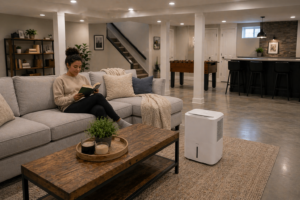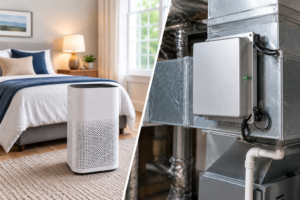


Air Purifier vs. Dehumidifier: Which One Does Your Home Need?
If you’re trying to create a healthier, more comfortable home, you’ve probably come across both air purifiers and dehumidifiers. While these appliances are often mentioned together, they solve very different problems. Choosing the right one depends on whether you’re dealing with poor indoor air quality, excess humidity, allergens, mold concerns, or a combination of these issues.
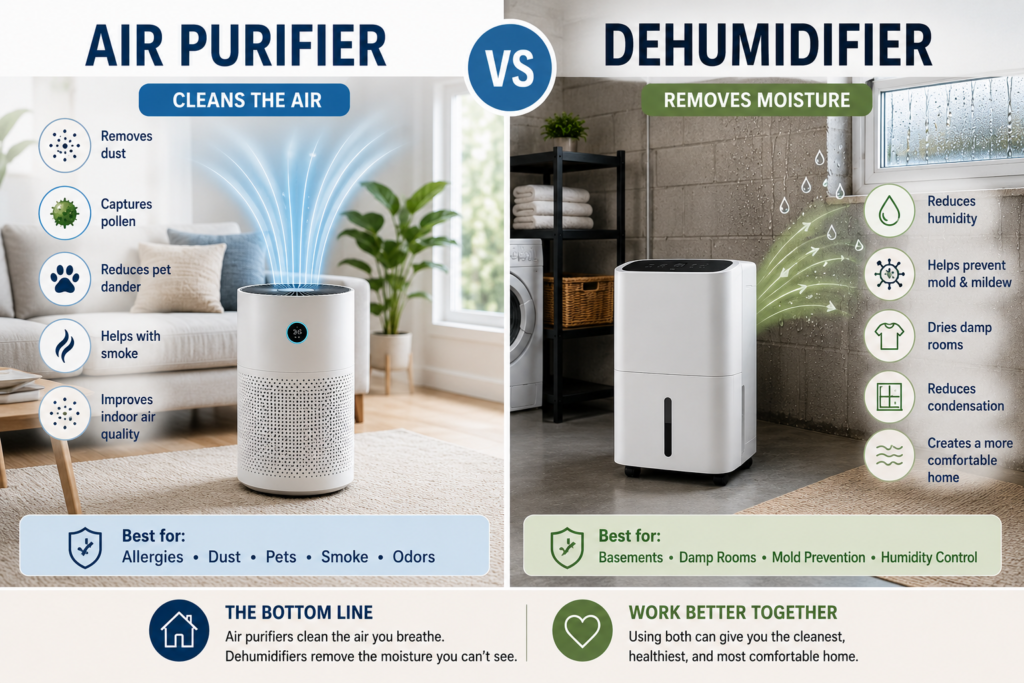
An air purifier is designed to remove airborne particles such as dust, pollen, pet dander, smoke, and other pollutants from the air you breathe. A dehumidifier, on the other hand, removes excess moisture from the air, helping to reduce humidity levels and create conditions that are less favorable for mold, mildew, and musty odors.
In this guide, we’ll compare air purifiers and dehumidifiers side by side, explain how each works, highlight their key differences, and help you determine which solution is best for your home. In many cases, you’ll discover that the best choice isn’t one or the other—it may be using both together to create a cleaner, healthier indoor environment.
Disclosure: This article may contain affiliate links. If you purchase through these links, we may earn a commission at no additional cost to you. This helps support Home Done Right and allows us to continue creating helpful homeowner resources.
Quick Answer
If your goal is to reduce dust, pollen, pet dander, smoke, or other airborne particles, an air purifier is the better choice. If you’re dealing with excess humidity, condensation, musty odors, or damp spaces, a dehumidifier is the right solution.
Many homeowners benefit from using both. An air purifier improves indoor air quality by filtering airborne contaminants, while a dehumidifier controls moisture levels that can contribute to mold, mildew, and uncomfortable living conditions. Understanding the problem you’re trying to solve is the key to choosing the right appliance.
Home, Done Right – Perspective
Air purifiers and dehumidifiers are often confused because both can improve the comfort of your home, but they solve completely different problems. In our view, the best choice depends on the root cause of your concern, not simply which appliance is more popular.
If you’re dealing with dust, allergens, pet dander, or poor indoor air quality, an air purifier is usually the better investment. If excess humidity, condensation, dampness, or musty odors are the issue, a dehumidifier is typically the right solution. For many homeowners, using both together provides the healthiest and most comfortable indoor environment.
Air Purifier vs. Dehumidifier at a Glance
Although air purifiers and dehumidifiers are both designed to improve your home’s indoor environment, they accomplish this in very different ways. An air purifier focuses on cleaning the air by removing airborne contaminants, while a dehumidifier controls moisture levels by removing excess humidity from the air.
For homeowners trying to decide between the two, this quick comparison highlights the most important differences.
| Feature | Air Purifier | Dehumidifier |
|---|---|---|
| Primary Purpose | Removes airborne particles | Removes excess moisture |
| Best For | Dust, pollen, pet dander, smoke, allergens | High humidity, condensation, damp spaces |
| Improves Indoor Air Quality | ✅ Yes | Indirectly |
| Reduces Humidity | ❌ No | ✅ Yes |
| Helps Prevent Mold | Helps capture airborne mold spores | Helps prevent mold growth by reducing moisture |
| Helps With Allergies | ✅ Yes | Sometimes |
| Removes Musty Odors | May help with odor-causing particles | Helps eliminate moisture-related odors |
| Ideal Location | Bedrooms, living rooms, offices | Basements, laundry rooms, crawl spaces |
| Can They Be Used Together? | ✅ Yes | ✅ Yes |
The right choice depends on the problem you’re trying to solve. If your concern is airborne particles, an air purifier is typically the better option. If excess moisture is causing dampness or mold concerns, a dehumidifier is usually the more effective solution. Many homeowners find that using both appliances together provides the healthiest and most comfortable indoor environment.
What Does an Air Purifier Do?

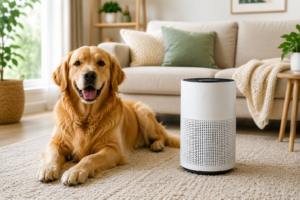
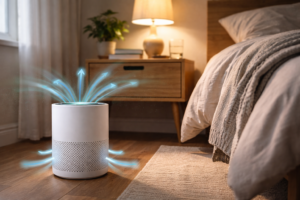
An air purifier is designed to improve indoor air quality by removing airborne particles from the air you breathe. Using one or more filters, most commonly a HEPA filter, an air purifier continuously pulls air into the unit, traps contaminants, and releases cleaner air back into the room.
Air purifiers are particularly effective at capturing:
- Dust and dust mites
- Pollen
- Pet dander
- Smoke particles
- Mold spores
- Other airborne allergens
Many models also include activated carbon filters that help reduce household odors from pets, cooking, and smoke.
Air purifiers work best in the rooms where you spend the most time, such as bedrooms, living rooms, home offices, and nurseries. Because they continuously circulate and filter the air, they can help create a cleaner, healthier indoor environment for allergy sufferers, pet owners, and anyone concerned about indoor air quality.
It’s important to remember that an air purifier does not remove moisture from the air. If excess humidity is causing mold, condensation, or dampness, a dehumidifier, not an air purifier, is the more appropriate solution.
Related Reading:
What Does a Dehumidifier Do?
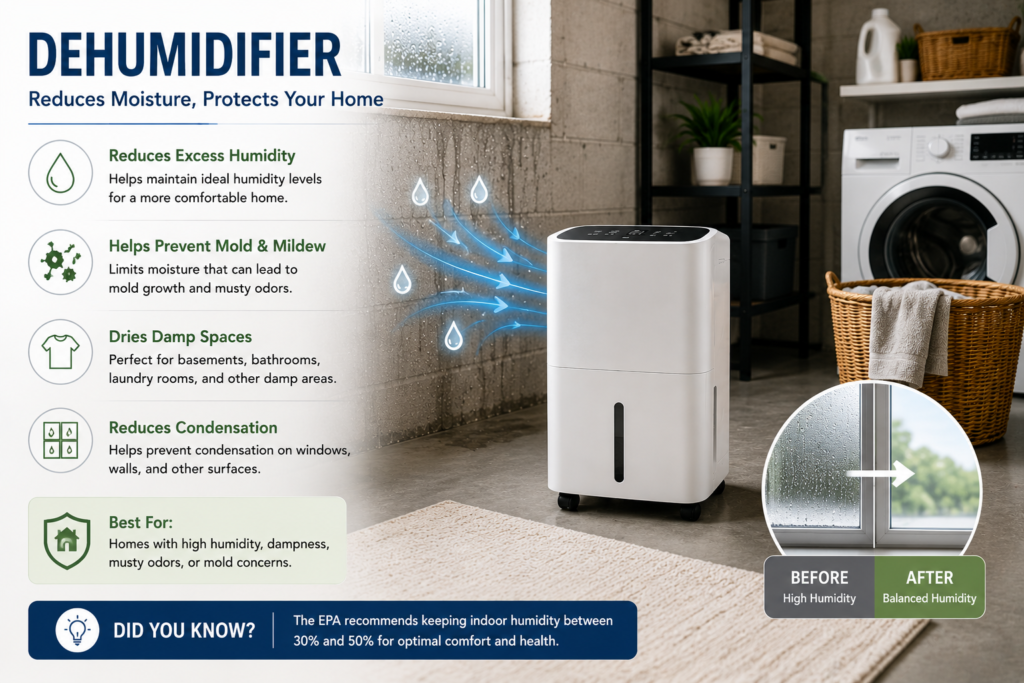
A dehumidifier is designed to remove excess moisture from the air, helping maintain a healthier and more comfortable humidity level inside your home. Instead of filtering airborne particles like an air purifier, a dehumidifier pulls humid air into the unit, removes the moisture through condensation, and then releases drier air back into the room.
Dehumidifiers are especially helpful for controlling:
- High indoor humidity
- Condensation on windows
- Damp basements
- Musty odors
- Mold and mildew growth
- Moisture damage
By reducing excess humidity, a dehumidifier creates an environment that is less favorable for mold, mildew, and dust mites, all of which thrive in damp conditions. Lower humidity can also make your home feel more comfortable, especially during warm or humid weather.
Dehumidifiers are most commonly used in basements, crawl spaces, laundry rooms, garages, and other areas prone to moisture. However, they can also benefit any room where humidity levels consistently exceed the recommended range of 30% to 50%.
It’s important to remember that a dehumidifier does not remove dust, pollen, pet dander, or other airborne particles. If poor indoor air quality or allergens are your primary concern, an air purifier is the better solution.
Related Reading:
Key Differences Between an Air Purifier and a Dehumidifier
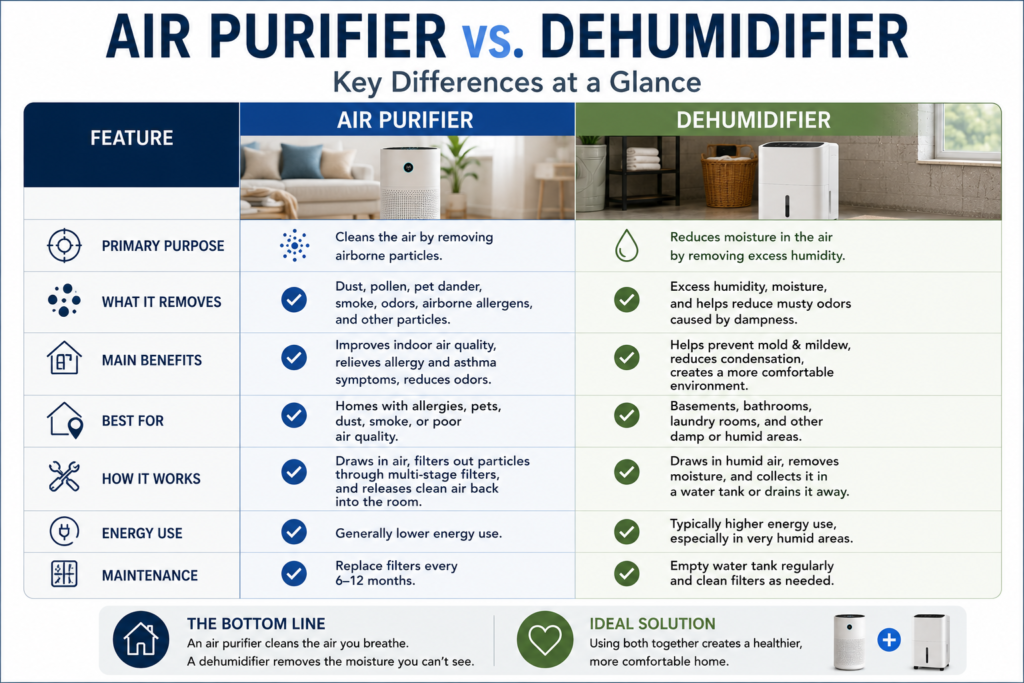
While both appliances can contribute to a healthier home, they address completely different issues. Understanding these differences can help you choose the right solution—or decide whether your home would benefit from using both.
Indoor Air Quality
An air purifier is specifically designed to improve indoor air quality by removing airborne contaminants such as dust, pollen, pet dander, smoke particles, and allergens. A dehumidifier does not filter these particles from the air.
Best Choice: ✅ Air Purifier
Humidity Control
A dehumidifier removes excess moisture from the air, helping maintain healthy humidity levels. Air purifiers have no effect on indoor humidity.
Best Choice: ✅ Dehumidifier
Mold and Mildew
If mold growth is caused by excessive moisture, a dehumidifier helps address the underlying problem by lowering humidity. An air purifier can capture airborne mold spores but cannot stop mold from growing if moisture remains.
Best Choice: ✅ Dehumidifier (for prevention)
Helpful Addition: Air Purifier (for airborne mold spores)
Allergies
For allergy sufferers, an air purifier is usually the better investment because it removes common airborne allergens like pollen, dust, and pet dander. A dehumidifier may provide some indirect relief by making your home less hospitable to dust mites, which thrive in humid environments.
Best Choice: ✅ Air Purifier
Energy Use
Both appliances consume electricity, but actual operating costs depend on the size of the unit, how often it runs, and your local utility rates. In general, dehumidifiers often consume more energy because they use a refrigeration process to remove moisture.
Maintenance
Air purifiers typically require regular filter replacements and occasional cleaning. Dehumidifiers require the water collection bucket to be emptied (unless connected to a drain) and routine cleaning to prevent mold and bacteria buildup.
Which Is Easier to Live With?
For most homeowners, an air purifier requires less day-to-day attention beyond replacing filters. Dehumidifiers may require more frequent maintenance, especially in damp environments where the water reservoir fills quickly.
Ultimately, neither appliance is “better” than the other, they simply solve different problems. The best choice depends on whether your primary concern is airborne contaminants, excess humidity, or both.
Which One Do You Need?

Choosing between an air purifier and a dehumidifier comes down to identifying the problem you’re trying to solve. While both appliances can improve your home’s comfort, they do so in very different ways.
Use the guide below to determine which option is best for your situation.
| If Your Goal Is… | Best Choice |
|---|---|
| Reduce dust and allergens | ✅ Air Purifier |
| Remove pet dander | ✅ Air Purifier |
| Improve indoor air quality | ✅ Air Purifier |
| Reduce smoke particles and odors | ✅ Air Purifier |
| Lower humidity levels | ✅ Dehumidifier |
| Eliminate musty basement odors | ✅ Dehumidifier |
| Reduce condensation on windows | ✅ Dehumidifier |
| Help prevent mold and mildew | ✅ Dehumidifier |
| Create the healthiest indoor environment | ✅ Both |
Choose an Air Purifier If…
An air purifier is the better choice if your primary concerns include allergies, asthma, pet dander, dust, pollen, smoke, or improving the overall air quality inside your home. These appliances continuously filter airborne particles, making them ideal for bedrooms, living rooms, home offices, and other frequently used spaces.
Choose a Dehumidifier If…
A dehumidifier is the better option if your home feels damp, you notice condensation on windows, your basement has a musty smell, or you’re concerned about mold and mildew caused by excess humidity. By maintaining healthy humidity levels, a dehumidifier helps create a more comfortable and healthier living environment.
Consider Using Both
Many homeowners don’t have to choose one or the other. If your home experiences both poor indoor air quality and high humidity, using an air purifier and a dehumidifier together can provide the best results. The dehumidifier controls excess moisture while the air purifier removes airborne contaminants, creating a cleaner, healthier, and more comfortable home.
Can You Use an Air Purifier and a Dehumidifier Together?

Absolutely. In fact, many homeowners achieve the best results by using both appliances together. Since an air purifier and a dehumidifier solve different problems, they complement each other rather than compete.
An air purifier continuously removes airborne contaminants such as dust, pollen, pet dander, smoke, and allergens. A dehumidifier reduces excess moisture, helping prevent mold growth, condensation, and damp conditions. Together, they create a cleaner, healthier, and more comfortable indoor environment.
Using both appliances is especially beneficial if you:
- Have allergies or asthma
- Own pets
- Live in a humid climate
- Have a damp basement or crawl space
- Are concerned about mold or mildew
- Want to improve overall indoor air quality
For the best results, place each appliance where it will have the greatest impact. Air purifiers are most effective in frequently occupied rooms such as bedrooms and living rooms, while dehumidifiers typically work best in basements, laundry rooms, crawl spaces, or other areas with elevated humidity.
Remember that neither appliance replaces routine home maintenance. Regular HVAC filter replacement, proper ventilation, and addressing water leaks or moisture problems remain essential for maintaining a healthy home.
Tips for Getting the Best Results

Whether you choose an air purifier, a dehumidifier, or both, following a few best practices can help you maximize their performance and create a healthier indoor environment.
Choose the Right Size
Select an appliance that’s appropriately sized for the room where it will be used. An undersized unit may struggle to keep up, while an oversized unit can be less efficient and more expensive than necessary.
Place It in the Right Location
Air purifiers perform best in frequently occupied spaces such as bedrooms, living rooms, and home offices. Dehumidifiers are most effective in areas prone to excess moisture, including basements, laundry rooms, crawl spaces, and garages.
Keep Up With Maintenance
Replace air purifier filters according to the manufacturer’s recommendations and clean the unit regularly. For dehumidifiers, empty the water reservoir when needed, clean the filter, and keep the coils free of dust to maintain efficient operation.
Monitor Your Indoor Environment
If you’re using a dehumidifier, aim to maintain indoor humidity between 30% and 50%. A simple hygrometer can help you monitor humidity levels and determine when adjustments are needed.
Address the Root Cause
Neither appliance can solve underlying home maintenance issues. If your home has water leaks, poor ventilation, or persistent moisture intrusion, those problems should be repaired to prevent long-term damage and improve indoor air quality.
By choosing the right appliance, maintaining it properly, and addressing the underlying causes of poor air quality or excess humidity, you can create a cleaner, healthier, and more comfortable home for years to come.
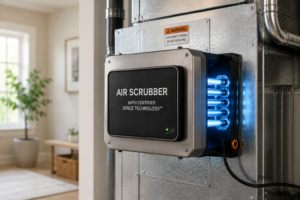
If you’re considering a whole-home air quality upgrade, our guide explains what is an air scrubber and whether it’s the right solution for your home.
Not all indoor air quality products solve the same problems. After learning the difference between an air purifier and a dehumidifier, compare Air Purifier vs. Air Scrubber to see how whole-house air cleaning systems fit into the picture.
Learn More
Choosing the right appliance is just one part of creating a healthier home. Explore these additional guides to learn more about improving indoor air quality, controlling humidity, and selecting the best products for your specific needs.
The more you understand your home’s air quality and moisture levels, the easier it becomes to create a cleaner, healthier, and more comfortable living environment.
The Bottom Line
Air purifiers and dehumidifiers aren’t competing appliances—they’re designed to solve different problems. If your goal is to remove dust, pollen, pet dander, smoke, and other airborne particles, an air purifier is the right choice. If you’re dealing with excess humidity, condensation, dampness, or mold concerns, a dehumidifier is the better solution.
For many homeowners, the healthiest indoor environment comes from using both together. By improving air quality and maintaining proper humidity levels, these appliances work hand in hand to create a cleaner, healthier, and more comfortable home.
Conclusion
Choosing between an air purifier and a dehumidifier doesn’t have to be complicated. The best option depends on the specific problem you’re trying to solve in your home. If airborne allergens, dust, pet dander, or smoke are your primary concern, an air purifier can significantly improve your indoor air quality. If excess humidity, condensation, or damp conditions are the issue, a dehumidifier is the better investment.
For many homeowners, the ideal solution is using both appliances together. An air purifier keeps the air cleaner, while a dehumidifier maintains healthy humidity levels that discourage mold and improve overall comfort.
No matter which appliance you choose, pairing it with good home maintenance practices—such as replacing HVAC filters regularly, improving ventilation, and addressing moisture problems promptly—will help you create a healthier, more comfortable living environment for years to come.
Frequently Asked Questions
Is an air purifier better than a dehumidifier?
Neither appliance is inherently better—they serve different purposes. Air purifiers remove airborne particles like dust, pollen, pet dander, and smoke, while dehumidifiers reduce excess moisture to help prevent mold, mildew, and damp conditions. The best choice depends on the problem you’re trying to solve.
Can an air purifier remove humidity?
No. Air purifiers are designed to clean the air by filtering airborne contaminants. They do not reduce humidity or remove moisture from the air. If high humidity is your concern, a dehumidifier is the better solution.
Can a dehumidifier improve indoor air quality?
Yes, but indirectly. By lowering humidity levels, a dehumidifier creates conditions that are less favorable for mold, mildew, and dust mites. However, it does not remove airborne particles like an air purifier.
Do I need both an air purifier and a dehumidifier?
Many homeowners benefit from using both. An air purifier improves indoor air quality by removing airborne contaminants, while a dehumidifier controls excess moisture. Together, they help create a cleaner, healthier, and more comfortable home.
Which is better for allergies?
An air purifier is typically the better choice for allergy sufferers because it removes common airborne allergens such as pollen, dust, pet dander, and mold spores. A dehumidifier may provide additional relief by reducing humidity levels that allow dust mites and mold to thrive.
Which is better for mold?
If you’re trying to prevent mold growth caused by excess moisture, a dehumidifier is usually the better option because it lowers humidity levels. An air purifier can help capture airborne mold spores but will not eliminate the moisture that allows mold to grow.
Where should I place an air purifier?
Air purifiers work best in rooms where you spend the most time, such as bedrooms, living rooms, home offices, and nurseries. Position the unit where airflow is unobstructed for the best performance.
Where should I place a dehumidifier?
Dehumidifiers are most effective in areas with elevated humidity, including basements, crawl spaces, laundry rooms, garages, and other damp spaces. They should be placed with adequate airflow around the unit and emptied or drained regularly.
Will using both appliances increase my electric bill?
Both appliances use electricity, but operating costs vary depending on the size of the unit, how often it runs, and local utility rates. Choosing an appropriately sized appliance and maintaining it properly can help maximize efficiency.
What is the ideal indoor humidity level?
Most experts recommend maintaining indoor humidity between 30% and 50%. Staying within this range helps improve comfort while reducing the risk of mold growth, dust mites, and excess moisture.
Frequently Asked Questions
Is an air purifier better than a dehumidifier?
Neither appliance is inherently better. Air purifiers remove airborne particles like dust, pollen, pet dander, and smoke, while dehumidifiers reduce excess moisture to help prevent mold, mildew, and damp conditions.
Can an air purifier remove humidity?
No. Air purifiers clean the air by filtering airborne contaminants, but they do not reduce humidity or remove moisture from the air.
Can a dehumidifier improve indoor air quality?
Yes, but indirectly. By lowering humidity levels, a dehumidifier creates conditions that are less favorable for mold, mildew, and dust mites.
Do I need both an air purifier and a dehumidifier?
Many homeowners benefit from using both. An air purifier removes airborne contaminants, while a dehumidifier controls excess moisture.
Which is better for allergies?
An air purifier is typically better for allergies because it removes common airborne allergens such as pollen, dust, pet dander, and mold spores.
Which is better for mold?
A dehumidifier is usually better for preventing mold growth because it lowers humidity. An air purifier can help capture airborne mold spores but will not remove the moisture that allows mold to grow.
Where should I place an air purifier?
Air purifiers work best in rooms where you spend the most time, such as bedrooms, living rooms, home offices, and nurseries.
Where should I place a dehumidifier?
Dehumidifiers are most effective in damp areas such as basements, crawl spaces, laundry rooms, garages, and other high-humidity spaces.
Will using both appliances increase my electric bill?
Both appliances use electricity, but operating costs depend on the unit size, usage, and local utility rates. Choosing the right size and maintaining each unit properly can help improve efficiency.
What is the ideal indoor humidity level?
Most homes should aim for indoor humidity between 30% and 50% to improve comfort and reduce the risk of mold, dust mites, and excess moisture.