
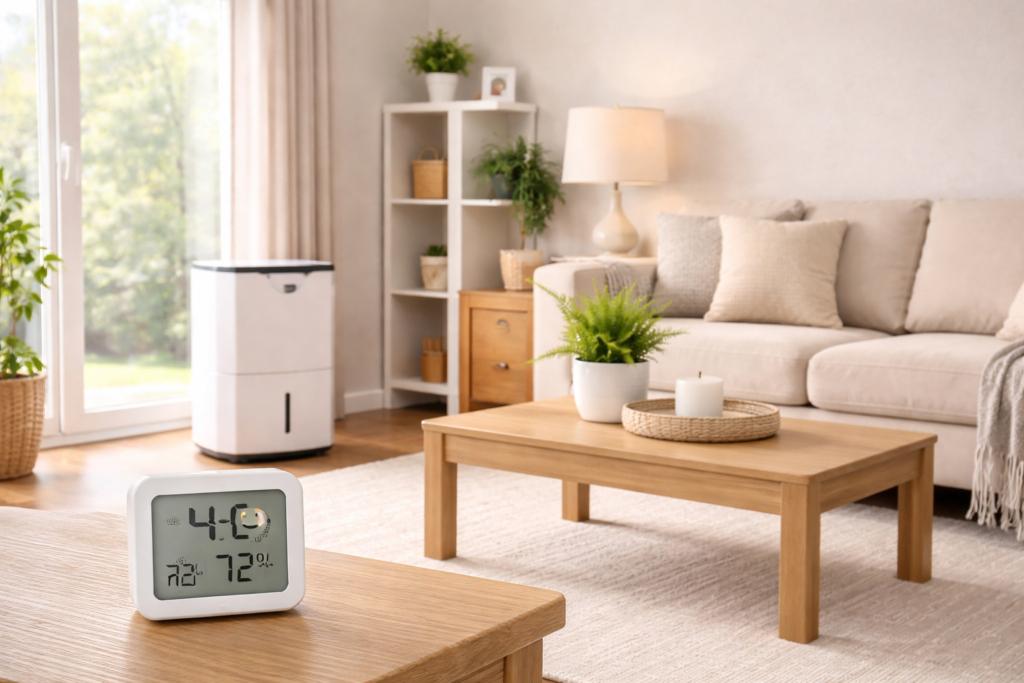
How to Reduce Humidity in a House
High humidity inside a home can create a range of problems, from uncomfortable indoor air to moisture damage and mold growth. When excess moisture builds up indoors, it can collect on windows, walls, and other surfaces, creating conditions where mold and mildew can develop.
Many everyday activities add moisture to the air inside a house. Showers, cooking, laundry, and even normal breathing release water vapor into the indoor environment. Without proper ventilation or humidity control, that moisture can accumulate and raise indoor humidity levels.
Reducing humidity in a house usually involves a combination of better ventilation, controlling moisture sources, and improving airflow throughout the home. Small changes in how moisture is managed can make a noticeable difference in indoor air quality and comfort.
High humidity inside a home can create a range of problems, including conditions that allow mold to develop. Learning how to prevent mold growth in a house starts with controlling indoor moisture.
Understanding what causes high humidity and how to manage it can help homeowners maintain a healthier and more comfortable indoor environment.
Home, Done Right – Perspective
Managing humidity in a house usually comes down to controlling moisture and improving airflow. In most homes, simple steps like using exhaust fans, fixing small leaks, and monitoring humidity levels can significantly reduce excess moisture and prevent related problems.
Why Humidity Builds Up in Houses
Humidity builds up in a house when moisture enters the indoor air faster than it can escape. Many normal household activities release water vapor, and without proper ventilation or moisture control, that vapor can accumulate and raise indoor humidity levels.
Indoor humidity is influenced by both everyday activities and the design of the home itself. Bathrooms, kitchens, laundry rooms, and basements are especially common sources of moisture because they regularly produce steam or contain water systems.
In some homes, outdoor humidity and poor airflow can also contribute to indoor moisture buildup. When humid air becomes trapped inside the home, it can lead to condensation on surfaces and create conditions where mold or mildew may develop. Learning how to prevent moisture problems in a house helps create a more complete solution.
Common Sources of Indoor Humidity
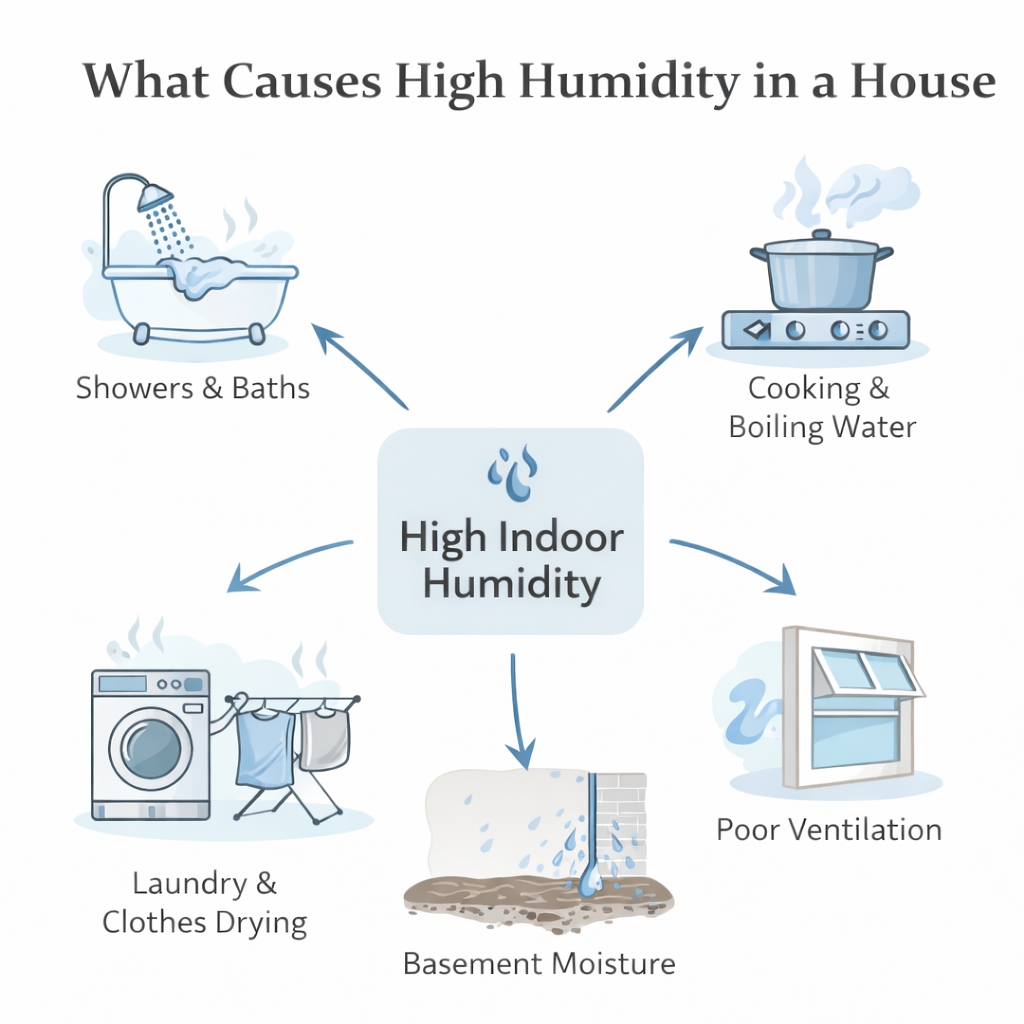
Several everyday activities and conditions can add moisture to indoor air, including:
- Poor ventilation or limited airflow
- Showers and baths
- Cooking and boiling water
- Laundry and clothes drying
- Basement or foundation moisture
In This Guide
Reducing humidity in a house usually involves controlling moisture sources and improving ventilation throughout the home. When excess moisture is removed from indoor air, it helps prevent condensation, mold growth, and other moisture-related problems.
In this guide you will learn how to:
- Identify common sources of indoor humidity
- Maintain a healthy indoor humidity range
- Improve ventilation in moisture-prone areas
- Use dehumidifiers effectively in basements and other spaces
- Reduce moisture from everyday household activities
- Monitor humidity levels throughout your home
Understanding these steps can help homeowners maintain comfortable indoor air and reduce the risk of moisture damage.
Ideal Humidity Levels for a Home
Maintaining the right indoor humidity level is one of the most effective ways to reduce excess moisture in a house. When humidity levels stay within a healthy range, the air feels more comfortable and the risk of moisture-related problems is lower.
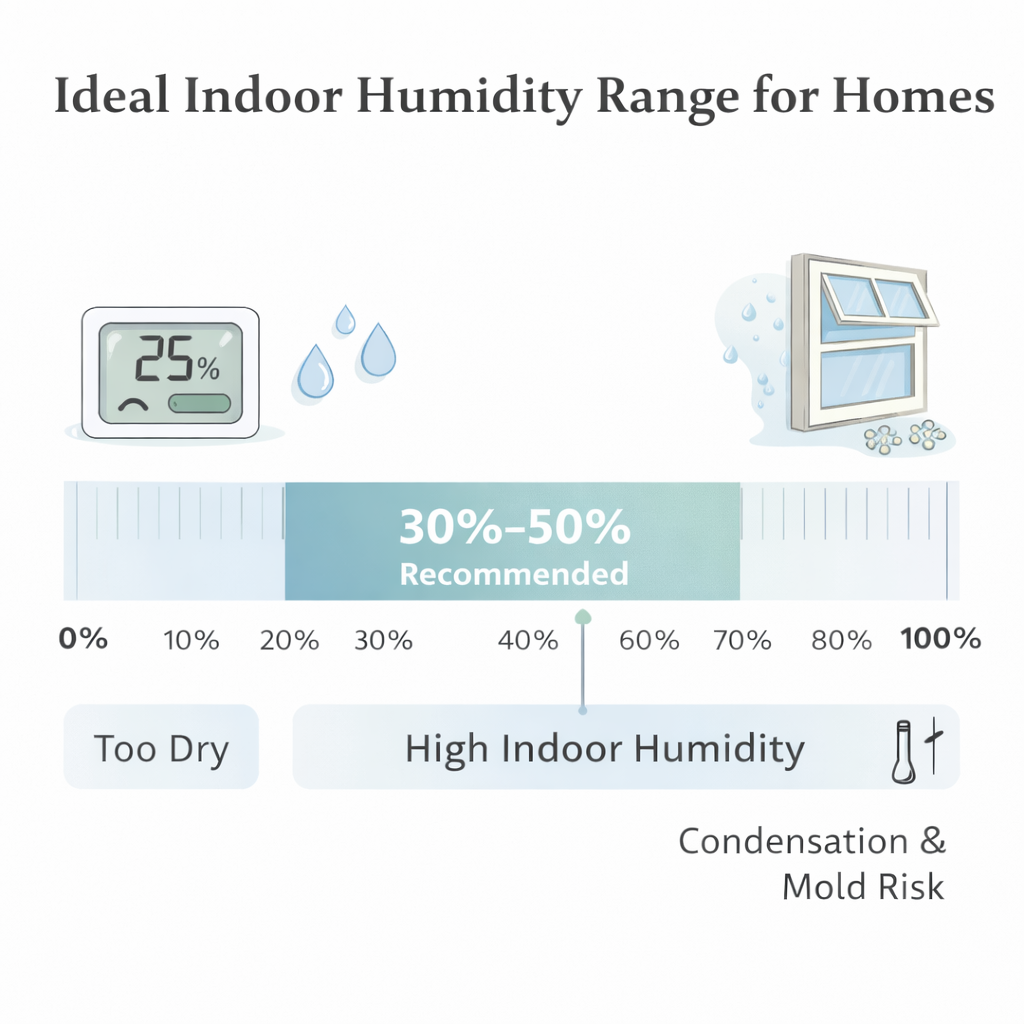
Most homes are healthiest when indoor humidity stays between 30% and 50%. Within this range, there is enough moisture in the air for comfort without creating conditions that allow condensation, mold, or mildew to develop.
When humidity levels regularly rise above this range, moisture can begin to collect on cooler surfaces such as windows, pipes, and exterior walls. Over time, repeated condensation can dampen building materials and create environments where mold can grow.
Why High Humidity Causes Problems
High humidity can make indoor spaces feel warm and uncomfortable. It can also lead to condensation on surfaces throughout the home, especially in cooler areas like basements or near exterior walls.
Over time, this excess moisture can damage materials such as drywall, wood trim, and insulation. Keeping humidity within the recommended range helps protect the home and maintain healthier indoor air.
How to Monitor Indoor Humidity
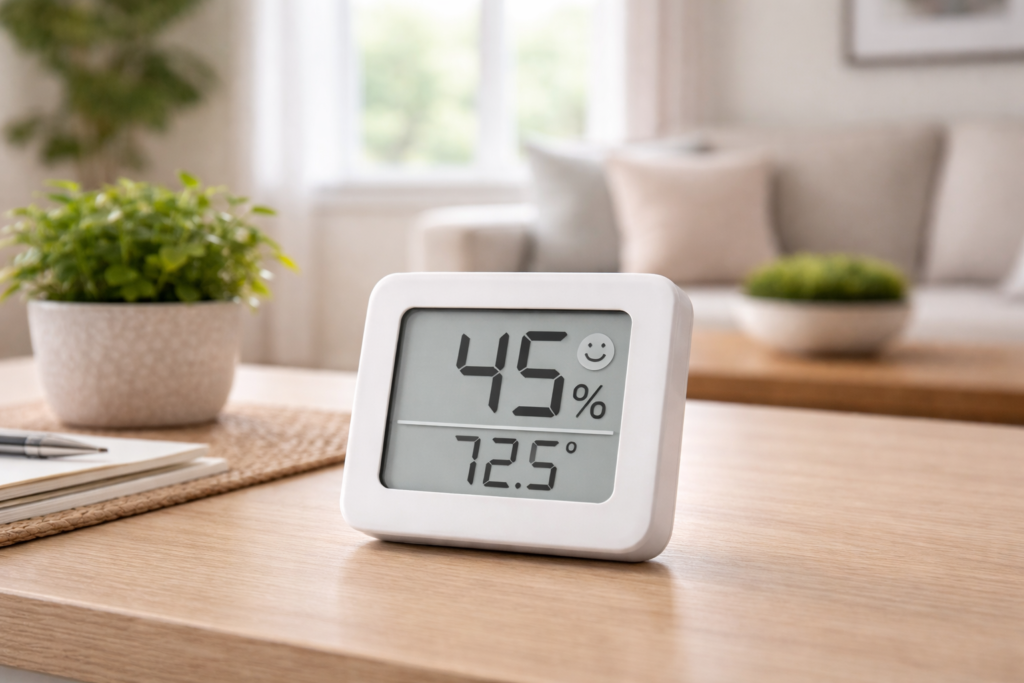
A simple digital hygrometer can help homeowners monitor humidity levels inside their home. These small devices measure the amount of moisture in the air and display the current humidity level.
Checking humidity occasionally throughout the year can help identify when conditions are becoming too humid and when additional ventilation or moisture control may be needed.
Improve Ventilation to Reduce Indoor Humidity
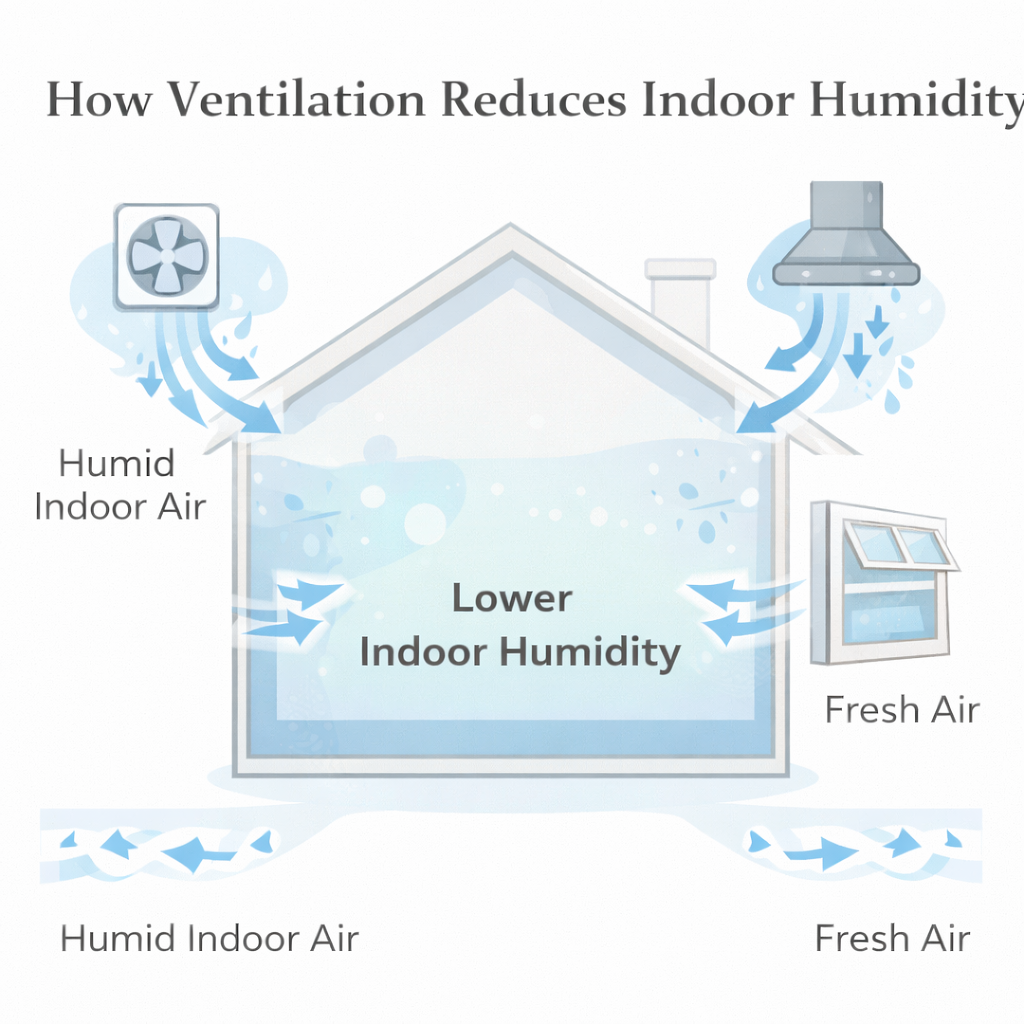
One of the most effective ways to reduce humidity in a house is by improving ventilation. Ventilation allows moist indoor air to escape while bringing in drier air from outside, helping maintain a balanced indoor environment.
Without adequate airflow, moisture released from everyday activities can remain trapped inside the home. Over time, this buildup can raise humidity levels and increase the chances of condensation and mold growth.
Bathroom Ventilation
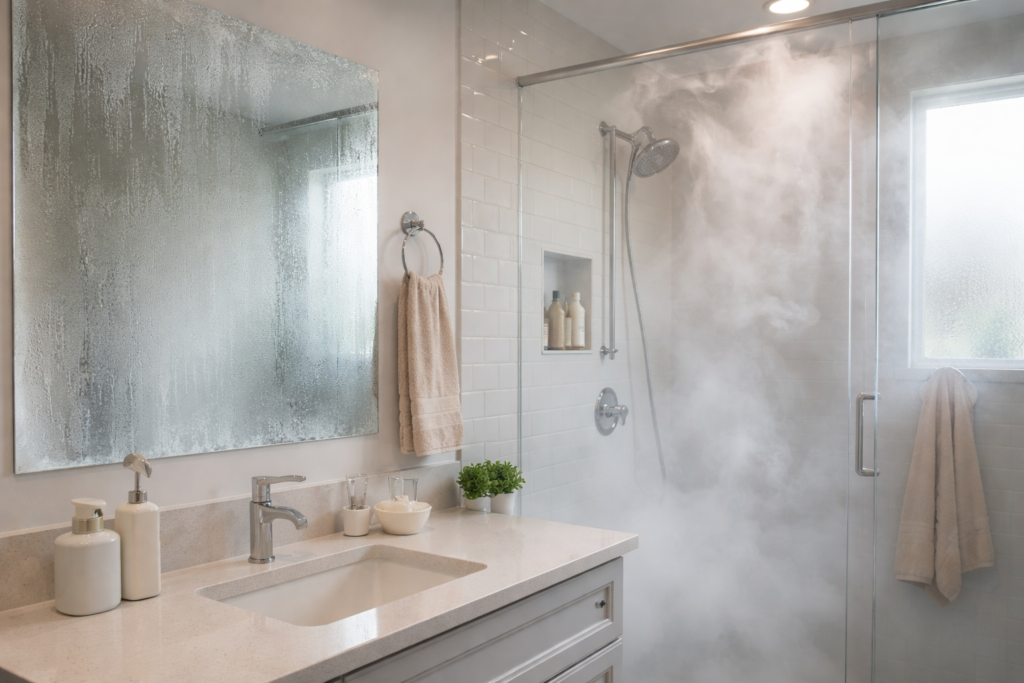
Bathrooms produce large amounts of steam from showers and baths. Without proper ventilation, this moisture can linger in the room and spread through the home.
Using an exhaust fan during and after showers helps remove humid air before it settles on walls, ceilings, and fixtures.
Kitchen Ventilation
Cooking, boiling water, and dishwashers release steam into the kitchen air. Range hoods and kitchen exhaust fans help remove this moisture before it spreads to other parts of the house.
Vented range hoods that send air outside are generally more effective at removing humidity than recirculating models.
Whole-Home Airflow
Opening windows periodically and improving airflow between rooms can also help reduce humidity. Good air circulation allows moisture to disperse instead of collecting in enclosed areas.
Use Dehumidifiers in Moisture-Prone Areas
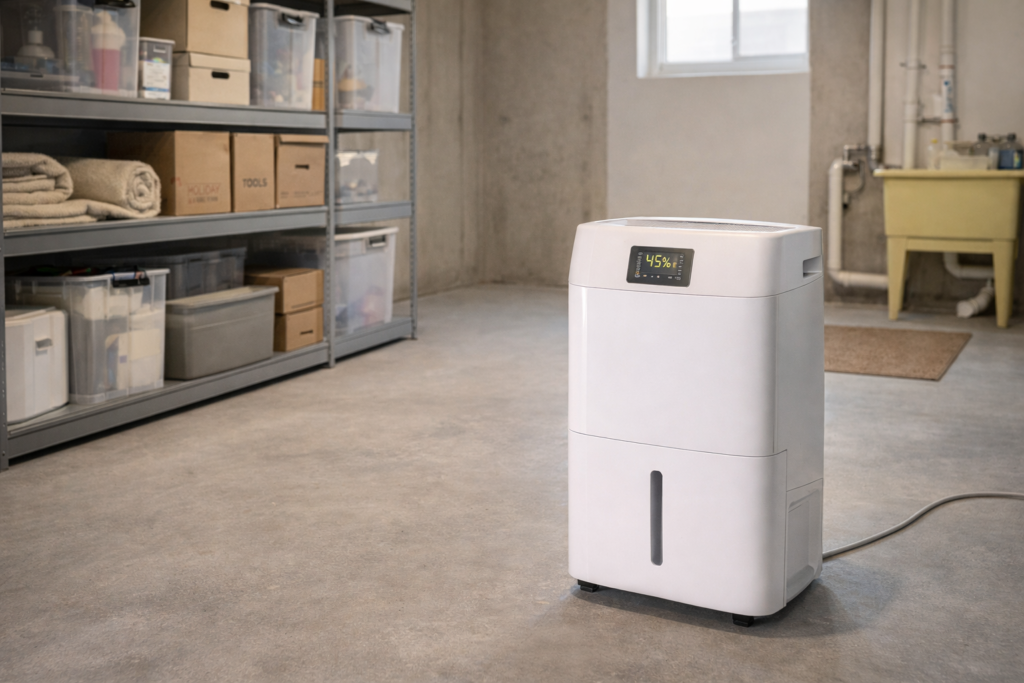
In some homes, ventilation alone may not be enough to control humidity. Areas such as basements, lower levels, and rooms with limited airflow can naturally hold more moisture. In these spaces, a dehumidifier can help remove excess water vapor from the air.
Dehumidifiers work by drawing in humid air, removing moisture, and releasing drier air back into the room. Over time, this process helps lower indoor humidity levels and reduce the risk of condensation and mold growth.
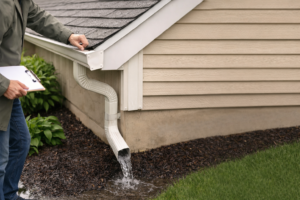
In many cases, the same steps used for preventing water damage in your home also help reduce excess humidity and moisture buildup.
Basements
Basements are one of the most common places where humidity builds up. Because they are partially or fully below ground, they are often affected by cooler temperatures and moisture from surrounding soil.
Running a dehumidifier in the basement can help keep humidity levels within a healthier range and prevent moisture from collecting on walls, floors, and stored items.
Rooms With Limited Airflow
Rooms that do not receive much airflow from the rest of the house may also benefit from a dehumidifier. Utility rooms, storage areas, and enclosed spaces can sometimes trap humid air.
Using a dehumidifier in these areas can help maintain more consistent humidity levels throughout the home.
Reduce Moisture From Everyday Activities
Many normal household activities release moisture into the air. While these sources are unavoidable, small changes in daily habits can help reduce the amount of humidity that builds up inside a home.
Being mindful of how moisture is produced and removed can make a noticeable difference in indoor humidity levels.
Cooking and Boiling Water
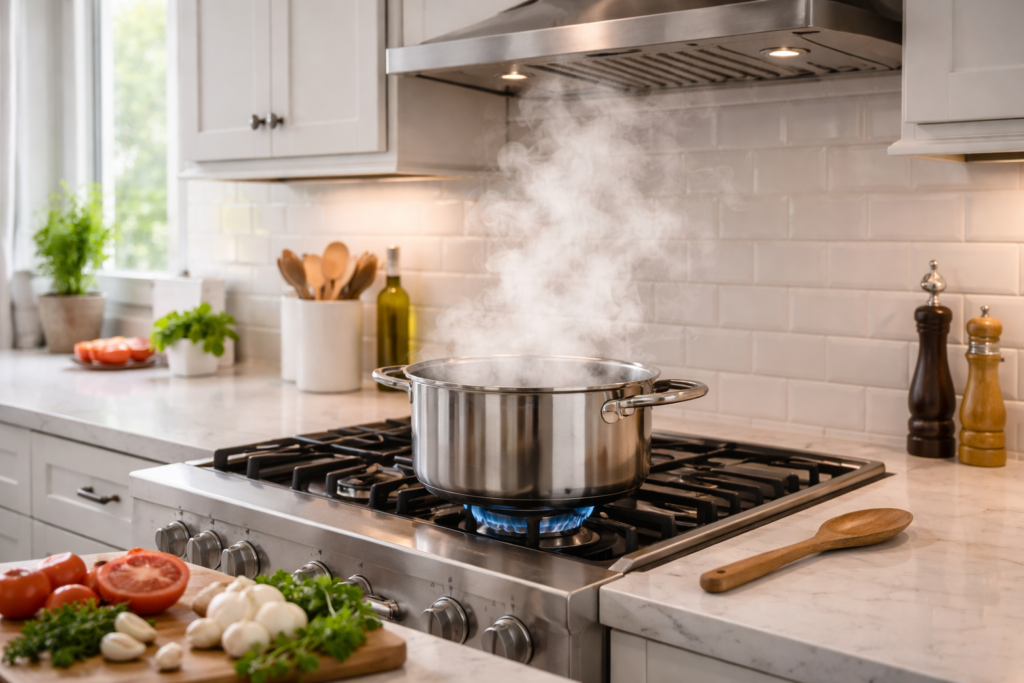
Cooking often releases steam into the air, especially when boiling water or simmering food. This moisture can spread through the kitchen and nearby rooms if it is not properly ventilated.
Using a kitchen exhaust fan or range hood while cooking helps remove steam before it raises humidity levels throughout the house.
Laundry and Drying Clothes
Drying clothes indoors can add a significant amount of moisture to the air. Whenever possible, clothes dryers should be properly vented to the outside.
If clothes must be dried indoors, improving ventilation and airflow can help prevent humidity from building up.
Showers and Baths
Hot showers release steam that can quickly increase humidity levels in bathrooms and nearby rooms. Running the bathroom exhaust fan during and after showers helps remove this moisture before it spreads through the house.
Monitor Humidity Levels in Your Home
Keeping track of indoor humidity is an important part of managing moisture in a house. Without measuring humidity, it can be difficult to know when levels are becoming too high.
A simple hygrometer can help homeowners monitor humidity and identify when conditions may lead to condensation, mold growth, or other moisture problems.
Using a Hygrometer
A hygrometer measures the amount of moisture in the air and displays the current humidity level. These small devices are easy to place in different areas of the home and can provide quick insight into indoor conditions.
Many homeowners place hygrometers in areas where humidity tends to be higher, such as basements, bathrooms, or laundry rooms.
Checking Humidity Throughout the Year
Humidity levels can change depending on the season. During warmer months, outdoor humidity can raise moisture levels indoors, while winter conditions may cause condensation on windows and colder surfaces.
Monitoring humidity periodically throughout the year helps homeowners make adjustments when needed, such as improving ventilation or using a dehumidifier.
Signs Humidity Levels Are Too High
Excess humidity inside a house often shows up through small warning signs before it becomes a larger problem. Recognizing these early indicators can help homeowners address moisture issues before they lead to mold growth or material damage.
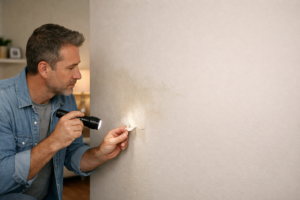
Many of these warning signs can also indicate underlying moisture problems, and learning to recognize the signs of hidden water damage in homes can help catch issues early.
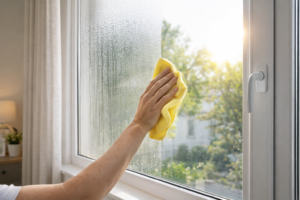
Condensation on Windows
One of the most common signs of high indoor humidity is condensation forming on windows. When warm, moist air comes into contact with cooler glass surfaces, water droplets can appear.
If condensation appears frequently, it may indicate that humidity levels inside the home are too high.
Musty Odors
A persistent musty smell can develop when moisture remains trapped in materials for extended periods. These odors are often noticeable in basements, bathrooms, or storage areas where airflow may be limited.
Musty smells can sometimes indicate that moisture has already begun affecting building materials.
Damp or Sticky Air
High humidity can also make indoor air feel heavy or sticky, especially during warmer months. This discomfort often occurs when the air contains more moisture than it can easily release.
Peeling Paint or Warped Materials
Excess moisture can affect building materials over time. Paint may begin to peel, drywall may show signs of staining, and wood trim or flooring may warp when humidity remains high for long periods.
Conclusion
Reducing humidity in a house helps protect both the home and the people living in it. When indoor humidity is kept within a healthy range, the risk of condensation, mold growth, and moisture damage is much lower.
Many humidity problems can be improved by increasing ventilation, controlling everyday sources of moisture, and using tools like dehumidifiers when necessary. Small changes in daily habits, such as running exhaust fans or monitoring humidity levels, can make a noticeable difference over time.
With consistent moisture management and proper airflow, most homes can maintain a comfortable indoor environment without excessive humidity.
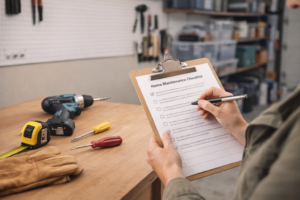
Following an essential home maintenance checklist can help homeowners stay ahead of moisture issues and maintain healthy humidity levels year-round.
The Bottom Line
Reducing humidity in a house comes down to managing moisture and improving ventilation. By controlling common humidity sources and keeping indoor levels within the recommended range, homeowners can create a healthier and more comfortable living environment.
Frequently Asked Questions
What is the fastest way to reduce humidity in a house?
The fastest way to reduce humidity in a house is to use a dehumidifier and improve ventilation at the same time. Running exhaust fans, opening windows when conditions allow, and removing moisture sources can quickly lower indoor humidity levels.
What humidity level should a house be?
Most homes are healthiest when indoor humidity stays between 30% and 50%. Keeping humidity within this range helps prevent condensation, mold growth, and moisture damage.
Does opening windows reduce humidity?
Opening windows can help reduce humidity if the outdoor air is drier than the indoor air. Good airflow allows moist air to escape and fresh air to enter, which can help balance indoor humidity levels.
Why is my house so humid even with air conditioning?
Air conditioning can reduce humidity, but it may not remove enough moisture in very humid conditions. Poor airflow, moisture sources, or an oversized AC unit can also contribute to higher indoor humidity.
Do dehumidifiers really work?
Yes. Dehumidifiers are effective at removing moisture from indoor air, especially in basements and other areas where humidity tends to build up. They help maintain healthier humidity levels and reduce the risk of mold.
Can high humidity cause mold in a house?
Yes. High humidity can lead to condensation and damp materials, which create the conditions mold needs to grow. Controlling humidity is one of the most important steps in preventing mold.