
How to Improve Indoor Air Quality at Home
Indoor air quality affects how your home feels every day, but it’s not always something homeowners think about until there’s a noticeable problem.
Dust that keeps coming back, rooms that feel stuffy, or air that feels heavy can all point to underlying issues with airflow, moisture, or buildup inside the home. The challenge is that these problems often develop gradually, making them easy to overlook.
The good news is that improving indoor air quality doesn’t require complicated systems or major changes. In most cases, it comes down to a few practical adjustments that help your home manage air more effectively.
This guide walks through the simple, effective ways to improve indoor air quality, so your home feels cleaner, more comfortable, and works the way it should.
If you want to understand the underlying causes, read indoor air quality problems homeowners overlook.
Home, Done Right – Perspective
Improving indoor air quality isn’t about fixing one single problem.
It’s about how your home handles air overall.
Air is constantly moving through your home, carrying dust, moisture, and particles with it. If something is off, like poor ventilation or excess humidity, it doesn’t stay in one place. It spreads.
That’s why the goal isn’t perfection. It’s balance.
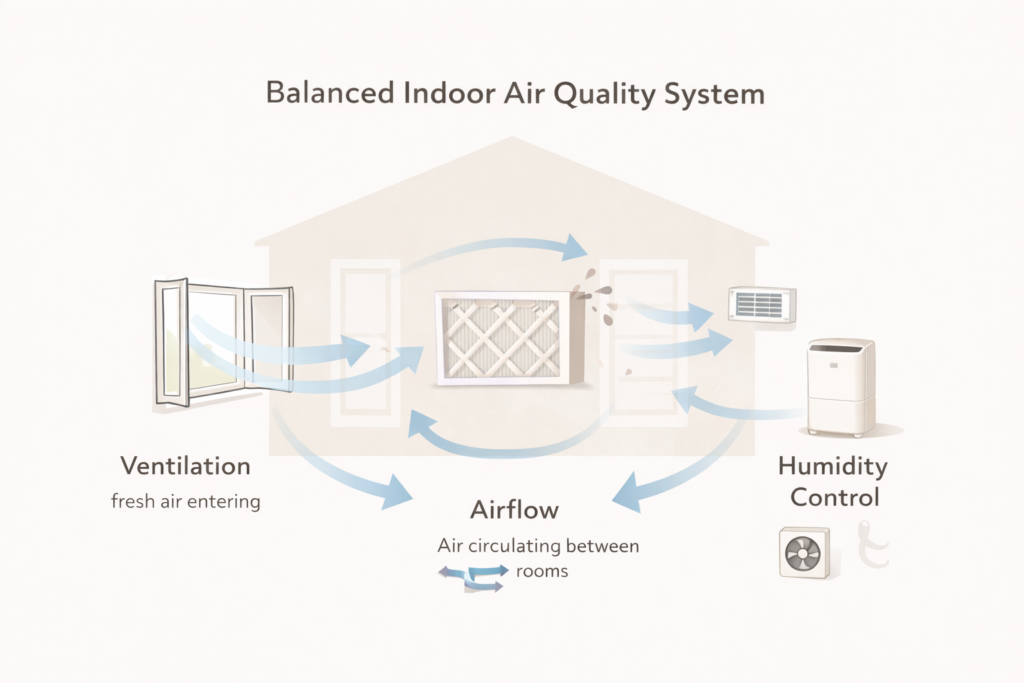
When airflow, filtration, and moisture control are working together, your home naturally reduces buildup and maintains more consistent air quality over time.

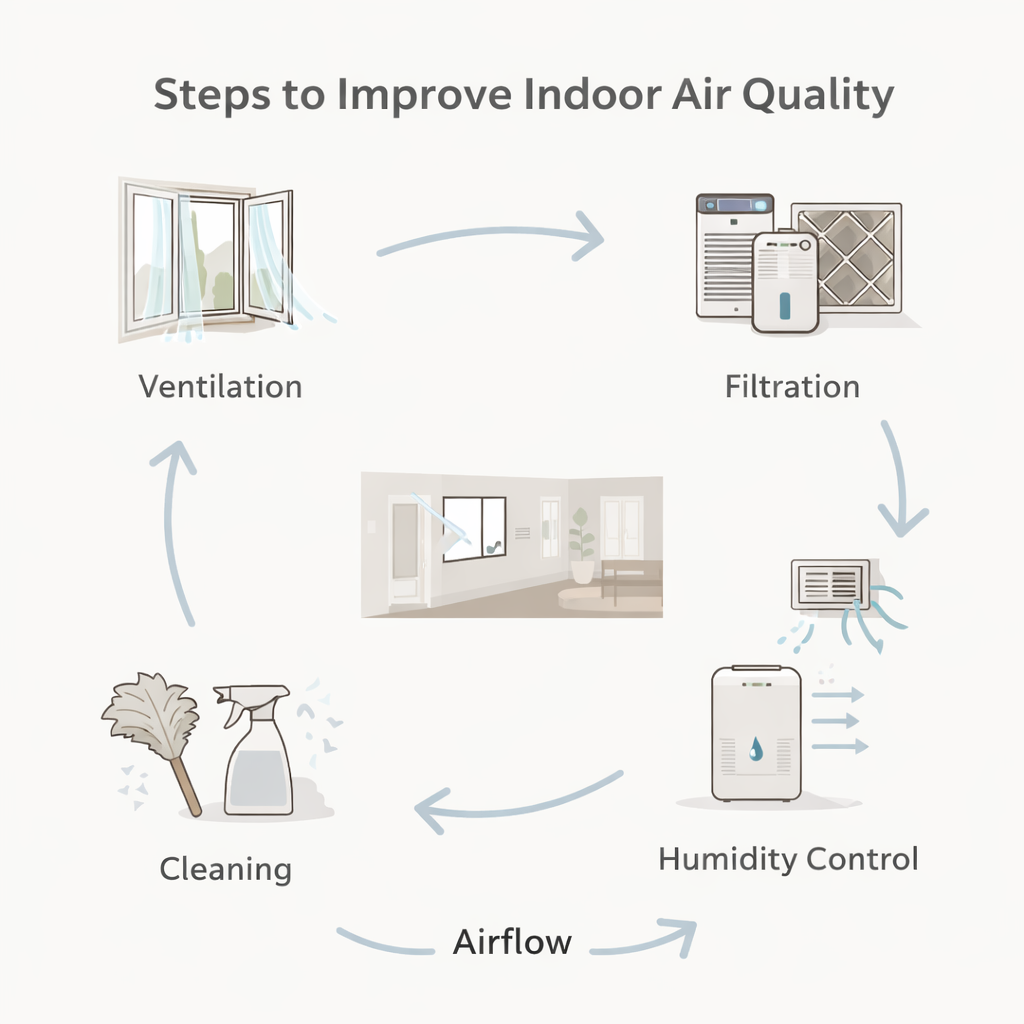
Simple Steps to Improve Indoor Air Quality
Improving indoor air quality doesn’t require a complete overhaul of your home.
Most improvements come from a few consistent actions that reduce buildup, improve airflow, and help your home manage air more effectively over time.
In This Guide
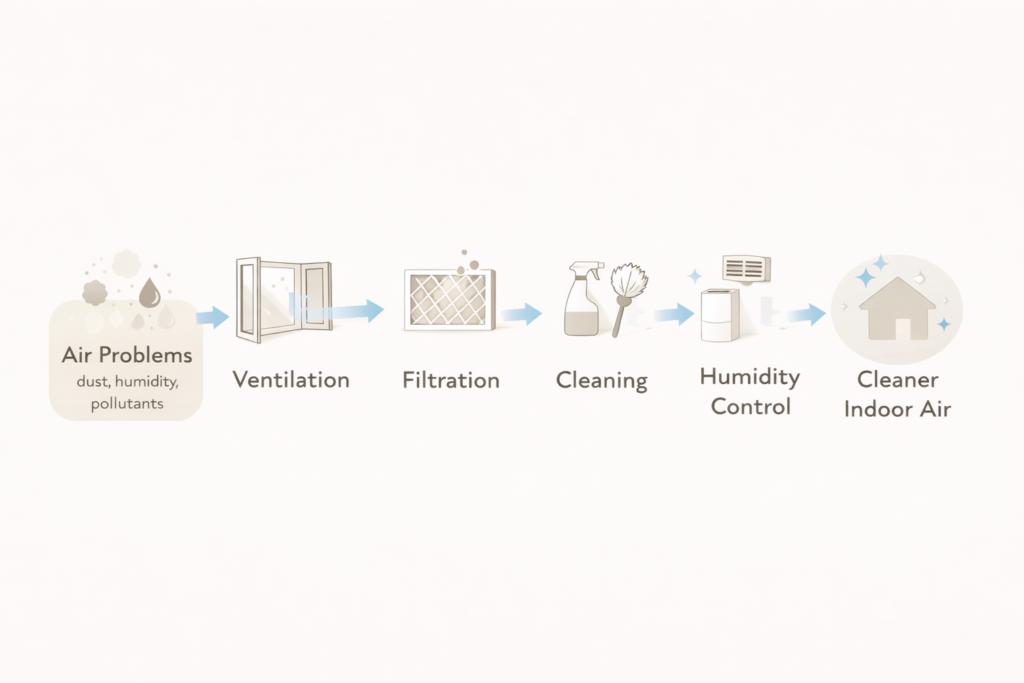
Improving indoor air quality comes down to a few consistent habits that reduce dust, manage moisture, and keep air moving through your home. Small adjustments can make a noticeable difference over time without requiring major changes.
In this guide you will learn how to:
- Improve airflow and ventilation throughout your home
- Reduce dust and airborne particles
- Manage humidity and moisture levels
- Maintain your HVAC system and filters
- Build simple habits that support better air quality
These steps help create a more comfortable and consistent indoor environment.
1. Improve Ventilation
Fresh air helps dilute indoor pollutants and prevent buildup.
Simple ways to improve ventilation include:
- Opening windows when conditions allow
- Using exhaust fans in kitchens and bathrooms
- Allowing air to move between rooms instead of keeping spaces closed
Even small increases in airflow can noticeably improve how your home feels.
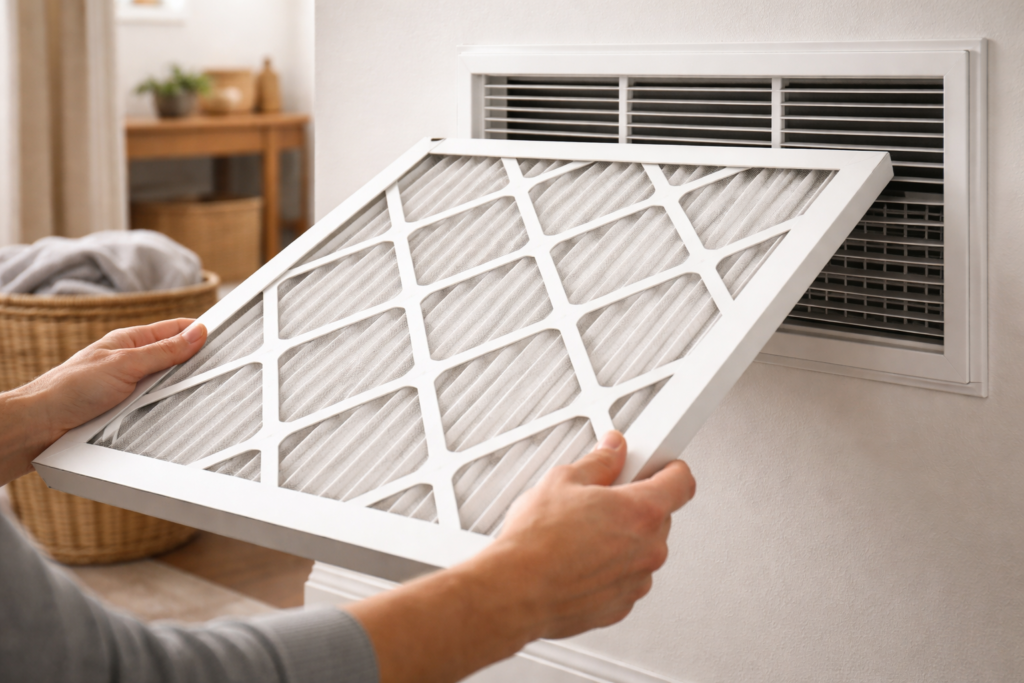
2. Replace Air Filters Regularly
Air filters help capture particles before they circulate through your home.
When they’re clean, they:
- Reduce dust in the air
- Improve airflow through your system
- Help maintain consistent air quality
When they’re clogged, they can restrict airflow and allow particles to continue circulating.
3. Manage Humidity Levels
Humidity plays a major role in indoor air quality. Too much moisture can make air feel heavy and create conditions where mold and mildew can develop.
Ways to manage humidity:
- Use exhaust fans in high-moisture areas
- Reduce excess moisture in bathrooms and basements
- Use a dehumidifier if needed
Learn More: How To Reduce Humidity In A House
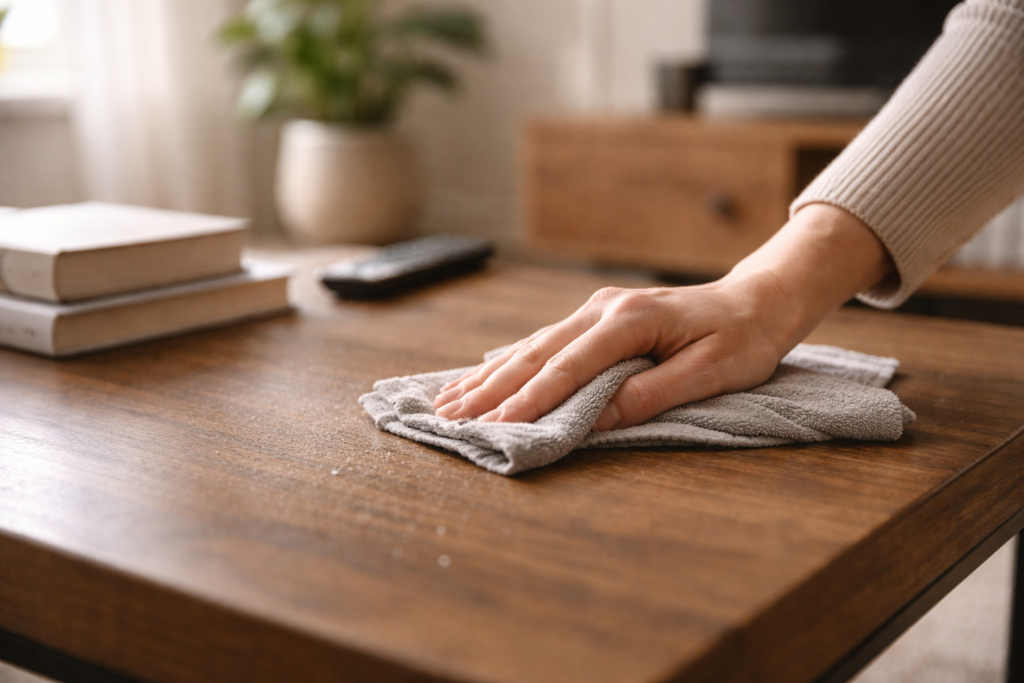
4. Reduce Dust and Particle Sources
Dust is one of the most common contributors to poor air quality.
While it can’t be eliminated completely, it can be reduced by:
- Regularly cleaning surfaces and floors
- Minimizing clutter that collects dust
- Maintaining fabrics, carpets, and upholstery
5. Keep Air Moving Between Rooms
Air quality improves when air can circulate freely.
Simple adjustments include:
- Keeping vents unblocked
- Allowing space under doors
- Avoiding closed-off areas where air becomes stagnant
Air that moves freely is less likely to trap particles and moisture.
These steps are simple, but they work best when combined. Improving air quality isn’t about doing one thing perfectly, it’s about making small changes that support each other.
How Ventilation Improves Airflow in Your Home
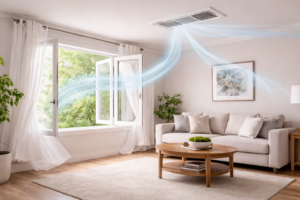
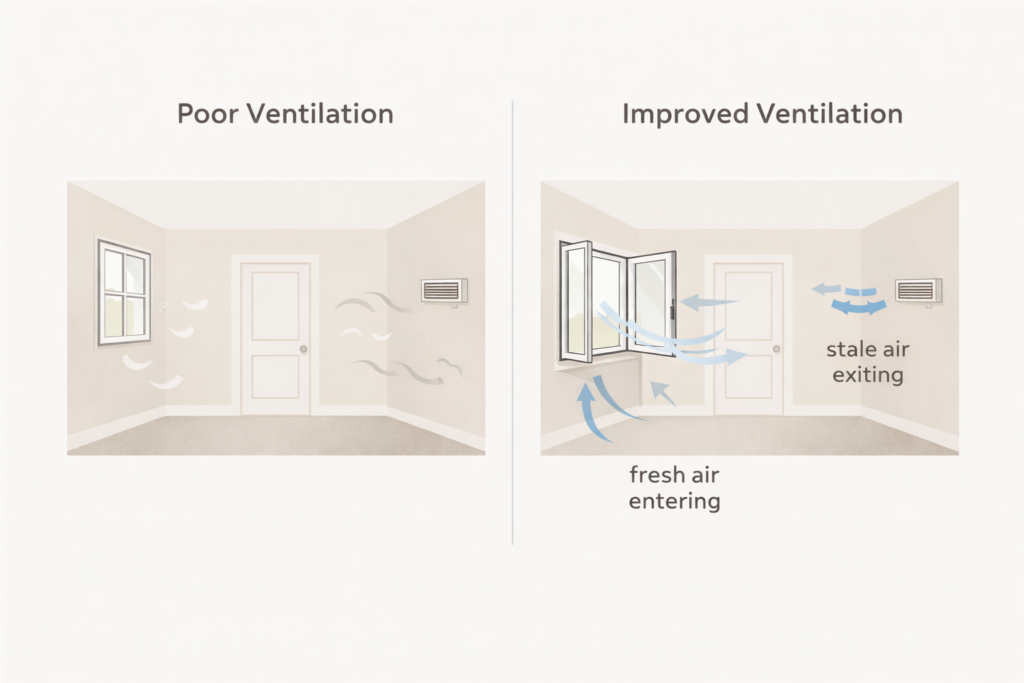
Ventilation is one of the most important factors in indoor air quality. Without it, air becomes stagnant. Particles build up, moisture lingers, and fresh air isn’t able to replace what’s already inside.
Why Fresh Air Matters
Fresh air helps dilute indoor pollutants.
When outside air enters your home, it reduces the concentration of:
- Dust
- Allergens
- Odors
- Moisture
This makes the air feel lighter and more comfortable.
How Poor Ventilation Affects Your Home
When air isn’t moving properly, problems tend to build up.
You may notice:
- Stuffy or stale rooms
- Lingering smells
- Uneven air quality between spaces
- Increased moisture in certain areas
These are signs that air isn’t being refreshed effectively.
Using Natural Ventilation
Natural ventilation is the simplest place to start.
This includes:
- Opening windows to let in fresh air
- Creating cross-ventilation by opening windows in different areas
- Allowing airflow between rooms
Even short periods of fresh airflow can help reduce buildup.
Using Mechanical Ventilation
Your home also relies on systems to move air.
This includes:
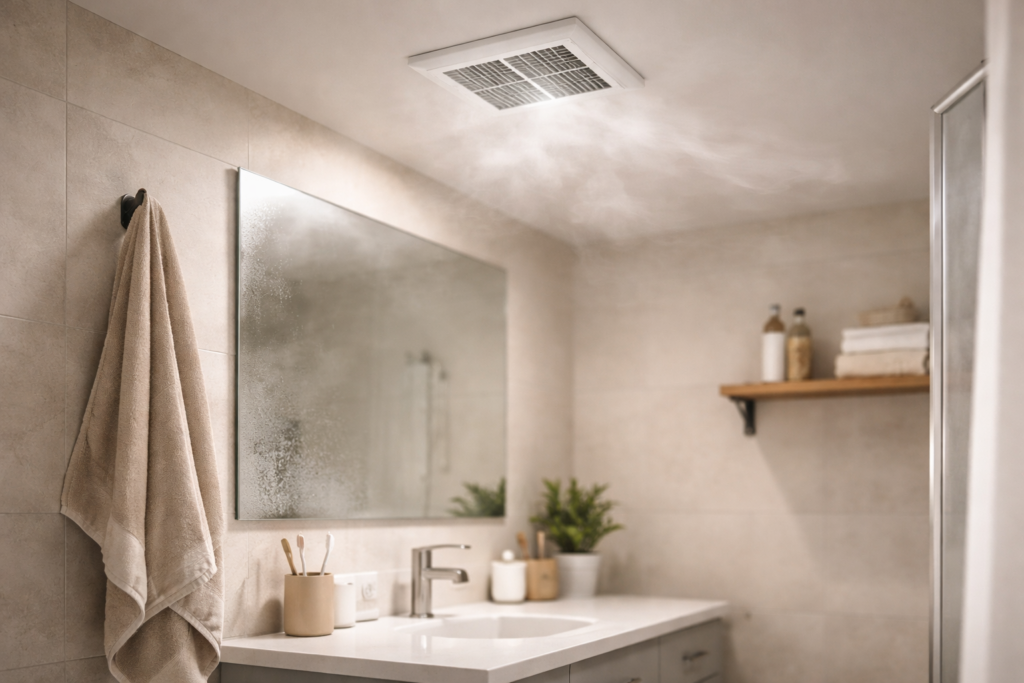
- Bathroom exhaust fans
- Kitchen exhaust fans
- HVAC systems that circulate air
These systems help remove moisture and move air more consistently. Excess moisture can affect both comfort and air quality. Learning how to dry out a damp room is often one of the first steps toward creating a healthier indoor environment.
Why Ventilation Needs to Be Consistent
Ventilation isn’t a one-time fix. Air quality improves when fresh air is introduced regularly and airflow is maintained over time. Without consistency, buildup returns quickly.
Ventilation is one piece of the system. To really improve air quality, it needs to work together with filtration and humidity control.
How Filtration and Air Systems Improve Air Quality
While ventilation brings fresh air into your home, filtration helps clean the air that’s already inside.
Together, they form the foundation of how your home manages air quality.
How Filtration Works
As air moves through your home, it passes through filters designed to capture particles.
These filters help remove:
- Dust
- Pollen
- Pet dander
- Other airborne debris
The cleaner the filter, the more effectively it can reduce what’s circulating in the air.
The Role of Your HVAC System
Your HVAC system constantly cycles air through your home.
Air is:
- Pulled into return vents
- Passed through a filter
- Heated or cooled
- Sent back into living spaces
This cycle repeats throughout the day, meaning your system plays a major role in maintaining air quality.
For homeowners looking for a permanent, whole-home solution, learn what an air scrubber is and whether it’s worth installing. Air purifiers and whole-house air scrubbers are two popular ways to improve indoor air quality. Our Air Purifier vs. Air Scrubber guide explains when each option is the better choice.
Why Maintenance Matters
Filtration only works when systems are maintained.
Over time:
- Filters become clogged
- Airflow becomes restricted
- Particles are less effectively captured
Regular maintenance keeps your system working the way it should.
Your HVAC filter plays an important role in indoor air quality. Replacing it regularly can help reduce airborne particles and improve airflow throughout your home. Learn more in our guide on How Often Should You Change Your HVAC Filter?
Air Purifiers and Additional Filtration
Some homes benefit from additional filtration beyond standard HVAC systems.
Air purifiers can:
- Capture smaller particles
- Improve air quality in specific rooms
- Support overall filtration
Learn More: How Air Purifiers Work
Learn More: The Best Air Purifiers for Bedrooms
Understanding how air purifiers work is helpful, but many homeowners also want to know whether they’re actually worth the cost and maintenance.
How Filtration and Airflow Work Together
Filtration is most effective when air is moving properly.
If airflow is limited:
- Air doesn’t pass through filters as often
- Particles remain in certain areas
- Air quality becomes uneven
This is why filtration and airflow need to work together, not separately.
Filtration removes particles from the air, but it doesn’t solve everything. Moisture is another key factor that needs to be managed to keep air quality balanced.
Managing Humidity for Better Air Quality
Humidity plays a major role in how air feels and behaves inside your home. Too much moisture in the air can make rooms feel heavy, contribute to condensation, and create conditions where mold and mildew can develop. Too little moisture can make air feel dry and uncomfortable.
The goal is to keep humidity balanced so your home stays comfortable and problems don’t build over time.
Why Humidity Matters
Moisture in the air affects more than comfort. When humidity is too high, it can:
- Encourage mold and mildew growth
- Increase condensation on windows and surfaces
- Make air feel warmer and heavier
Learn More: How To Prevent Mold Growth In A House
When humidity is too low, it can:
- Make air feel dry
- Increase static and dust movement
- Affect comfort in living spaces
Where Humidity Builds Up
Some areas of the home naturally collect more moisture than others.
Common problem areas include:
- Bathrooms after showers
- Kitchens during cooking
- Basements and lower levels
- Rooms with limited ventilation
These spaces often need extra attention to prevent moisture buildup.
Simple Ways to Control Humidity
Managing humidity doesn’t require complicated solutions.
Simple steps include:
- Using exhaust fans in bathrooms and kitchens
- Allowing moisture to dissipate after showers or cooking
- Improving airflow in enclosed areas
- Using a dehumidifier when needed
These small adjustments help prevent moisture from building up over time.
Excess humidity can contribute to musty odors, poor air quality, and mold growth. If your basement feels damp, our guide to the best dehumidifiers for basements can help you choose the right solution.
How Humidity Connects to Air Quality
Humidity affects how particles behave in the air. High moisture levels can:
- Make airborne particles linger longer
- Encourage biological growth like mold
- Reduce overall air comfort
Balanced humidity helps keep air lighter and more stable.
Once airflow, filtration, and humidity are working together, air quality becomes much easier to manage.
The final piece is consistency, maintaining these habits over time.
Two of the most effective tools for improving your home’s environment are air purifiers and dehumidifiers, but they solve different problems. Learn which one you need in our Air Purifier vs. Dehumidifier guide.
Building Simple Habits That Keep Air Quality Consistent
Improving indoor air quality isn’t something you do once and forget. It’s the result of small, consistent habits that prevent buildup and keep your home functioning the way it should over time.
1. Focus on Consistency, Not Perfection
You don’t need to manage every part of your home at once.
What matters most is consistency:
- Opening windows regularly
- Replacing filters on schedule
- Managing moisture as it appears
These small actions, repeated over time, have the biggest impact.
2. Pay Attention to Early Signs
Indoor air quality problems often start small. Pay attention to:
- Dust returning quickly after cleaning
- Rooms that feel stuffy or different from others
- Condensation or lingering moisture
- Air that feels heavier than usual
Catching these early makes them easier to address.
3. Keep Air Moving
Air that stays still allows particles and moisture to build up.
Simple habits like:
- Keeping vents clear
- Allowing airflow between rooms
- Using fans or ventilation when needed
help prevent stagnation and improve overall air quality.
4. Maintain Your Home Systems
Your home’s systems support air quality every day.
Stay consistent with:
- Replacing HVAC filters
- Using exhaust fans when needed
- Keeping systems clean and functional
These are small maintenance steps that make a long-term difference.
5. Build Awareness Into Daily Life
The goal isn’t to constantly think about air quality—it’s to recognize how your home behaves.
Over time, you’ll start to notice:
- When air feels different
- When moisture builds up
- When airflow is limited
That awareness helps you make small adjustments before problems grow.
When these habits become part of your routine, your home naturally maintains better air quality without constant effort.
Conclusion
Improving indoor air quality doesn’t require complicated systems or major changes. It comes down to understanding how your home handles air—and making small adjustments that support airflow, filtration, and moisture control.
Most air quality problems develop gradually, which means they can also be improved gradually with the right approach.Improving indoor air quality doesn’t require complicated systems or major changes.
It comes down to understanding how your home handles air—and making small adjustments that support airflow, filtration, and moisture control. Most air quality problems develop gradually, which means they can also be improved gradually with the right approach.
The Bottom Line
Better indoor air quality is the result of consistent, simple actions.
When air can move freely, moisture is managed, and particles are reduced, your home becomes more comfortable, more consistent, and easier to maintain over time.
Frequently Asked Questions
What is the fastest way to improve indoor air quality at home?
The fastest ways to improve indoor air quality are usually opening windows when conditions allow, using exhaust fans in high-moisture areas, and replacing dirty HVAC filters. These steps help reduce buildup and improve airflow right away.
Does opening windows actually improve indoor air quality?
Yes. Opening windows can improve indoor air quality by bringing in fresh air and helping stale indoor air move out. This is especially helpful when air inside the home feels stuffy or heavy.
How often should you replace your air filter?
That depends on the filter type, your HVAC system, and how your home is used, but filters should be checked regularly and replaced when they become dirty. A clogged filter reduces airflow and makes filtration less effective.
Does cleaning improve indoor air quality?
Yes. Regular cleaning helps remove dust and particles before they continue circulating through the home. Cleaning surfaces, floors, and fabrics can reduce ongoing airborne buildup.
How does humidity affect indoor air quality?
Humidity affects how air feels and how particles behave inside the home. High humidity can make air feel heavy, increase condensation, and support mold growth, while very dry air can make a home feel uncomfortable and dusty.
Do air purifiers improve indoor air quality?
Air purifiers can help improve indoor air quality by capturing particles in specific rooms or areas of the home. They work best as part of a broader approach that also includes ventilation, filtration, and moisture control.
Why does one room feel stuffier than the others?
A room may feel stuffier because of limited airflow, poor ventilation, higher humidity, or uneven air circulation. This often happens in spaces where air does not move as easily as it does in the rest of the home.
Can indoor air quality improve without expensive equipment?
Yes. Many indoor air quality improvements come from simple habits like better ventilation, regular filter replacement, dust reduction, and moisture control. Expensive equipment is not always necessary.